‘We are the biggest family’: Rabbi Doron Perez draws on personal loss to call for Jewish unity
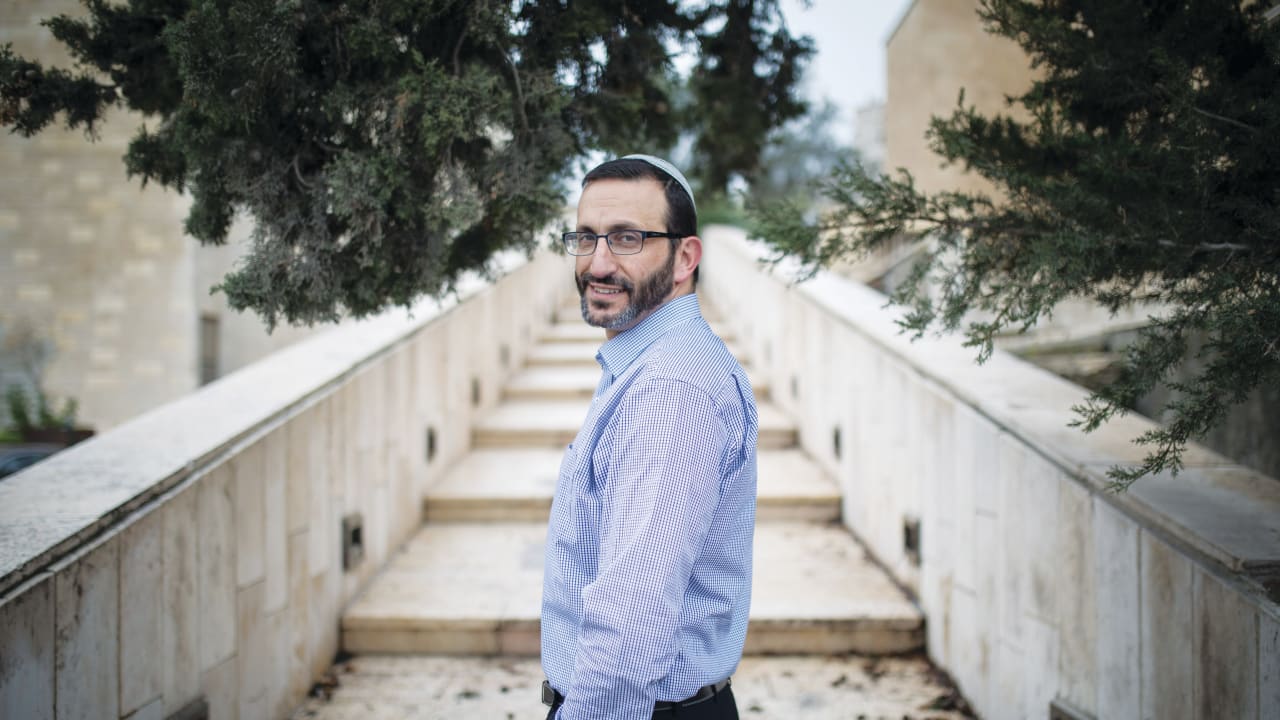
‘Sometimes, the simplest idea is the most obvious,” says Rabbi Doron Perez, president of the World Zionist Organization and chairman of the World Mizrachi movement.
His new book, Smallest Nation, Largest Family, explores a deceptively simple premise: that the Jewish people is, first and foremost, a family, and that this bond is the foundation of Jewish peoplehood.
Perez spoke with the Magazine about the book and its lessons for Jews in Israel and around the world.
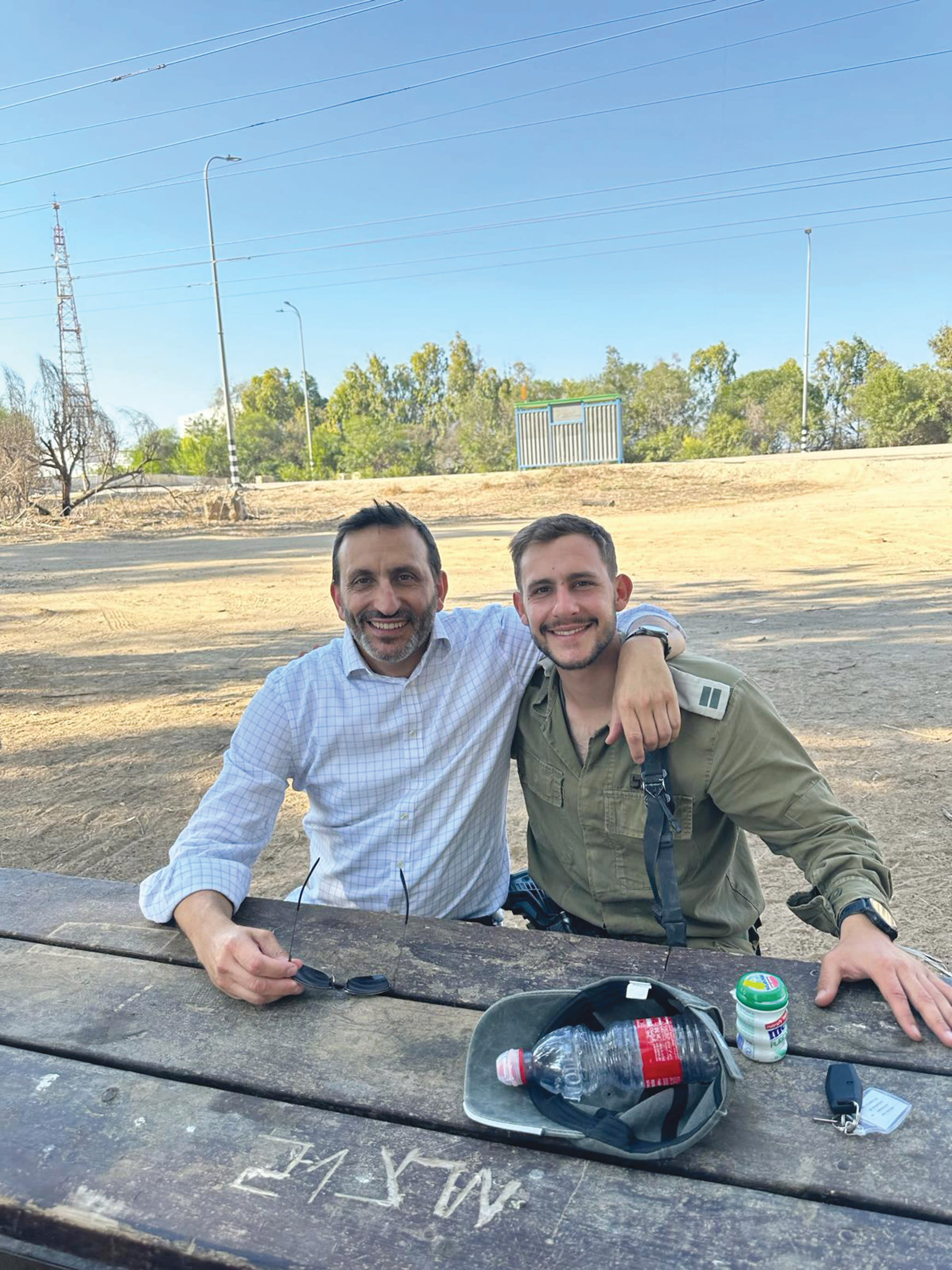
The book resulted from his experiences surrounding the death of his son Daniel, a tank commander in the 7th Armored Brigade’s 77th Battalion, who fell in battle on Oct. 7, defending Kibbutz Nahal Oz. Daniel’s body was taken by Hamas terrorists and was held hostage for two years.
In the first few months of the war, Daniel was thought to be alive. It was not until March 17, 2024, that the IDF learned, based on video evidence, that Daniel was dead, and his body was being held by Hamas. The Perez family held a funeral shortly thereafter, burying the bloodstained shirt from his army uniform on Mount Herzl.
On the morning of October 13, 2025, as the last 20 living hostages were returned to Israel, Perez and his family were anxiously watching on television, hoping that Daniel’s body would soon be returned.
As they were watching, Perez received a WhatsApp message of encouragement from a friend in Cape Town, who wrote, “We may be the smallest nation in the world, but we are the largest family. Thinking of you as we watch the first convoy arrive.... Sending all our love!”
That night, on Simchat Torah, two years to the day, according to the Hebrew calendar, after Daniel fell, his body was returned to Israel. Following the holiday, a second funeral was held at Mount Herzl, in which Daniel’s body was interred.
Perez recalls the two messages he delivered at the eulogy.
“I said that everybody talks about what the ‘day after’ in Gaza is going to look like. I said that I think it’s more important what the ‘day after’ in Israel is going to look like. If we know what it’s going to look like in Israel, we’ll work out what it looks like in Gaza. If we don’t know what it’s going to look like in Israel, we’ll argue about what it’s going to look like in Gaza.
“The second thing I said was that we may be the smallest nation in the world, but we’re the biggest family.
“I said that we are brothers and can never go back to October 6. Just like Daniel and his tank crew fought together, and they came from different walks of life, so too, we have to remember that we are brothers.”
His thoughtful, dignified manner and quiet, measured delivery lend his words a gentle authority.
Perez’s assessment of the Jewish people as the biggest family was later quoted by President Isaac Herzog at the opening of the plenary of the winter session of the Knesset, and by Prime Minister Benjamin Netanyahu at the funeral of the last deceased hostage, Ran Gvili.
After further reflection, Perez realized that beneath the idea’s simplicity lay the kernel of a fundamental truth.
“The more I thought about it,” he shares, “the more I really started realizing that there’s something very, very true and very profound here, both in terms of the Torah’s perspective of who we are as a people, and secondly, in practice, how the Jewish people act like family.
“We support each other like we are family. We fight like family sometimes. It’s only with family that you say the worst things in the world, and the next minute they’re your best friends. We care about each other so much that sometimes we say things out of such care for each other. The closer somebody is to you, the more potential they have to hurt you. We hurt each other because we’re so close, and then we make up because we’re so close.
“I started seeing this idea everywhere.”
The bonds of kinship
For Perez, the determination of Israel’s citizens to bring every hostage home reflected the enduring sense of family that binds Jews together.
He writes in the book, “Like Abraham’s quest to bring back his nephew Lot... so, too, did the national family instinct and intuition kick in, in full force, on Oct. 7, to bring back every one of the hostages. I believe that it is this heartfelt kinship of brotherhood between Jews in Israel and around the world that ensured the return of every last hostage.”
The Jewish people, says Perez, is more than a group of people who share a religion and a nationality. “We are a people which is both a religion and a nation, which is built on being a family.”
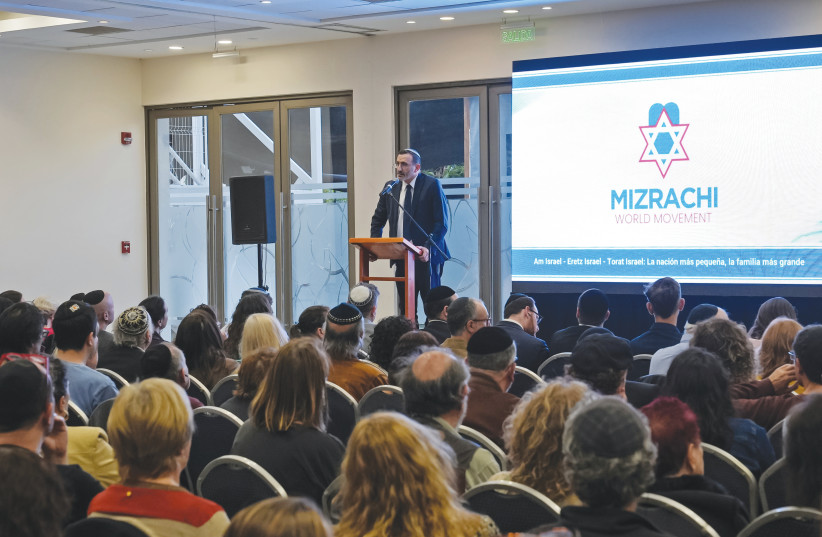
Extending the metaphor, he points out that the Jewish people is distinguished not only by its founding fathers, but by its founding mothers.
Countries frequently cite their “founding fathers,” such as in the case of the United States, but a family needs both parents. “If you want to found a family, you’ve got to have a mother and a father, and therefore, the whole story of the Book of Genesis is about mothers and fathers.
“It’s not just a religious belief or a national belief. It’s both of those. But, first and foremost, it’s a father and a mother who become a family, which becomes a people committed to becoming a nation and committed to a certain ideology.”
Solidarity across the generations
This concept was a revelation and a novel insight for Perez, and accompanied his thoughts daily. “I started seeing it everywhere in the Torah and Jewish history. It started animating and coloring everything that I saw. I began to see it as the foundation of Jewish identity.”
Perez cites the story of Mendel Beilis, a Jewish factory worker in Kyiv in 1911, who was falsely accused of the murder of Andriy Yushchinsky, a 13-year-old boy, who disappeared on his way to school. Eight days later, his mutilated body was found in a cave.
Authorities arrested Beilis months later. Despite there being no evidence incriminating him, he was accused of killing the teen to use his blood to make matzah.
“What happened next,” writes Perez, “is one of the most remarkable demonstrations of Jewish solidarity in the modern era.”
Despite Beilis’s anonymity, the case captured the attention of Jewish leaders worldwide, who rallied behind his cause and assembled a team of scholars and legal minds to counter the charges.
“The otherwise unknown Beilis walked free because his people understood in their bones that his fate was their fate – that he was not a stranger, but a brother.”
One hundred twelve years later, in 2023, in the first few weeks of the war, 100,000 Israelis returned to Israel to fight, demonstrating their family loyalty to their people.
“There were thousands and thousands of Israelis who left the tranquil beaches of Goa and came back to Israel,” says Perez. “We’re the only nation in the world where you need rescue flights to take you back into a war zone.”
Vacationing Ukrainians and Russians on those same beaches of southwest India, says Perez, who had fled the war in their part of the world, couldn’t understand why the Jews were returning.
“I think it’s because they couldn’t understand what the Jews were going back to. I think they couldn’t understand because we’re not just coreligionists and co-patriots – we’re mishpaha (family). We’re fighting for our home and our family. It’s very, very different.”
Sighing, Perez says that he is pained when Israeli leaders speak harshly of each other.
“What causes me a lot of pain and anguish is that, especially after Oct. 7, we’ve seen that the enemy is not our fellow Jew. Hamas, Hezbollah, the Houthis, and Iran do not distinguish between any Jew. It pains me a little bit that we can’t conduct ourselves in a way...” His voice trails off, and then he continues: “We have to live with each other after this, you know. We’re in the same boat.
“It’s not that there shouldn’t be differences. In every family, there are; and certainly within the Jewish people, there can be sharp differences of opinion.
“Still, when you start defining the other as an enemy, and when people say, ‘This person is more dangerous to the Jewish people than Hamas,’ it pains me. You hear it on both sides.
“As long as people are prepared to give their lives to the Jewish people and the Jewish state, you can’t see people like that as enemies. It pains me to delegitimize and defame others and see political opponents as enemies.”
A place at the family table
In his book, Perez notes that the passage of the “Four Sons” read at the Passover Seder epitomizes how Judaism respects other viewpoints. The Haggadah, he writes, presents the four sons as children within a single family.
“Judaism’s response to difference is therefore profoundly familial. It does not cast aside difficult questions, nor discard divergent personalities; it keeps them at the same table.”
Perez hastens to add that Judaism’s close familial ties do not contradict universal human values.
“A family that cares about one another more than anything else but is also built on righteousness and justice, on the concept that all people are created in the image of God, doesn’t become an exclusionary family that doesn’t feel the pain of others. It just says it starts with its own family.”
While Perez suggests that the sense of family and a shared fate is felt most acutely in Israel, he acknowledges that the need to see the Jewish people as an extended family is true for Jews in the Diaspora.
“It wasn’t only what happened to us over here. It was the response in so many quarters in the rest of the world, where, all of a sudden, liberal Jews were being made to feel that they were also responsible for Oct. 7. Jews were attacked on campuses no matter what their views were, and if they didn’t come out in support of Hamas, then they were on the wrong side of Israel.
“The October 8th Jew, I think, not only has the feeling of ‘Look what happened in Israel.’ It’s ‘Look how I’m being discriminated against for being a Jew, and I’ve done absolutely nothing wrong.’
“I think for the first time, people around the world felt we’re all in it now; we’ve all seen what’s happened in America and in Canada and Australia and in places where people did not believe this would be the response, but yet it is. I think the sense of feeling that we’re all in the same boat, for the October 8th Jew, is not only as a result of what has happened in Israel but also what’s happened to them, being all thrown under the bus as well.”
Perez says that the explosion of worldwide antisemitism is prodding Jews to reaffirm their identity and become part of the Jewish family.
“I think in this tremendous opposition is an opportunity to rediscover who we are as Jews and rediscover Jewish tradition and Jewish destiny and Jewish foundation.”
From personal loss to national healing
Shifting the focus back to Israeli society, Perez expresses optimism that Israeli society is gradually moving toward greater accommodation.
“I definitely feel that the society is shifting, even if we don’t yet see the change right now in Israeli politics. People ultimately understand we’ve got to find a way to get on with each other.
“We’ve got to find a politics where the mainstream of Israel comes together. I think the desire in Israel is less for the extremes and more for wanting to reach consensus.
“I talk to a lot of soldiers, and I talk all around Israel, and I feel a lot that there’s a desire for change.
“Will it express itself in politics right now? I think it’ll take a bit more time.”
He concludes the book with 10 suggestions for building a healthy society rooted in the idea of the Jewish people as a family. These include fostering unity; recognizing that opposing views can both hold truth; practicing humility; and challenging ideas without attacking the people who hold them.
Perez and his family have experienced a great deal of grief and sadness since Oct. 7. Yet, he points out, pain and challenge do not have to be expressed through anger and blame.
“I’ve tried to focus on internal healing. I feel that the Jewish people need internal healing, and the State of Israel needs healing, and I’ve tried to take my own dealing with healing to a place of national healing.”
When he served as a rabbi in South Africa, Gen. Eliezer Shkedi, the former commander of the Israel Air Force who later became CEO of El Al, came to speak at his synagogue. Perez says that he has never forgotten what he said.
Shkedi explained that no airline alliance would accept El Al. But, he said, we belonged to a much bigger alliance: the Jewish people. And that alliance was stronger than any other.
“His words have stayed with me because they speak to what we are discovering today: we have each other, and we need each other.
“We need to return to our roots – to rediscover what it means to be part of the Jewish family, to embrace our Jewish identity, and to share a sense of Jewish destiny.”
The bonds that make a people
In Smallest Nation, Largest Family, Rabbi Doron Perez suggests that family is the central organizing framework of Jewish existence.
He traces the idea of family in the Torah, citing the stories of Adam and Eve, Cain and Abel, Abraham and Sarah, Jacob and his sons, and the Exodus from Egypt. The Israelites emerge not just as religious seekers but as a people discovering their collective identity.
Throughout Jewish tradition, he writes, fraternity and brotherhood are at the heart of Jewish society. “Family is the building block of Jewish society and the very foundation of Jewish identity.”
Perez quotes Rabbi Abraham Isaac Hacohen Kook (1865-1935), the first Ashkenazi chief rabbi of the Land of Israel, who argued that Judaism is far broader than a religion. Rather, it is a living civilization that incorporates peoplehood, language, land, and a divine calling.
The foundation on which it rests, Perez suggests, is the idea of the Jewish people as an extended family.
To buttress his position, he cites Rabbi Adin Steinsaltz (1937-2020), one of the great rabbis of the modern age, who said that the Jewish people is best understood not as a religion, belief system, or people, but as a family – an interconnected family tree stretching across generations.
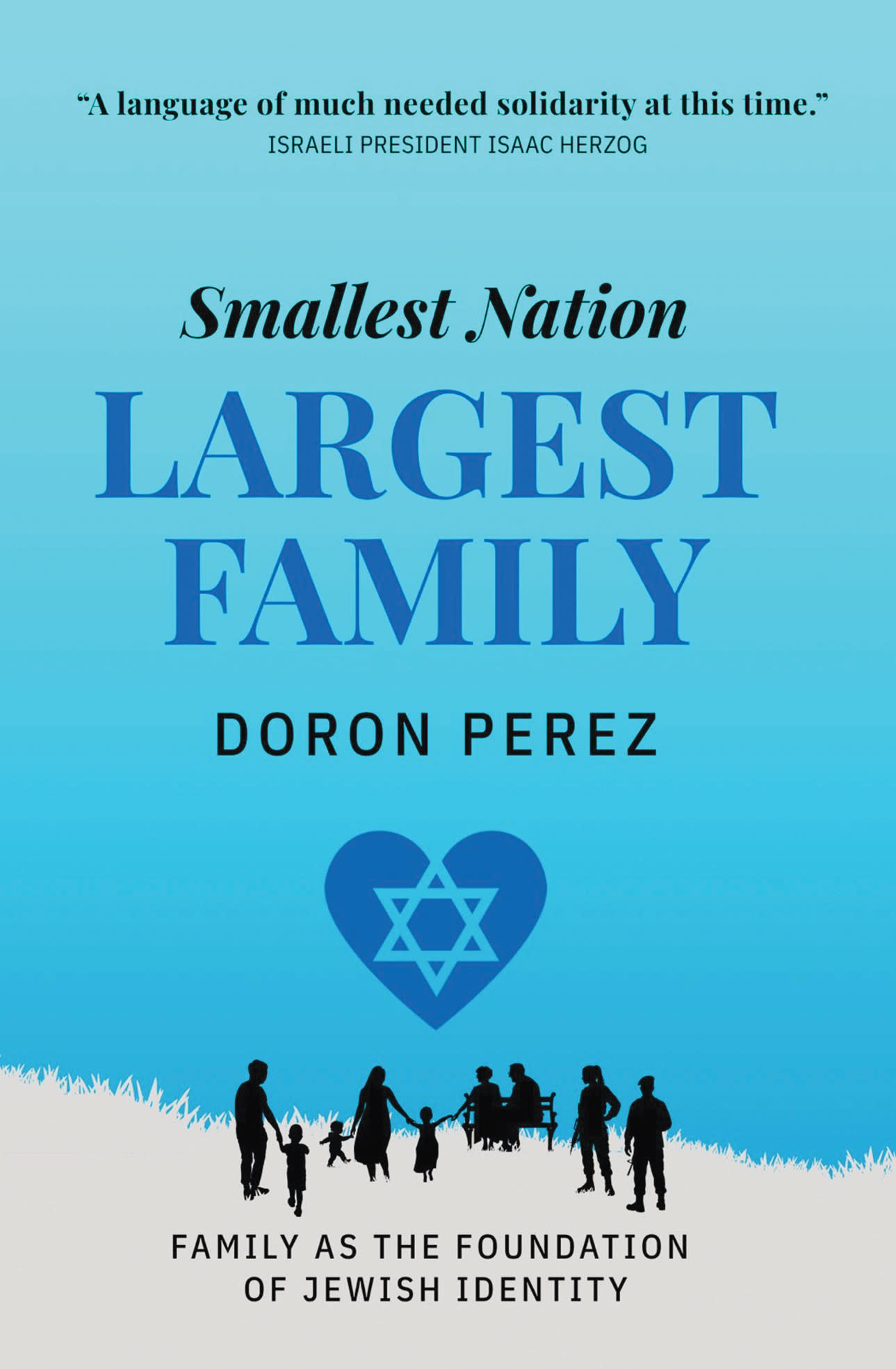
Perez closes the book by recalling Daniel’s second funeral, held after his body was returned, and describing his son’s tank crew as a microcosm of Israeli society. Its members were religious, secular, and traditional Jews, from Ashkenazi, Sephardi, and Yemenite backgrounds, who came together to fight as brothers-in-arms.
“If a tank crew composed of young men from different backgrounds could become brothers,” he writes, “prepared to sacrifice everything for one another and for their people, then surely we, too, can find the strength to preserve and deepen the bonds that unite us.
“Daniel and his crew are part of a heroic generation that has stepped up, fought with extraordinary courage since October 7, and reminded us of the profound sense of kinship we share as an extended family.” – A.R.
KioskNews shows a cleaned-up reading view extracted from the publisher’s page — the original always lives on their site, not ours.