NP View: Brad Bradford offers relief for crime-ridden, high-cost Toronto
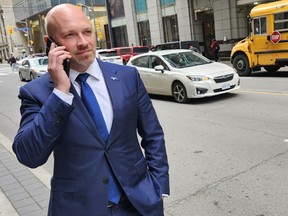
On Monday, Torontonians will have a historic opportunity to unseat Mayor Olivia Chow and send city hall a message that the era of disorder and failed experiments is coming to an end by electing Brad Bradford.
Sign In or Create an Account
A recent Nanos poll found that the top issues for Toronto voters are traffic, housing costs and crime — issues that Chow has failed to address and Bradford is keen on solving.
Tomtom’s annual Traffic Index report found that last year, Torontonians spent 100 hours sitting in traffic, nearly four hours more than in 2024. Part of this is surely due to the city’s fetish for ripping up lanes previously devoted to cars and reserving them for bicycles.

Columnist Jesse Kline keeps you up to date with what’s happening in Israel and the effects of antisemitism on life here in Canada. Friday mornings.
By signing up you consent to receive the above newsletter from Postmedia Network Inc.
A welcome email is on its way. If you don't see it, please check your junk folder.
The next issue of Channel Israel will soon be in your inbox.
We encountered an issue signing you up. Please try again
Most of this work took place before Chow came to power, but she has staunchly opposed the provincial government’s efforts to undo bike lanes and has approved a plan to create 20 kilometres of new lanes, at a cost of $30 million.
Meanwhile, the city’s congestion numbers are likely to be markedly worse in 2026, as city hall has turned stretches of Bathurst and Dufferin streets, both major north-south thoroughfares, into parking lots by reserving a lane in each direction for buses and streetcars.
To get traffic moving, Bradford has proposed a seven-point plan that includes: better event planning; overnight construction work; increasing streetcar travel times by giving them signal priority, installing automated switches and spacing out stops; smarter traffic signals; the replacement of bike lanes on some major arteries with new routes along side streets; automated pothole detection; and new subway safety measures.
In terms of housing starts, Chow has made progress on building government-owned housing units, but has done little to free developers from the myriad of taxes, bylaws and zoning restrictions that prevent private development. According to the CMHC’s latest housing supply report, Toronto “needs to increase annual housing starts by at least 50 per cent over the next decade to restore affordability to pre-pandemic levels,” yet “new construction remains exceptionally weak.”
Bradford, who has a background in urban planning, has promised to eliminate the municipal portion of the land transfer tax on the first $1.1 million of a home’s value, which would represent significant savings for home-buyers. He has also made a commitment to affordable housing, but has pledged to prioritize non-profit housing initiatives over Chow’s big-government solutions and recognizes that city hall’s job to “create the conditions to build.”
Crime has also been a major issue in Toronto since the pandemic, and while the city saw a bit of a reprieve in 2025, police statistics show that the number of crimes committed so far this year has already exceed last year’s total.
Hate crimes, in particular, have become a pressing issue, especially for the city’s Jewish community. Mirroring overall crime stats, the city saw fewer hate crimes in 2025, but a Toronto police report released in May noted that, “So far in 2026, there has been a concerning 40 per cent increase in reported hate crimes, compared to the same time last year.”
The city has been particularly hard hit by violence targeting Jews and Jewish institutions. While Chow has given lip service to community safety, her police department has done little to stem the tide of hate that regularly engulfs city streets, and she has only served to fuel the protesters by perpetuating the lie that Israel’s committing a “genocide” and refusing to participate in a debate about antisemitism.
To tackle the city’s growing crime problem, Bradford has pledged to hire 1,000 new police officers in the next four years, personally oversee the Toronto Police Services Board to provide leadership on hate crimes, place more officers in the subway network and Sankofa (formerly Dundas) Square and help create private-sector youth jobs to keep them off the streets.
Bradford also appears to have a healthy respect for taxpayers’ money and just how unaffordable life has become for many Torontonians. During Chow’s time in office, property taxes have increased every year, including a rate hike of 9.5 per cent in 2024 — the highest since the city was amalgamated in 1998.
And this would likely to get worse, as she has pledged to expand her school food program to provide taxpayer-funded lunches to all students and start a chain of city-run grocery stores so those who are lucky enough to live close to one can get cheaper food, and the rest of Toronto can pay for it.
Bradford, on the other hand, is promising to reduce water bills by 25 per cent, freeze property taxes for a year and limit increases to the rate of inflation thereafter, as well as conduct a “line by line review” of the city’s budget to eliminate waste and find savings.
In deciding who to choose in Monday’s municipal election, voters only need to ask themselves one simple question: has the city gotten better or worse since Olivia Chow came to office in 2023?
For anyone who has sat in the Toronto’s notoriously bad traffic, weaved their way through mazes of homeless encampments and drug-addled zombies or happened upon one of the hateful protests that regularly target the city’s downtown core and Jewish neighbourhoods, the answer should be painfully obvious.
Chow’s tenure has focused on trendy left-wing causes, like scrubbing the names of historical figures from city streets, and expensive socialist projects, such as nationalized grocery stores and taxpayer-funded meals for schoolchildren.
Bradford is offering a saner approach to municipal politics, one that seeks to address the issues that actually affect the lives of real Torontonians.
National Post
Join the Conversation
This website uses cookies to personalize your content (including ads), and allows us to analyze our traffic. Read more about cookies here. By continuing to use our site, you agree to our Terms of Use and Privacy Policy.
KioskNews shows a cleaned-up reading view extracted from the publisher’s page — the original always lives on their site, not ours.