House bill proposes National Commission on Animal Welfare
Make this your preferred source to get more updates from this publisher on Google.
A bill seeking to create a National Commission on Animal Welfare has been filed at the House of Representatives.
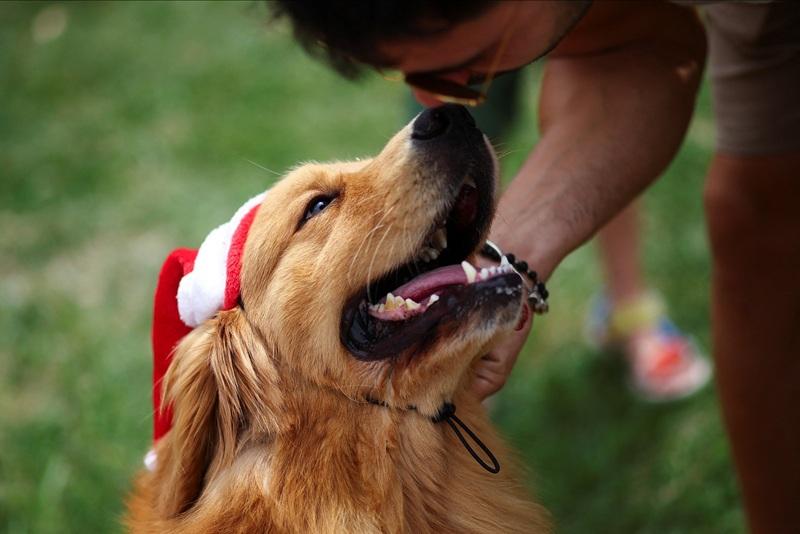
In a report by GMA News’ Bea Pinlac on Tuesday, dogs were seen accompanying Akbayan Partylist Representative Perci Cendaña and animal welfare advocates during the filing of the bill.
House Bill 11495, or the Animal Life Advocacy and Guardianship Act (ALAGA), seeks to amend the Animal Welfare Act of 1998 by creating an independent commission that would enforce animal welfare laws and impose stiffer penalties on violators.
Under the proposed measure, the National Commission on Animal Welfare “shall serve as the national authority over all matters pertaining to animal welfare, including enforcement, licensing, regulation of facilities, and adjudication of violations.”
The commission would have fiscal and administrative autonomy, with its own budget line item under the Department of Agriculture. It would not be subsumed under any existing bureau or office.
The bill also seeks to replace the existing Committee on Animal Welfare with the proposed commission, transferring its members and functions to the new body.
The National Commission on Animal Welfare would be empowered to formulate rules and regulations on the treatment, transport, and use of animals for research. It would also have the authority to register and regulate animal control facilities, pounds, and shelters.
The proposed commission would also have quasi-judicial functions, allowing it to investigate and hear cases involving animal welfare violations.
The bill also proposes stiffer penalties for violators. The current Animal Welfare Act imposes a maximum fine of P5,000 and up to two years in prison, while the proposed measure would impose penalties based on the severity of the offense.
For instance, causing the death of an animal could carry a fine of up to P500,000 and imprisonment of up to one year and six months. Inflicting grave injury on an animal could result in up to one year and six months in prison and a maximum fine of P80,000.
“Sa loob ng mahabang panahon, nakita natin na kulang na kulang talaga ‘yung mga batas natin para pangalagaan at, ultimately, tiyakin ‘yung kagalingan ng ating mga alaga… Dahil dito sa ating panukalang batas, itong ALAGA bill, tinataas ‘yung governance mechanisms at policies pagdating sa pangangalaga ng welfare ng ating mga animal,” Cendaña said.
(For a long time, we have seen that our laws have been inadequate to protect and ultimately ensure the welfare of our animals. Through the ALAGA bill, we are strengthening the governance mechanisms and policies for animal welfare.)
Representatives from the Philippine Animal Welfare Society (PAWS) were also present during the filing.
PAWS Executive Director Anna Cabrera said the existing law already covers various types of animals, from farm livestock to pets, but its implementation has been lacking.
“Kaya lang hindi na-implement is because there is no dedicated commission on animal welfare, na yung na-li-limit lang doon sa rulemaking Committee on Animal Welfare. With the ALAGA bill, there will be a National Commission on Animal Welfare and it has the fiscal mandate, admin, budget to implement, all across,” Cabrera said.
(It was not implemented because there is no dedicated commission on animal welfare, as the Committee on Animal Welfare was limited to rulemaking. With the ALAGA bill, there will be a National Commission on Animal Welfare with the fiscal mandate, administrative authority, and budget to implement, all across.) — Jean Mangaluz/VBL, GMA News
KioskNews shows a cleaned-up reading view extracted from the publisher’s page — the original always lives on their site, not ours.