Three Ontario elections to watch that are not Toronto
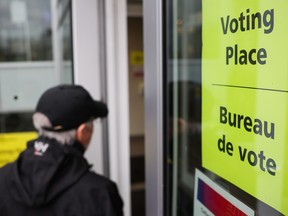
With residents in 444 Ontario cities and towns deciding who will lead them for the next four years, today is Canada’s busiest day in municipal politics.
Sign In or Create an Account
While many municipalities have their niche issues — like the cleanup of former General Motors land in St. Catharines or Mississauga’s Ridgeway Plaza — the topics most important to voters are consistent: taxes, transit, housing, homelessness and local infrastructure.
And like so many urban centres across Canada, public safety is also paramount to deciding whether a candidate’s proposed policies will meaningfully address the issue of rising crime rates and increased public drug use.
Most eyes are sure to be locked on Toronto’s results, but here are three other adjacent races worth watching.
Mississauga
Incumbent Carolyn Parrish and former mayor and Ontario Liberal Party Leader Bonnie Crombie are the central figures in this closely watched contest, but councillor Alvin Tedjo has emerged as a potential spoiler.
Councillor Dipika Damerla is also in the running alongside 10 other candidates on the second-longest ballot outside Toronto.
Parrish, a long-time city councillor and former four-term Liberal MP, is seeking her first full term, having replaced Crombie when she left municipal politics for provincial politics in 2024. Crombie, also a former Liberal MP, failed to win a seat in the 2025 Ontario general election and announced her intention to reclaim the mayoralty.
During a leaders’ debate on Oct. 1 at Food Banks Mississauga’ warehouse, Parrish and Crombie got into a heated back-and-forth, shouting at one another at times and launching personal barbs. Parrish called Crombie a “blonde bombshell,” and Crombie accused her successor of being a mayor who “just sits behind her desk,” the National Observer reported.
“She can be very Trumpian,” Crombie said of Parrish to the outlet. “I took her to task on her comments, but I never resorted to name-calling.”
Parrish reportedly said she may have lost her “cool a bit,” but doesn’t “believe anyone behaved particularly well.”
Things are getting heated at this Mississauga mayoral debate.— Ahmad Elbayoumi (@ahmadelbayoumi) October 2, 2026“Our staff are terrified of the blonde bombshell coming back,” Carolyn Parrish says to Bonnie Crombie.
“Okay ladies, settle down,” replies Dipika Damerla. pic.twitter.com/t5FBOHzCit
Damerla, meanwhile, told the Bramptonist that the debate “felt like it was kindergarten” at times, and Tedjo said bickering “is part of the problem,” City News reported. Both said it showed a need for change in leadership.
Criminal offences in the Mississauga and Brampton area have been on a downward trend since 2023, according to the Peel Regional Police website, but a 2025 annual report shows drug violations were up 14 per cent since the year prior.
The candidates’ approaches vary on police staffing, funding for law enforcement, the use of surveillance technology and the role of mental health and social service workers in responding to drug-related issues.
Crime and public safety (11 per cent) are tied with housing as the most important issue facing the city, according to an Abacus Data poll released last week.
That same poll indicates a three-way race between Crombie (26 per cent), Tedjo (25 per cent), and Parrish (22 per cent), with 16 per cent still undecided.
A Liaison Strategies poll last week, however, finds Crombie leading with 35 per cent among decided and leaning voters, followed by Tedjo (31 per cent) and Parrish (28 per cent). Damerla is a distant fourth in both.
Ottawa
The nation’s capital also has 14 people on the mayoral ballot, among them incumbent mayor Mark Sutcliffe and his main challenger, longtime progressive councillor Jeff Leiper.
Two other candidates likely to pinch votes from either include Neil Saravanamuttoo, an economist and regular critic of City Hall, and homebuilder Alex Lawson, a political outsider vowing top-down reforms.
“I think it’s important for the people of Ottawa to understand the ideology behind some of the candidates who are running for mayor,” Sutcliffe said earlier this month, per the Ottawa Citizen.
“It’s a competition of ideas. It’s a competition of agendas.”
In July, Sutcliffe stood by fundraising and endorsement emails from two former Ontario politicians — former MPP and provincial cabinet minister Madeleine Meilleur and former MPP, MP and cabinet minister John Baird — that framed his opponents as radicals, CBC reported.
Meilleur said Leiper and Lawson represent the “ideological extremes of the political spectrum,” while Baird’s labelled the former as a “hard left, ideological and out of touch candidate.”
In response, Lawson called it “petty name-calling,” and Leiper argued, “malicious American-style politics has no place in our municipal politics.”

Ottawa has not elected a leftist candidate as mayor since Marion Dewar in 1978, the Citizen reported.
Citywide crime as of Aug. 17 is up eight per cent over the same period last year, according to the Citizen. Sexual violations are up 24 per cent, assaults are up five per cent, instances of violent crime grew four per cent and property crime inched up six per cent.
“The increase in the vulnerable population is overwhelming the social agencies that manage them. People aren’t feeling as safe as they used to with some of the social disorder and the open drug use and whatnot,” Ottawa Police Service Chief Eric Stubbs told the Citizen late last year.
All the candidates’ platforms differ in how they balance police staffing and budgeting, enforcement and response to drug addiction and mental health crises.
Sutcliffe, first elected in 2022, has been the frontrunner since the get-go, but recent polling suggests his lead over Leiper has slipped to single digits. An Oct. 19 Quorus Consulting Group poll put him at 28 per cent among all respondents, Leiper at 24 per cent, Saravanamuttoo at seven per cent and Lawson at four per cent.
Hamilton
Incumbent Andrea Horwath, the former Ontario NDP leader, faces 12 challengers, including former chamber of commerce president Keanin Loomis and councillor and businessman Rob Cooper, who have arisen as her chief opponents. Horwath won the election in 2022 by defeating Loomis.
One expert described the campaign as “fairly negative” to CBC, with candidates focusing on Hamilton’s problems without offering a vision of how to solve them.
The negativity was evident during a disorderly debate earlier this month that included allegations of Donald Trump-style politics, religious discrimination and candidate citizenship, the Hamilton Spectator reported of the occasionally raucous event featuring 12 of the 13 candidates.
Horwath went after her primary challengers, labelling Cooper a “hatchet man” and Loomis a “nowhere man.” They countered that Horwath was spending too much without delivering the necessary public services.
Cooper, an avowed Christian, was challenged on his abortion stance and forced to defend his faith, while Loomis, who moved to Hamilton from Washington, D.C., in 2009, had to pull out his Canadian passport when facing questions about his American roots.

The debate also featured an informal vote against the participation of candidate Paul Fromm, a self-described white nationalist.
Statistics Canada data released in July shows that crime rates in Hamilton over the past five have consistently stayed below provincial and national averages, but Hamilton Police Service Chief Frank Bergen said there’s a gap between the numbers and how people say they feel.
“We can statistically tell you that the crime severity index in the city is going in the right direction, but the perception of safety is not there,” he said in November, per CBC.
Cooper and Loomis have put forth different strategies to deal with the spike in downtown incidents, the Spectator reported, while Horwath wants to create a new police substation incorporating other services.
Polling conducted by Clear Impact Strategy in July put Loomis in the lead with 38 per cent among decided voter, followed by Horwath (24 per cent) and Cooper (22 per cent.)
Our website is the place for the latest breaking news, exclusive scoops, longreads and provocative commentary. Please bookmark nationalpost.com and sign up for our newsletters here.
Join the Conversation
This website uses cookies to personalize your content (including ads), and allows us to analyze our traffic. Read more about cookies here. By continuing to use our site, you agree to our Terms of Use and Privacy Policy.
KioskNews shows a cleaned-up reading view extracted from the publisher’s page — the original always lives on their site, not ours.