Jason Yeoh on two decades in Malaysian food TV, why he’s not afraid of losing tradition and his new series, ‘Axian’s Local Eats’
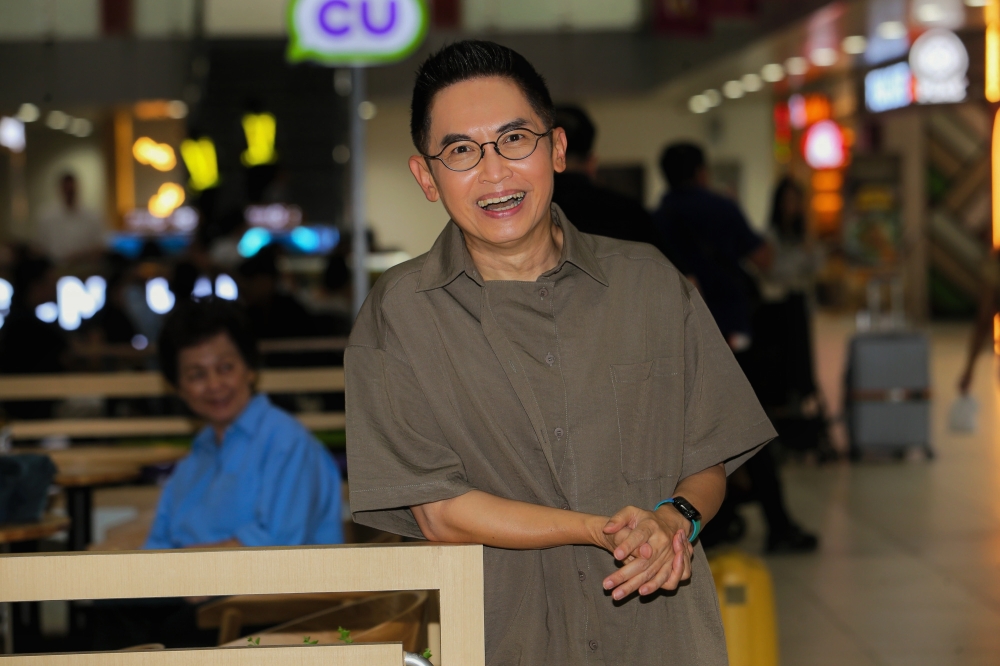
KUALA LUMPUR, Aug 30 — Long before the age of content creators, AI-generated scripts and “influencer voice,” there was the food television boom.
The turn of the century was the golden age of food and travel programming on TV: Andrew Zimmern, Bobby Chinn and David Rocco took viewers to the far reaches of the globe — though I always got a tickle watching them exoticise food from our part of the world — and then, of course, there was the man himself: the very face of food and travel TV, often imitated but rarely replicated, Anthony Bourdain.
In Malaysia, we had our answer in Jason Yeoh, better known as Axian.
Since 2000, he’s hosted numerous shows for both Astro and later, the Asian Food Channel, but it was Taste with Jason that made him a household name, especially in the Mandarin-speaking world.
But Yeoh didn’t set out to become the face of anything.
In 1996, he was a radio deejay in Sarawak, moonlighting on air while studying telecommunications engineering; three years later, he was in Kuala Lumpur on NTV7’s Mandarin news desk, working his way up from journalist to assistant producer, but nowhere near the front of the camera.
However, he tells me food was always in the picture.
Not quite the main event, but as an ever-present part of his life — growing up in Penang, his mother sold curry mee, his grandfather ran the canteen at a school, and Yeoh himself worked in the kitchen at Penang Turf Club through secondary school.
“I never thought I would be hosting a food show,” he said.
“At the time, nobody grew up wanting to be a food host. It wasn’t even a thing.”
We were sitting in a cafe at Sultan Abdul Aziz Shah Airport, Subang, an hour before his flight to Penang.
He’d spent the past week filming in KL with his mother, who was flying back with him, before he left for China to film a new series.
Several people had already recognised him by then — most just waved from a distance, one even tripped over himself doing it — but just then, two men politely interrupted to ask for a picture.
“So sorry to disturb, but are you Jason?” the taller one asked.
“Yes!” Yeoh said, nodding.
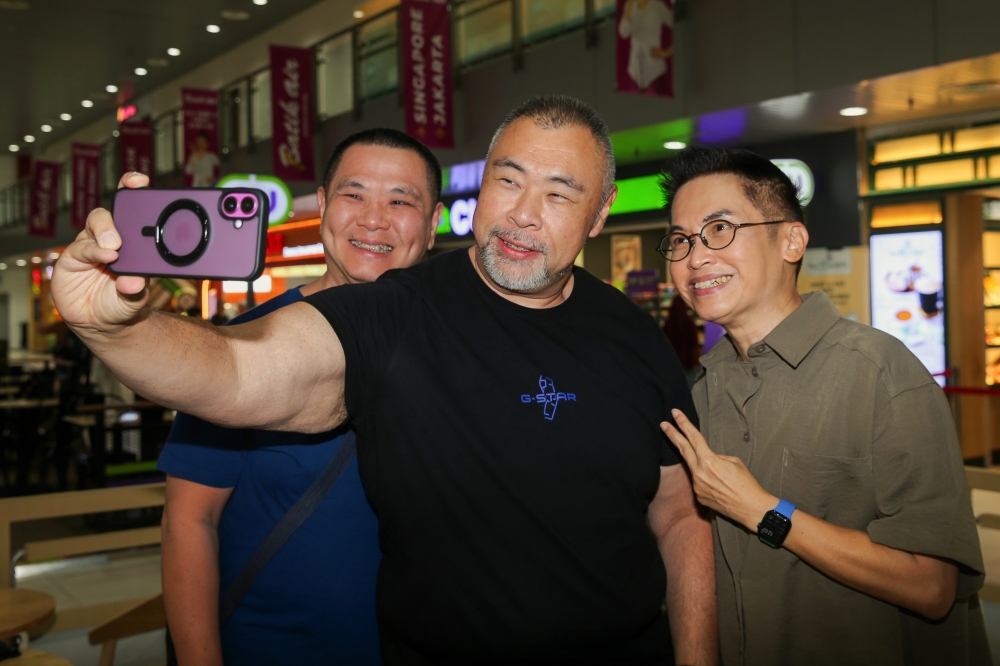
Yeoh’s shows have made him a household name both in and outside Malaysia, as these two fans from Hong Kong demonstrated. — Picture by Choo Choy May
“Oh, my goodness, we’re big fans! We’re from Hong Kong but came to Malaysia just to try all the food, and we especially loved Penang!” the man gushed.
“Thank you so much for your show on the Asian Food Channel. Can we have a picture?”
Yeoh happily obliged, and then they switched to Cantonese, talking about how much his show had made them want to visit Malaysia, and their love of durians.
Although he never pictured ending up where he is today, Yeoh believes his inclination towards food is intrinsic.
“I think it’s my ‘factory setting’. I didn’t go to culinary school or aspire to become a chef,” he explained.
“But growing up in a Peranakan household, our kitchen was bigger than our living area. I was slaughtering chickens and pounding sambal belacan while my classmates couldn’t even clean bean sprouts.”
Those same classmates pointed out Yeoh’s knack for storytelling from a young age, even while he considered his older brother to be the natural talker in the family, not himself.
The knack for storytelling, coupled with his “factory setting” desire to work with food, was what eventually drew him toward food television.
But what he wanted to make wasn’t quite what food TV already liked.
“Everybody was making food review guides, focusing on the opinion of the host. I didn’t want to only do that.”
To Yeoh, whether a dish was good or bad was maybe only a fifth of the story worth telling.
The rest — the why behind it, the community or family it came from — was the part he was truly interested in filming.
“It’s food anthropology. I’m curious about the evolution, origin and nature of entire cuisines.”
Through it, Yeoh explores what he calls people “speaking different food languages”, and more often than not, drawing the line from one language to another.
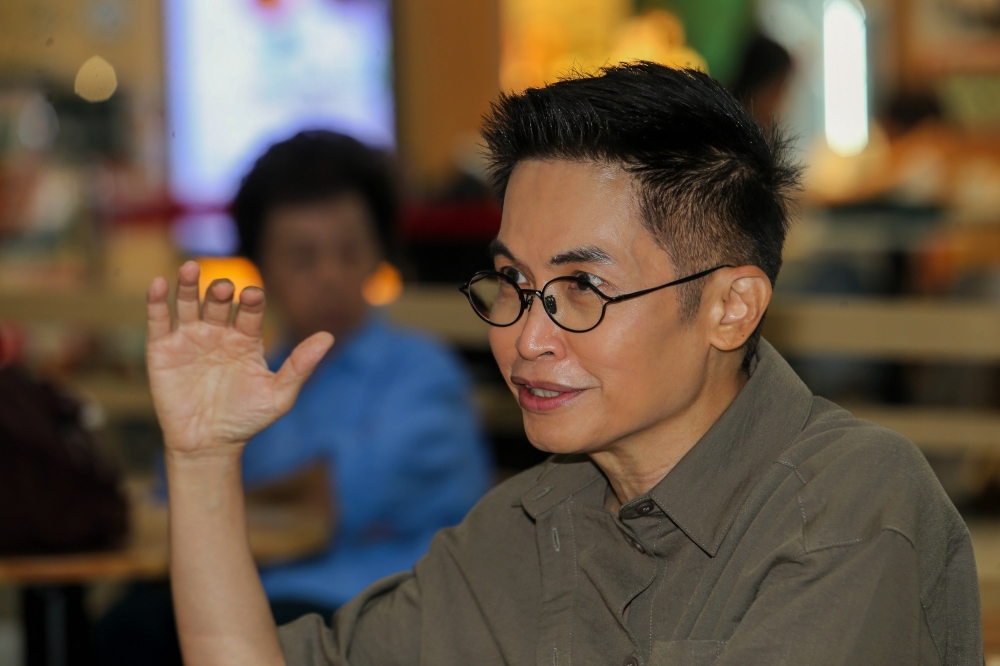
For Yeoh, starting some form of formal documentation process for Malaysian heritage food is important to pass down said heritage. — Picture by Choo Choy May
Yeoh, 53, has filmed more than 30 shows since 2000, but Taste with Jason — released in 2005 and ran for 10 seasons — remains the one most people associate with him.
His newest series, Axian’s Local Eats, is a retrospective that sees him revisit restaurants and people previously featured on his shows.
If there’s a single idea Yeoh keeps returning to over 20 years, it’s the loss of tradition in food.
But to him, it isn’t automatically a tragedy.
“Tradition is constantly being lost, but it doesn’t mean it’s a bad thing,” he said.
“You gain a new way of doing things when tradition is lost. You can’t pick up something new until you let go of what’s already in your hand, you know?”
He points to what happened to kopitiam-style chain restaurants after the pandemic as a case in point.
Advances in food preservation and production technology extended shelf life in ways that made rapid franchise expansion possible in a way it simply wasn’t before — a business that started in KL could suddenly open in Penang within months, not years.
The boundaries that once separated regional food scenes have, in his view, largely dissolved.
Whether that’s for better or worse, Yeoh can’t say — not yet.
“There’s no way to say whether it’s a good or bad thing,” he said.
“We might only know in 10 years whether this was good or bad. We need that hindsight.”
“But whether it’s good or bad isn’t important. What matters is that food continues to evolve.”
It’s something he traces back further than the last few years.
Peranakan cuisine itself, he points out, only exists because earlier generations were willing to let their food change.
“Imagine if the early Chinese were all sticklers for tradition and refused to evolve, we’d never get Nyonya cuisine,” he said.
“The essence of a thriving food culture is constant change.”
For all his ease with change, there’s one thing Yeoh says hasn’t shifted in all his years of doing this: Malaysia still has no formal record of its own food history.
He cites an example of a kway chap maker in Penang who used to sun-dry the rice noodles for texture.
When he revisited them recently, he found they now use a commercial oven.
He feels the younger generation will miss out on tasting, or even knowing how these foods were traditionally prepared.
“If we are serious about passing down our local food heritage, the Malaysian government needs to include food education in the syllabus,” he said.
“The process of formally documenting Malaysian food will also benefit our tourism, as they’ve done in Singapore.”
“I am forced to say, I’ve had to use sources from Singapore when doing research for the show,” he admits.
“They’ve done a great job with their library. I don’t know if we’ve even started.”
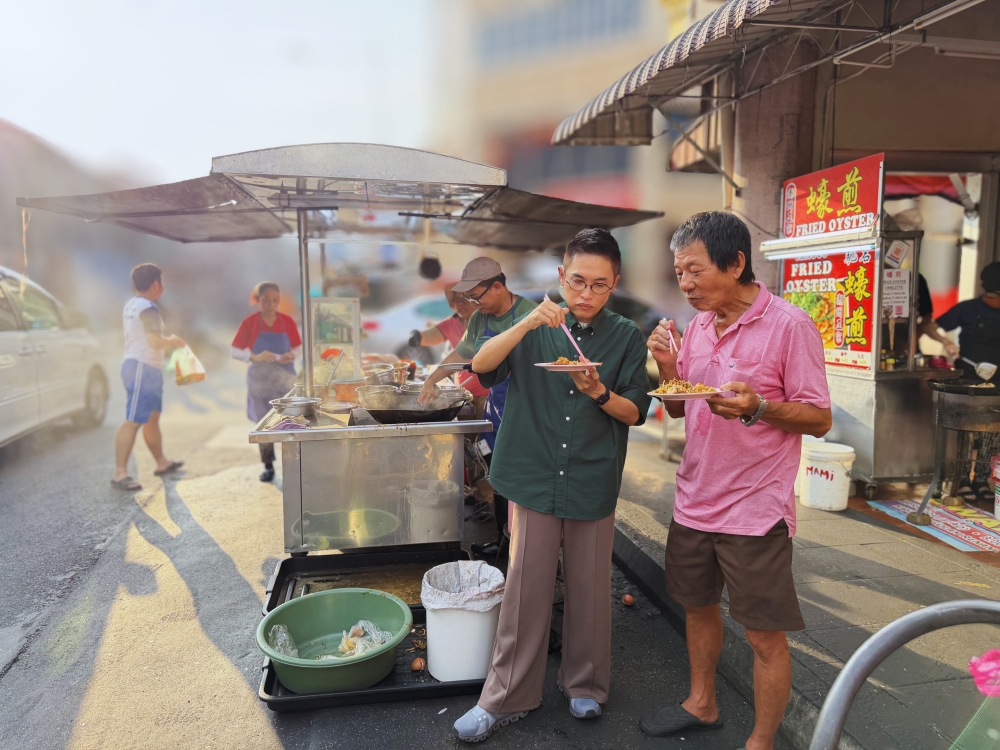
Jason Yeoh’s new series, ‘Axian’s Local Eats’, is a 20-year retrospective that takes him back to many restaurants and families that he’s featured on his shows before. —Picture courtesy of Jason Yeoh
More than a decade ago, he says, the Ministry of Tourism, Arts and Culture approached him about building something like this.
“But after one election cycle, it all went away completely.”
“If you ask me what hasn’t changed in 20 years of doing this show,” he said, “It’s this.”
The lack of importance placed on history doesn’t happen purely on an institutional level. It’s individual too.
“The general public doesn’t really value history; but I believe that each family’s history is incredibly important,” he said.
“A lot of families who we’ve featured on the show 10, 20 years ago, come looking for us after their grandparents pass away.
“They tell us about how their grandparents would play their DVD of the show every day, and now they’ve lost the DVD and are hoping we can help. Most of the time, we can’t do much.”
It isn’t always a clean story of appreciation.
Often, he says, the pride comes only after the fact — once the cameras, and the attention that follows them, have already done the work of convincing a family their business was worth keeping.
“A lot of second- and third-generation in the family weren’t proud of their family business. They had no intention of taking over. When the tourists start showing up after our show is broadcast, then they start to feel pride in the business. Then there’s interest, and sometimes, there are disputes over the business.
“Our culture is like that. When there’s money involved, only then there’s something to be proud of. On one hand, I’m touched, but I’m not sure if it’s something to be proud of.”
For Yeoh, that complication doesn’t undo the larger point.
“If we aren’t proud of our hawker culture, we’ll never be able to continue to develop our food culture. We have to be proud of ourselves — proud of being Malaysian, proud of being anything, being yourself. Only then can we carry on.”
What makes him happiest, 20 years in, isn’t the recognition.
It’s seeing people from entirely different backgrounds tell him how much they love the show — proof, to him, that the pull toward food doesn’t care where you’re from.
Food brings people together. It’s a way of understanding people deeply, he says, in a way little else manages.
I ask him why he’s still doing this, and the answer has nothing to do with fame, and not much to do with money either.
“The inner happiness this gives me, nothing else comes close. It makes me feel that this one life is enough.”
You’ll never be bored, he says. It’s enough, on its own, to make him content.
Axian’s Local Eats premieres September 5 on Astro AEC and Astro GO.
Instagram: @axian.my
* Follow us on Instagram @eatdrinkmm for more food gems.
* Follow Ethan Lau on Instagram @eatenlau for more in-depth conversations.
KioskNews shows a cleaned-up reading view extracted from the publisher’s page — the original always lives on their site, not ours.