‘Progress takes time’: Stonewall CEO on turning down the heat on the trans debate

Transgender people fear social acceptance is going into reverse and some are retreating from public spaces, according to the first major analysis since last year’s supreme court ruling in the UK on the definition of a woman.
The Stonewall survey finds that while almost half of British LGBTQ+ people feel more accepted by society than a decade ago, 58% of trans+ people – and 75% of trans women – feel less so. Almost half of trans+ people now avoid certain bars and restaurants where they do not feel safe, 37% avoid single-sex spaces such as toilets and changing rooms, and 29% avoid exercise classes or sports teams. A striking 80% are pessimistic about the future of equality, in stark contrast to the net hope expressed when the same question was asked in 2017.
Last year’s ruling that sex in law means biological sex was a landmark moment for gender-critical campaigners, who had argued that trans access to single-sex spaces from changing rooms to prisons was endangering women, and who saw the verdict as a relief and vindication. But it has had significant consequences for trans lives, said Stonewall’s chief executive, Simon Blake, citing warnings that trans people may avoid going to hospital under new NHS guidance that they should use wards matching their birth sex.
“If you feel as though there’s guidance which is impacting on your ability to participate in public life, to get treatment when you’re unwell, to be able to use the toilets which you have been using successfully for 10 years at work, when it feels as though your rights are secondary rather than equal – that’s going to make you feel incredibly pessimistic,” Blake told the Guardian.
Recently, he said, he had been out with friends for a drink. “They were frightened about going to the toilet – each time that someone went to the toilet, it was a question mark. That’s not the way anybody should be expected to live.” He is calling on government to monitor the ruling’s impact and act on any harms revealed.
The survey, to be published on Monday, also found 22% of LGB and 32% of trans respondents reported having attempted suicide at some point in their lives.
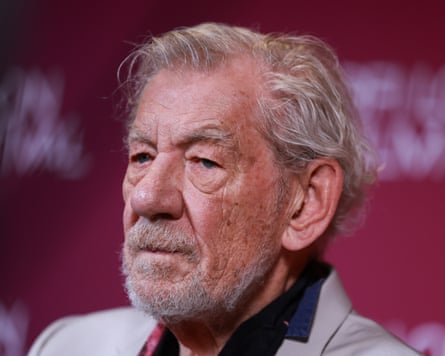
“What so often people who have often experienced suicidal ideation say is ‘I don’t want to be dead, I just don’t want this any longer,’” said Blake. “I had three people over the weekend say we are very, very close to leaving this country – friends, colleagues (feeling) that this is a hostile country to be in.”
Gender-critical campaigners, however, consider the ruling not as a rollback but as a clarification of what the Equality Act always meant. They argue it has restored women’s ability to have single-sex toilets, changing rooms, wards and sports without having to justify each exclusion case by case, and that uncertainty for trans people about their current position partly reflects organisations, including Stonewall, having previously claimed the law said something it did not.
Stonewall was not, Blake stressed, aiming to overturn the supreme court ruling. “We understand that this is the law. But we also want to ensure that trans people are protected and, along with other organisations, we are looking at what that would look like.”
Discriminating against trans people on the grounds of gender reassignment remains illegal, he noted, and the supreme court judges argued their ruling should not be seen as one side in a bitter culture war triumphing over the other. “It’s on government and our watchdogs and everybody with responsibility to understand the impact, and where there is a negative impact to take action.”
If this approach seems unduly meek to some, Blake has reason to tread carefully. A former Stonewall trustee who cut his teeth on successful campaigns for equal marriage and the age of consent, he returned in 2024 to an organisation in crisis. Institutions from Whitehall departments to the BBC had quit its workplace diversity scheme – a key source of income – amid controversy over Stonewall’s tactics and the quality of its legal advice.
To rebuild public trust, Blake sought inspiration from Stonewall’s less combative early years, getting veterans such as the actor Ian McKellen – who co-founded Stonewall in 1989 – to talk to staff about winning hearts and minds in a hostile era. “Progress takes time. You’ve got to coalesce, to convene, sometimes you’ve got to be pragmatic,” he said of the new strategy.
“Our first value was about having the courage to do what we think is in the best interest of the LGBTQ+ community and sometimes that will mean absolutely pushing really, really quickly, and sometimes it might be understanding that there is a first step.” If the goal is now to air genuine disagreements without vitriol and agree on a way forward, that’s exactly what Stonewall managed to do in the past: “We were having the same conversations around equal marriage, the age of consent.”
For 52-year-old Blake, growing up gay in the 1990s was a “terrifying” experience. “When I came out to my parents their first thought was ‘Christ he won’t be alive for very much longer’, because of HIV.”
That was arguably the easy part. “In your formative years, when you’re learning to love yourself, every single day somebody or something is telling you either through explicit words or through silence that you’re not good enough; that you’re a danger to children; that you shouldn’t be allowed to teach … it’s just confusing. The (feeling of), ‘I’m a nice person, I don’t understand why you’d want to be frightened of me, what am I missing?’ – that sadly, despite the progress, is still happening.”
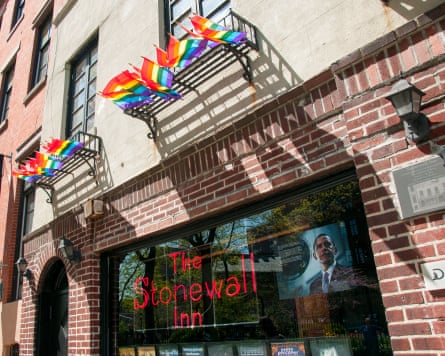
That the ban on conversion practices currently under parliamentary scrutiny is trans-inclusive matters to him personally because “it’s saying you don’t need to be changed, you’re good enough”, something he needed to hear as a teenager.
Blake credits Stonewall with transforming his life as a gay man. So why does he think its trans advocacy ended in so many feeling worse off?
“People knew less around trans issues and non-binary issues a decade ago, and it wasn’t part of a culture war which had been played out for a long period of time, people’s lives being talked about as if they’re abstract rather than they are lived,” Blake said, arguing that made trans people feel dehumanised.
Was the defensive “no debate” position some activists then took, refusing even to acknowledge any conflict between trans rights and women’s rights, counter-productive? “What I recall that period to be was saying that there is a reality which is that trans people exist and that actually trans people should be around the table having the conversation, and that when trans people went around the table in some of those conversations it felt really difficult and therefore (they) didn’t feel able to participate … everybody needs to be able to have questions, we need to be able to have discussion, but we do have to find ways to do that without heat.”
If that seems a forlorn hope in a climate where Reform-led councils are taking down rainbow flags and scrapping diversity training, Blake chooses to focus on the trade unions who rode to the financial rescue after Durham county council defunded their local Pride event.
“What you keep on seeing is most people – what I like to call the moral majority – saying ‘we just want to get on, we just want to live our lives, and for other people to be able to do so’.” But it’s precisely that ability to live ordinary lives that, according to his research, some trans people feel is slipping away.
KioskNews shows a cleaned-up reading view extracted from the publisher’s page — the original always lives on their site, not ours.