Death of former PM Yasuo Fukuda leaves void in fraught China-Japan relations
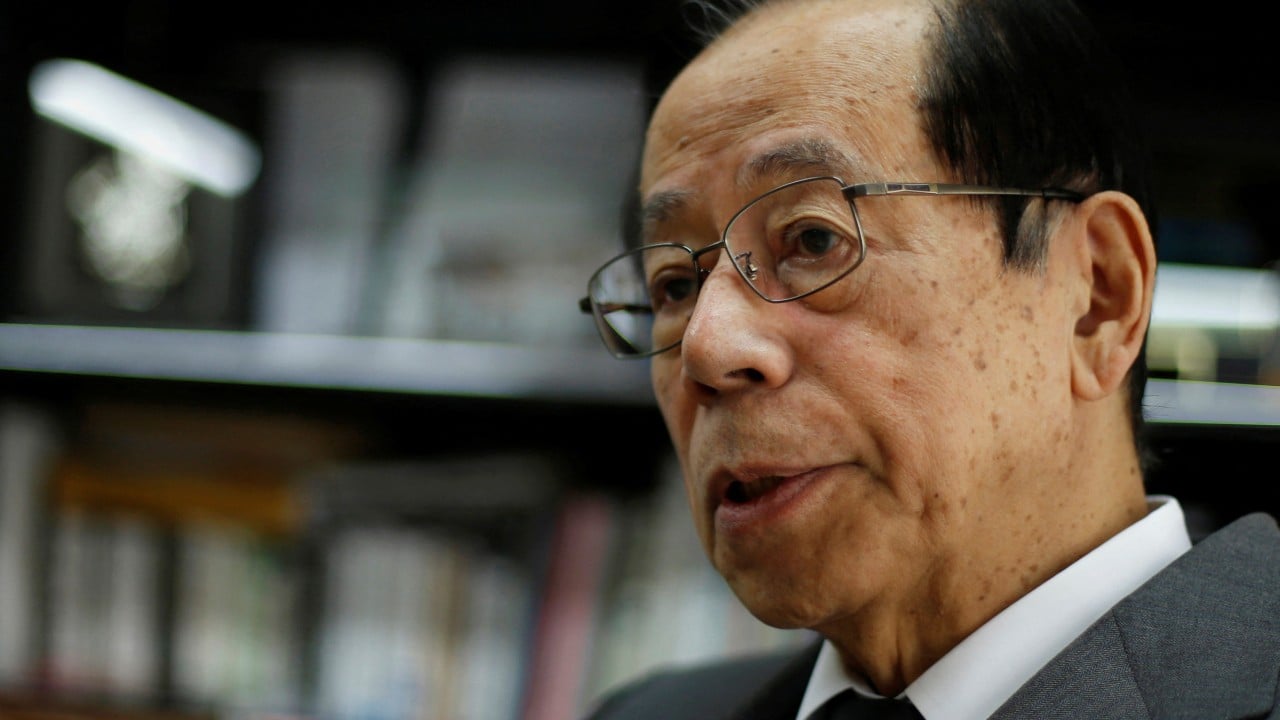
Former Japanese prime minister Yasuo Fukuda, who championed closer ties with China during his brief tenure and later served as a crucial diplomatic intermediary during bilateral crises, has died at the age of 90.
Fukuda died of heart failure on Thursday at a Tokyo hospital, Japanese media reported on Monday. His passing came as the relationship he spent decades nurturing faces its gravest test since diplomatic normalisation in 1972.
Chinese foreign ministry spokesperson Guo Jiakun offered condolences on Monday, praising Fukuda as someone who “made positive contributions to improving and developing China-Japan relations” and “held a correct view of history during his tenure”.
Guo said Fukuda’s words “carried great weight”, reflecting the credibility and responsibility of Japan’s statesmen of the older generation.
In a swipe at Japanese Prime Minister Sanae Takaichi, he added: “Those running the Japanese government should look inward and do serious soul-searching.”
04:47
Why have Takaichi’s Taiwan comments sent China-Japan ties into a tailspin?
Guo’s comments laid bare how far bilateral relations have deteriorated since Fukuda’s era. Ties have been strained since November last year, when Takaichi suggested that a conflict in the Taiwan Strait might prompt Japan’s military intervention.
Wang Guangtao, deputy director of the Centre for Japanese Studies at Fudan University, who met Fukuda in person, described him as “modest and gentle” despite his political pedigree – his father, Takeo Fukuda, served as Japan’s prime minister from 1976 to 1978 – and credited him with playing an important role in bilateral ties at both official and unofficial levels.
Wang called Fukuda’s death a loss that could not easily be replaced, warning that Tokyo now lacked figures with comparable credibility in Beijing.
“We’ve witnessed a succession of Japanese statesmen who championed bilateral friendship pass away in recent years, when bilateral relations have entered an exceptionally challenging phase,” he said.
Wang said Fukuda’s unique value was his credibility in Beijing that few Japanese politicians could claim, earned through consistent engagement and a willingness to acknowledge historical facts.
Finding another noteworthy politician to be trusted by Beijing like Fukuda would be “extremely difficult”, he added.
Wang attributed that to Japan’s domestic political environment, saying domestic pressures had made engagement with China politically dangerous.
“Any gestures of goodwill towards Beijing risk being portrayed as weakness at home,” he said. “This atmosphere intimidates politicians who wish to seek rapprochement.”
Fukuda served as Japan’s 91st prime minister from September 2007 to September 2008, inheriting a bilateral relationship badly damaged by leader Junichiro Koizumi’s repeated visits to Yasukuni Shrine, which honours Class-A war criminals alongside Japan’s 2.5 million war dead, between 2001 and 2006.
In December 2007, Fukuda made an official visit to Beijing, delivering a speech at Peking University that emphasised historical reflection and cooperation.
Chinese state media hailed the trip as a “warm spring”, and Fukuda kept his commitment of never visiting Yasukuni Shrine.
Arguably, Fukuda’s most consequential work came after he left office. When Japan in 2012 nationalised three of the disputed Diaoyu Islands, which Japan calls the Senkaku Islands, Beijing cut high-level contact with Tokyo.
In July 2014, Fukuda made a secret trip to Beijing and met with Chinese leader Xi Jinping.
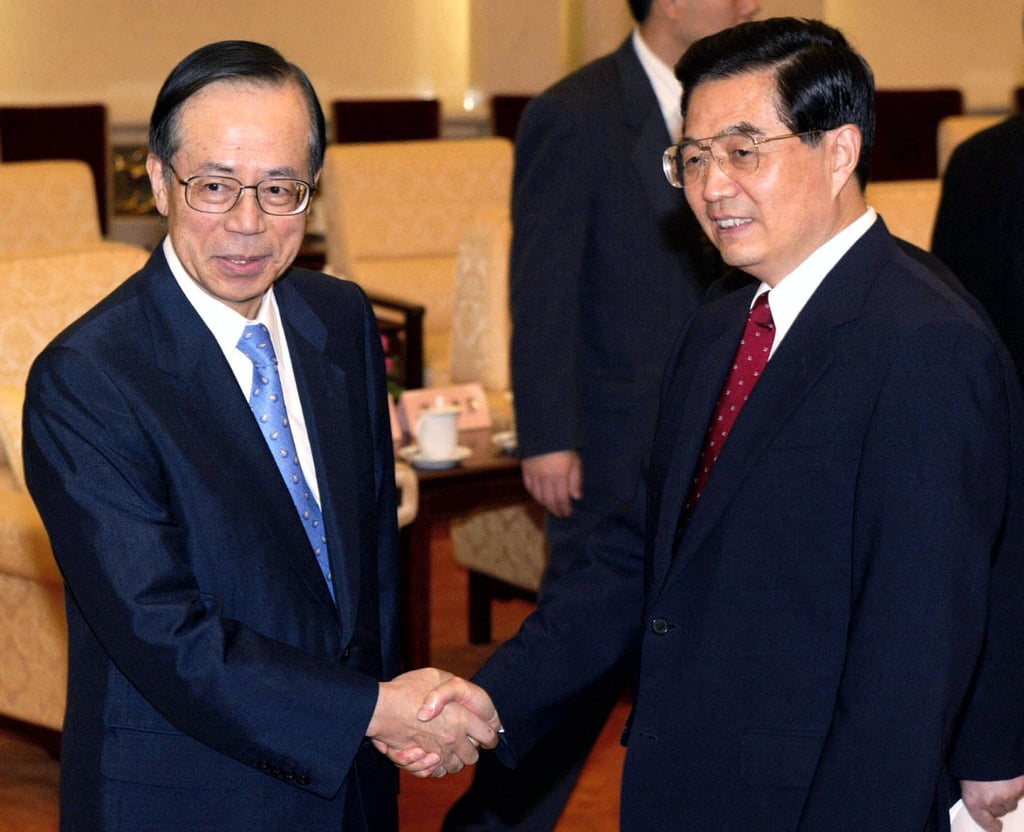
Fukuda’s commitment to China-Japan relations was deeply personal.
In 1978, when the Treaty of Peace and Friendship was signed, Yasuo Fukuda served as his father’s political secretary, witnessing first-hand how Takeo Fukuda and then Chinese vice-premier Deng Xiaoping advanced bilateral ties in the negotiations leading up to the ratification ceremony.
Thirty years later, in May 2008, when Fukuda hosted then-Chinese president Hu Jintao for a state visit to Japan, the two leaders signed a document pledging to develop a “mutually beneficial relationship based on common strategic interests”.
The joint statement signed by Hu and Fukuda, alongside the 1972 Joint Communique normalising bilateral ties, the 1978 Treaty of Peace and Friendship, and the 1998 Joint Declaration emphasising future-oriented cooperation, formed the bedrock of modern China-Japan relations.
The 1972 joint communique stated that Japan “fully understands and respects” Beijing’s position that Taiwan is an inalienable part of the territory of the People’s Republic of China, while the 1998 joint declaration reaffirmed Japan’s 1972 stance, reiterating that there is one China.
Beijing sees Taiwan as part of China to be reunited by force if necessary. Most countries, including the United States and Japan, do not recognise Taiwan as an independent state, but Washington is opposed to any attempt to take the self-ruled island by force and is committed to supplying it with weapons.
Throughout his post-premiership years, Fukuda repeatedly stressed that the jointly signed documents represented commitments that must be kept in mind and warned against backtracking on their principles.
This approach to bilateral ties was built on the vision proposed by Abe, Fukuda’s predecessor. Abe’s abrupt resignation in 2007 left Fukuda to complete the task of cementing the relationship.
After leaving politics in 2012, Fukuda led several delegations to China, with his last visit taking place in 2024.
From 2010 to 2018, Fukuda served as chairman of the Boao Forum for Asia, widely referred to as the ‘Asian Davos’, promoting building consensus and cooperation in the region.
In 2018, he toured the museum in Nanjing commemorating the victims of the Nanking massacre.
Fukuda publicly stated that Japan’s diplomacy must properly handle historical issues, a flashpoint in Sino-Japanese relations, otherwise it would be isolated in the international community.
KioskNews shows a cleaned-up reading view extracted from the publisher’s page — the original always lives on their site, not ours.