Commentary: India and Pakistan’s water treaty was active for more than six decades – can it survive current tensions?
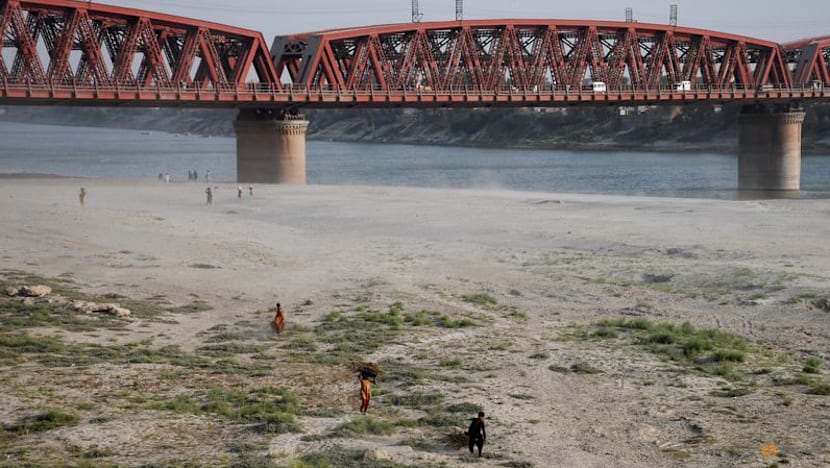
The Court of Arbitration says that the Indus Waters Treaty is still in force, but the big question is whether India will comply with the latest ruling, says Amit Ranjan from the NUS Institute of South Asian Studies.
New: You can now listen to articles.

This audio is generated by an AI tool.

15 Sep 2026 06:00AM
SINGAPORE: Despite wars and tensions, the Indus Waters Treaty, which governs water-sharing among six rivers between India and Pakistan, was active for more than six decades.
But India has held the treaty in “abeyance” since April 2025, when 26 tourists were killed in the terror attack in Pahalgam in Jammu and Kashmir. The Court of Arbitration in its Aug 31 ruling, said that this decision was “not permissible under the Treaty or other applicable rules of international law”.
The Court of Arbitration was set up in 2022, despite India’s objections, to hear the differences and disputes over the Kishanganga and Ratle Hydroelectric Plants under the treaty. In the same ruling, the court also issued an order to stop work on part of a dam wall in the 850-megawatt Ratle project on the Chenab River, which flows from India into Pakistan. The restrictions will remain in place for 90 days after a neutral expert makes a final decision whether the design of the Ratle plant is in line with the treaty. The decision is expected by July 2027.
As the court ruled that the Indus Waters Treaty remains fully in force and that India remains bound by and must observe its obligations under the treaty, a big question is whether India will comply.
THE HAGUE CANNOT COMPEL COMPLIANCE
India has stayed away from proceedings since the Court of Arbitration was established.
New Delhi immediately rejected the latest August ruling as it had done with court decisions issued since 2023, when the court unanimously held that it had jurisdiction to hear Pakistan’s case on the Indus Waters Treaty. A party's non-participation in the arbitration process does not stop the tribunal from proceeding with its work if it satisfies that the matter falls within its jurisdiction.
Earlier in May, the court had ruled on India’s maximum pondage. This refers to the storage capacity of the reservoir behind a dam and affects how a hydroelectric plant stores and releases water. India rejected this ruling as well.
For India, the court is illegitimate and has “no jurisdiction whatsoever to pronounce on India’s sovereign decisions”.
What then does the Aug 31 Hague ruling achieve? The Court of Arbitration cannot compel a state to participate in its proceedings or comply with its order. But its ruling may strengthen the other party’s effort to seek diplomatic support on the matter.
One way to understand this is through parallels with the 2016 South China Sea arbitration decision. China raised questions about the “legitimacy” and “jurisdiction” of the Arbitral Tribunal at the Hague, which ruled that its claim over the South China Sea based on the “nine-dash line” is inconsistent with the United Nations Convention on the Law of the Sea.
China did not participate in the court's proceedings and continues not to recognise the decision. However, the Philippines has used the ruling to seek support from like-minded countries.
INFRASTRUCTURE WORK HAS ACCELERATED
So, if the Hague cannot compel India to comply, what can India actually do to water from the transboundary rivers?
A growing population in the Indus basin requires more water for industrial activities, hydroelectric power generation, agricultural activities, and domestic consumption, thereby increasing demand. The water situation has been compounded by the impact of climate change in the region.
Since holding the treaty in abeyance, India has accelerated work on various projects on the transboundary rivers.
For example, work on hydropower projects such as Kiru, Kwar and Sawalkot which involve building dams on the Chenab River are making progress. India has recently built its first rock check dam on the Indus River at Upshi, raising the water level by about 3m and storing 40 million litres of water for irrigation.
Under the treaty, waters from the Western Rivers (Indus, Jhelum and Chenab) are allocated for Pakistan’s unrestricted use. India is allowed some restricted uses, which include agriculture and the generation of hydroelectric power.
While India sees these projects as developing infrastructure to use its full share of water, Pakistan fears that these may affect water flow in the lower basin region.
Indeed, Pakistan had previously challenged infrastructure designs in the upper basin region of the Western rivers under the treaty. On the Ratle and Kishanganga hydroelectric plants, after 2022, India had engaged by attending the neutral experts’ meetings. But this has stopped since it unilaterally suspended the treaty in April 2025.
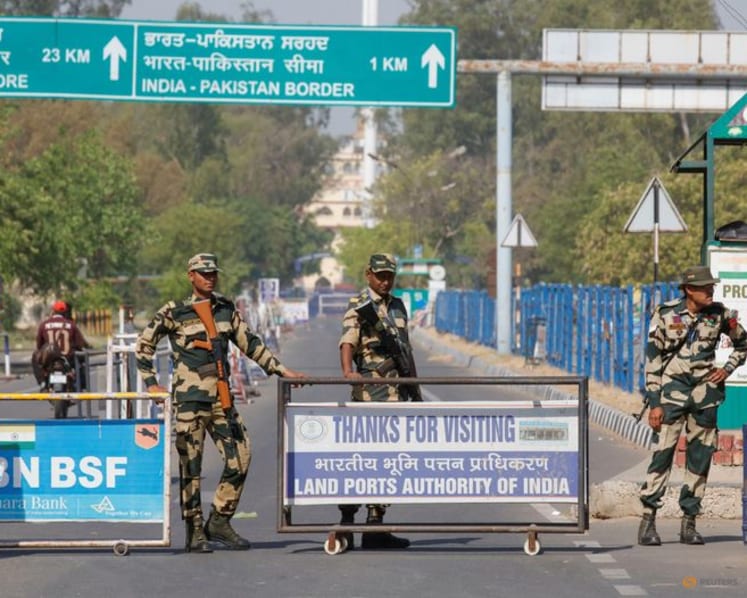
IS THE TREATY DEAD?
States that do not maintain healthy relations in matters of “high politics”, such as war and diplomacy, often show an unwillingness to cooperate in the sphere of “low politics”, such as water issues. The Indus Waters Treaty negated such an assumption.
Questions have been raised on the treaty since it was signed in 1960, but it stayed active for so many years because both sides, particularly the upper riparian, largely preferred cooperation.
Particularly, after the 2016 terror attack on an Indian Army camp in Uri in Jammu and Kashmir, India began explicitly linking cooperation under the Indus Waters Treaty with its security and cross-border terrorism. There has been a resurgence of “water nationalism” in India and Pakistan.
India’s decision to put the treaty into abeyance has considerably escalated water tension between the two countries. Pakistan has issued a nuclear threat and raised the matter at international forums, including at the United Nations and at the recently concluded Shanghai Cooperation Organisation Summit. India has warned Pakistan of “painful consequences” to any military misadventure.
It is difficult to make any prediction about the future of the treaty as, in an interview to the Times of India,Indian Home Minister Amit Shah said: “No, it (the treaty) will never be restored” and Pakistan is contesting India’s stance on the treaty.
Whatever the future of the Indus Waters Treaty, it is unlikely to be back in the form it was before April 2025.
Dr Amit Ranjan is Research Fellow at the Institute of South Asian Studies, National University of Singapore.
KioskNews shows a cleaned-up reading view extracted from the publisher’s page — the original always lives on their site, not ours.