She retired. He had a health scare: Why Indians are choosing HYROX, a brutal fitness race
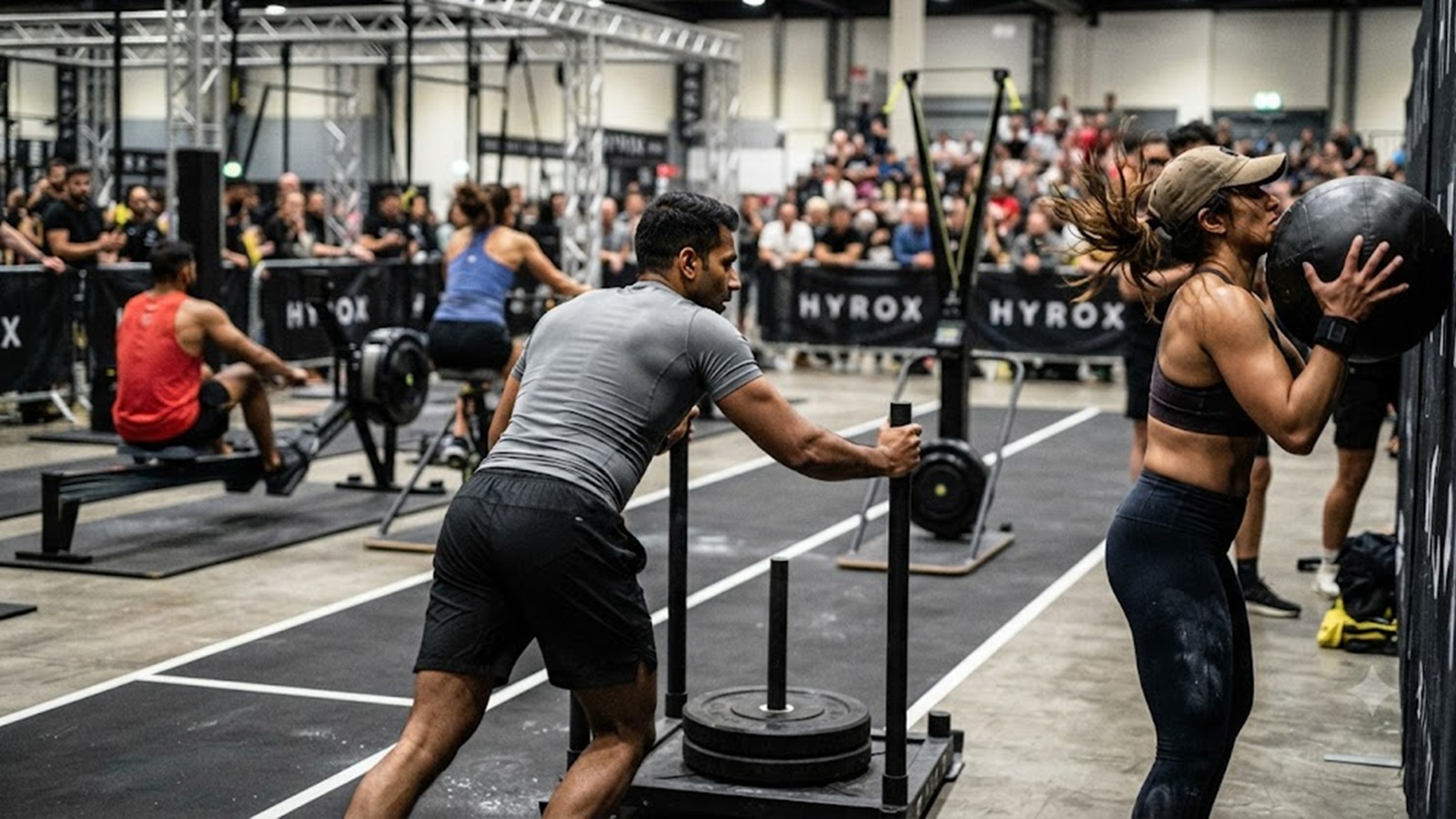
HYROX may be designed as a competition, but the reasons people turn up at the start line of this ‘fitness race’ can be surprisingly different. For Mamta Ranka, 62, a Mumbai-based senior school English teacher who spent 25 years in the classroom, it is a way to test what life after 60 could look like. For Bengaluru’s Rohan Koralhalli, 30, it’s part of a much larger lifestyle change after he went from 160 kg to about 115 kg. For Ahmedabad-based law student Aditya Gidwani, 21, the challenge was even harder—he chose to complete the race in a suit.
HYROX is a standardised “fitness race” where athletes complete 8x1km runs, each followed by a functional station: SkiErg, sled push, sled pull, burpee broad jumps, row, farmer’s carry, sandbag lunges, and wall balls. The format remains the same worldwide, so results are comparable across cities.
In simple terms, it is a hybrid of endurance and functional training that gym-goers can rally around, with categories for all levels and team options that lower the barrier to entry. Standardised programming plus timing make progress trackable.
What seems to draw people to HYROX is not a particular body type, age or training background. It is the appeal of combining running with strength and functional movements, then figuring out how the body responds when fatigue sets in.
‘Turning 60 does not mean slowing down’
 Mamta Ranka wants to try new things (Photo: Mamta Ranka)
Mamta Ranka was introduced to HYROX by her daughter-in-law. She initially began with running and added strength training much later. “What attracted me was that it demanded endurance, strength, discipline and mental resilience. Last September, I completed my first HYROX (Mumbai) in the Women’s Open 54-59 category,” she said.
“Then I travelled to New York to participate in the 60-64 category. And now, I participated in my third race in Mumbai where I achieved a new personal best of 2:03:49, and shaved off a full 15:58 mins from my previous best,” she added.
For Ranka, the significance goes beyond a time on the clock. “For most of my life, my identity has been closely tied to being a teacher and a mother. After retirement, I decided it was also time to find out what Mamta could do. And I’m only getting started,” she explained.
Story continues below this ad
She describes this phase as one of “trying new things, pushing myself outside my comfort zone and proving to myself that turning 60 does not mean slowing down”.
At 59, 3 HYROX races in a year
 Ashu Jain has participated in three races already (Photo: Ashu Jain)
Ranka is not the only woman showing that age need not be a barrier to trying a demanding fitness event. Dehradun-based Ashu Jain, 59, a fitness content creator, attempted her first HYROX in Bengaluru in April 2026. She finished third in 2 hours 27 minutes. Her second attempt came in Delhi, where she finished in 2 hours 31 minutes, followed by her third race in Mumbai, where she clocked 2 hours 18 minutes.
“I am currently training to improve my endurance and strength for stations that feel very challenging to me: sled pull and wall balls. Every HYROX is different because of how consistent your training was, how you worked on your shortcomings and how your energy was on the race day,” she said.
Her experience also underlines a defining feature of HYROX: the same event can feel completely different depending on preparation, recovery, and what happens on race day.
Story continues below this ad
From 160 kg to 115 kg—and then HYROX
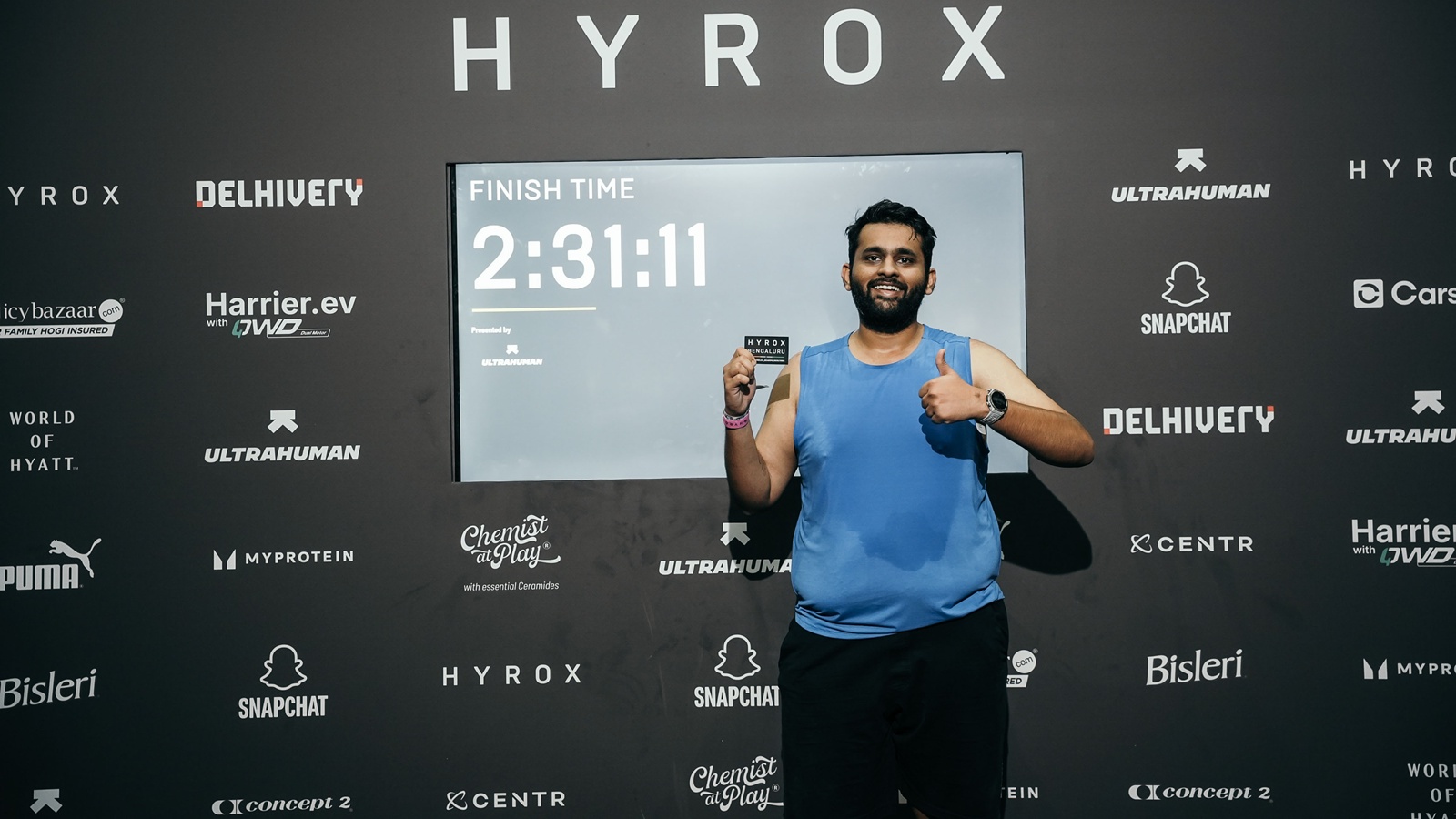 Rohan Koralhalli started running — 2 km, three times a week, about 6 km a week (Photo: Rohan Koralhalli)
Rohan Koralhalli’s entry into HYROX came after a health scare. He had been obese for most of his life. In August 2024, what he initially thought was a panic attack turned out to be an acute coronary issue. His blood vessels had narrowed because of cholesterol and weight.
That became his turning point. “I registered around October-November 2025 after seeing HYROX videos all over Instagram through the 2024 and 2025 seasons. I couldn’t find a partner for doubles, so I didn’t overthink it. I just signed up for solo,” he said.
After his health scare, Koralhalli started his fitness journey with a gym trainer in October 2024, “with 10,000 steps a day as the base”. He began running in February 2025. “I loved it. That grew to 20-30 km a week, and in February 2026, I finished my first half marathon. I have gone from 160 kg to about 115 kg, 45 kg down. By late 2025, I wanted a real challenge, and HYROX was it,” he said.
His Mumbai race took 2:31:11.
“The sandbag lunges nearly broke me: 20 kg, 100 metres, and you’re not allowed to drop the bag. With about 20 metres left, I was ready to give up. A guy I’d never met came up beside me and said, ‘Dude, we’re in this together; there’s no letting go’. We finished it together. That brotherhood is what stayed with me,” he recalled.
Story continues below this ad
“Train properly; don’t walk in blind. Give it three months of honest preparation. Willpower alone won’t get you through. You don’t need a specialised HYROX gym. I trained at a completely normal gym. Three days of running and three days of strength work, with a little focus on HYROX movements, will get you there,” he advised, adding, “Enjoy it. You’re pushing yourself harder than you ever have, so actually enjoy the experience while it’s happening.”
A fitness journey that began in her 30s
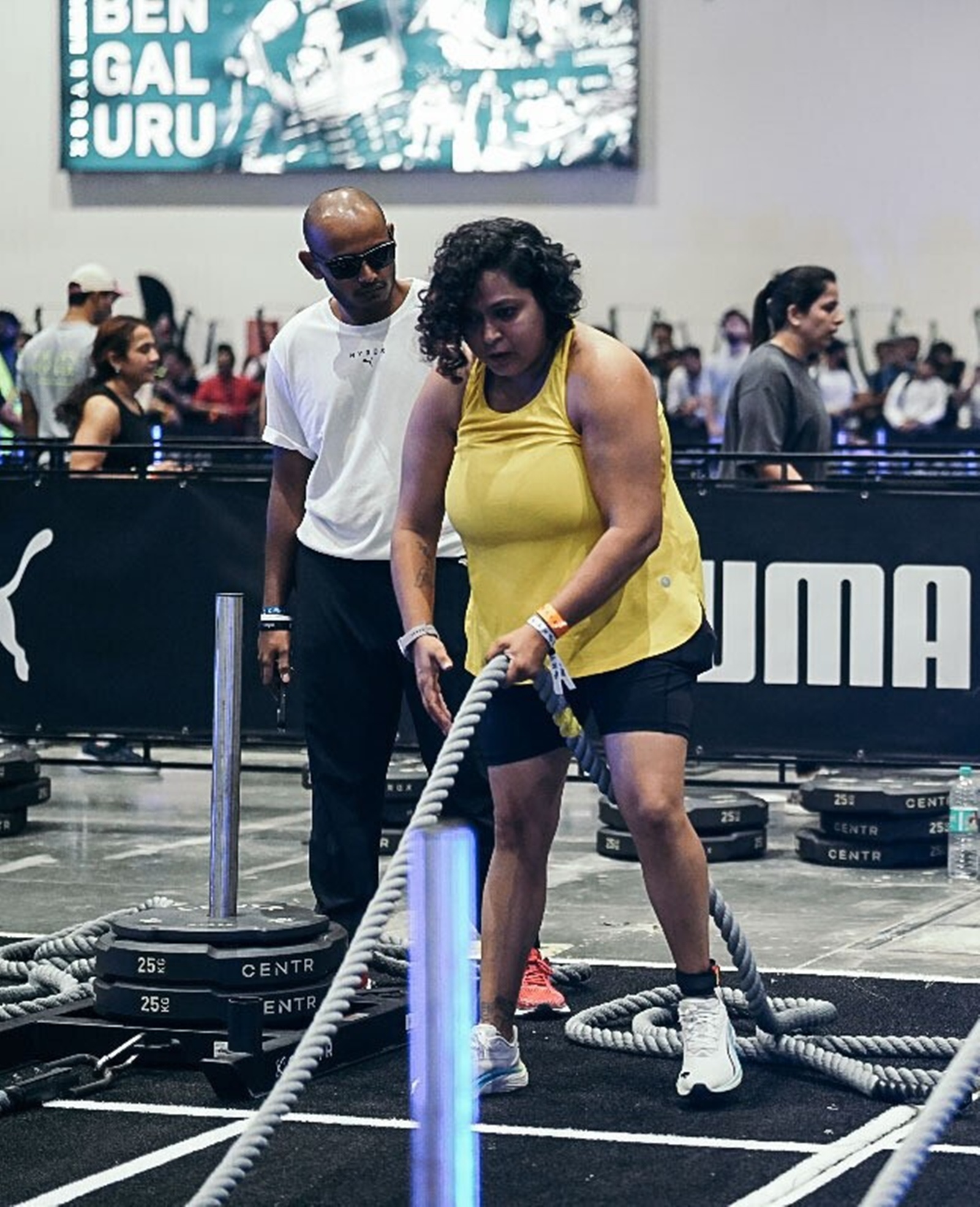 Anjee Bhatia talks about what motivated to join the race (Photo: Anjee Bhatia)
For Anjee Bhatia, 36, from Porvorim in Goa, the journey to HYROX was not rooted in a lifelong sporting background. She describes herself as someone who was never particularly physically active. She began going to the gym and taking kickboxing lessons in 2020, but consistency remained a challenge. Strength training became a regular part of her life only from October 2023.
Bhatia began training for HYROX with her coach Anmol Raikar in May 2025. The goal initially was not simply to complete a race. “My intention back then was just to get out of my comfort zone, get stronger, and start running for cardio and endurance. Training for it helped me believe in my body more than ever, gave me confidence to push myself, and try harder. My singles attempt was in April 2026,” she said.
Her experience also challenged her perception of what a person who is considered “fit” is supposed to look like. “For me, the journey to HYROX means much more than the actual event. Especially since I, as a mid-sized woman, don’t fit the mould of what “fit” or “strong” looks like. I am in my mid-thirties, and I have insulin resistance. Training for HYROX wasn’t easy, but it was still doable. Because I was willing to challenge myself and prioritise my fitness goals,” she stressed.
Story continues below this ad
She eventually competed in HYROX Doubles with her husband in Mumbai.
The 21-year-old who ran HYROX in a suit
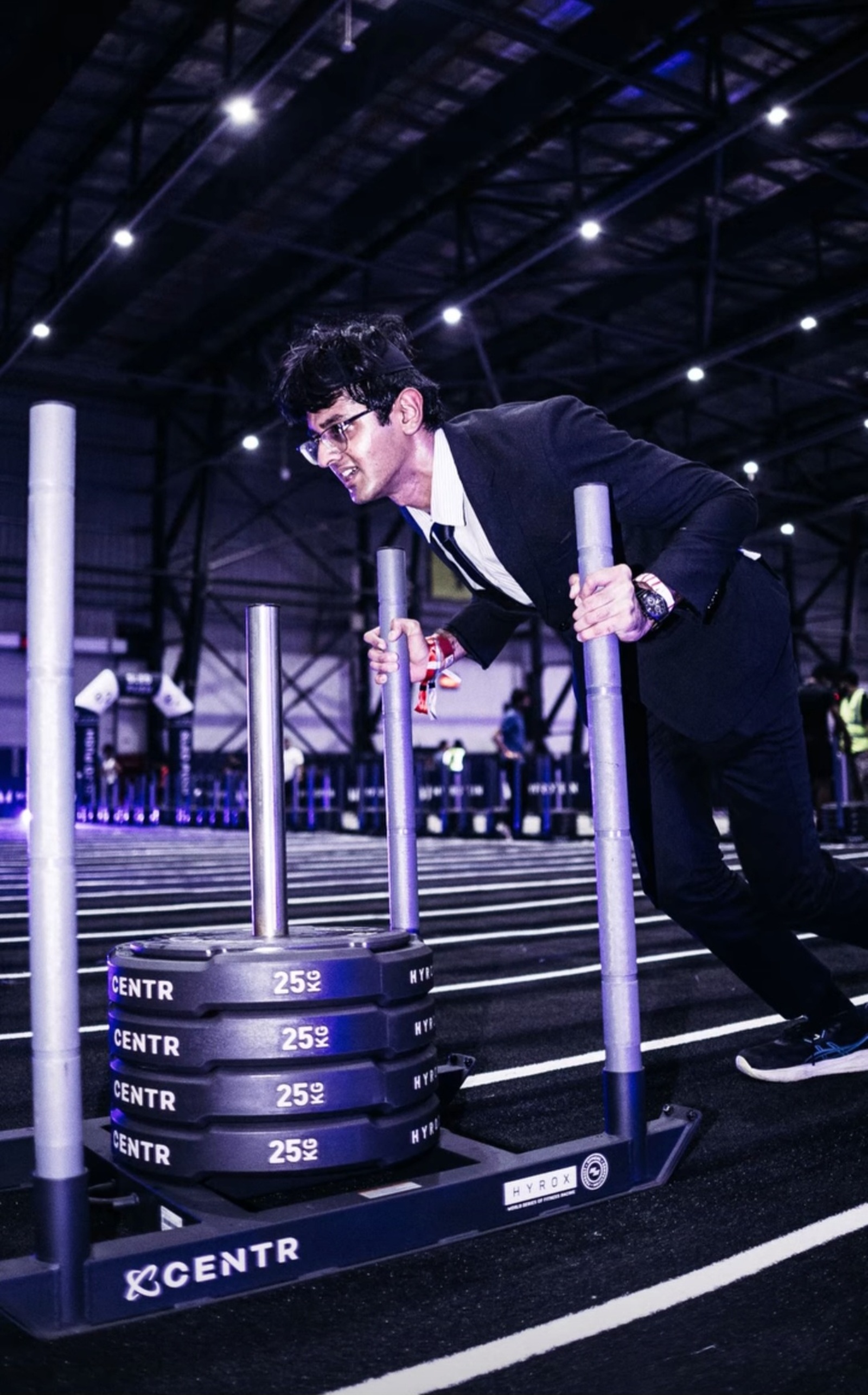 Aditya Gidwani did HYROX in a suit (Photo: Aditya Gidwani)
Aditya Gidwani, a final-year law student from Ahmedabad, decided to make his HYROX debut unconventional. He finished the race in three hours and three minutes—wearing a power suit.
“Doing HYROX in a suit was something I decided to do because I wanted to make the experience a little different from the usual race-day setup. HYROX is already an extremely demanding event, and wearing a suit added another layer of discomfort. Mobility and movement were restricted, the fabric became heavier with sweat, and movements like the sled push, burpees and wall balls felt noticeably more challenging. There were moments when I genuinely questioned why I had decided to do it!” he said.
But the discomfort eventually became part of the challenge. “The suit became almost a mental challenge. I had to stop thinking about how uncomfortable I was and simply keep moving. Once the race started, it was less about looking different and more about finishing what I had committed to. I also wanted to show that HYROX can be approached in different ways and that you don’t necessarily have to fit the conventional image of what an endurance or functional fitness athlete looks like,” he explained.
Story continues below this ad
Gidwani had registered in May and started training in June. His gym work included HYROX-specific equipment twice a week. He deliberately trained with heavier loads: 10-kg wall balls, 20-kg sandbag lunges and heavier weights for movements such as farmer’s carries and sled pushes.
“I focused on training legs intensely since it formed the most important part of the body for HYROX. I started running long distances only a month back, which made it quite easier to carry myself through an entire HYROX with a good pace,” he said.
The strategy paid off when the standard race weights felt more manageable despite the restrictions created by the suit.
What is HYROX and what draws people to it?
HYROX was born in Hamburg, Germany, in 2017. Founded by soccer executive Christian Toetzke, three-time Olympic hockey medallist Moritz Fürste, and digital entrepreneur Michael Trautmann, the fitness race has exploded in popularity worldwide.
Story continues below this ad
Participating in a HYROX race in India generally costs between Rs 3,500 and Rs 10,000 per person for event registration, depending on the category and city.
While HYROX is drawing everyone from serious athletes to working professionals, what is interesting is that people with already demanding lives are voluntarily choosing something even harder.
“There is a difference between being busy and feeling challenged. Modern life can leave us mentally exhausted through deadlines, screens, parenting, traffic and constant decision-making, without giving us the satisfaction of testing our capabilities. A chosen physical challenge gives discomfort a purpose and progress a visible finish line,” reflected Delnna Rrajesh, psychotherapist and relationship breakthrough coach.
“There is also something powerful about self-efficacy: the belief that ‘I can do difficult things’. Someone starts unable to run a particular distance, lift a certain weight or complete a workout. They practise, struggle, return and improve. The body changes, but so does the internal narrative. That confidence can spill into careers, relationships and other difficult areas of life,” she explained.
Story continues below this ad
For adults in their 40s, 50s and beyond, such challenges can offer something else: the opportunity to become a beginner again. “Life can gradually become centred around maintaining careers, families and responsibilities. Trying something unfamiliar interrupts autopilot and asks, What else am I capable of? Age need not mean the end of growth, play, adventure or reinvention,” said Delnna.
The community aspect matters too. “Training provides accountability, belonging and shared achievement, experiences adults sometimes lose as life becomes increasingly responsibility-driven,” she added.
So, how is HYROX different from a gym workout or marathon?
According to Gagan Saini, 31, from Gurugram, the answer lies in what happens between the exercises. “You need to learn how to run while fatigued and then immediately perform a strength/endurance movement. For example, running 1 km is very different when you know you’re going straight into sled push, sled pull, burpee broad jumps or wall balls,” he said.
 Gagan Saini has done HYROX four times (Photo: Gagan Saini)
Saini has trained consistently for around 11 years and has completed HYROX four times—twice in Mumbai and twice in Delhi. “I have learnt that the goal isn’t to win the first kilometre. It’s to still be able to perform when you reach the final wall balls,” he said.
And while the event is physically demanding, he does not believe participants need to be elite athletes. “The event has different categories, and for many people the challenge is simply competing against their own previous performance,” he said.
Saini believes the event’s psychological lesson can extend beyond sport. “You voluntarily put yourself in an uncomfortable situation and learn that you can handle it. That experience stays with you. The next time you’re dealing with something difficult outside of sport, at work, in your personal life, or just going through a challenging phase, you have something to fall back on.”
Preparing for your first HYROX? Here’s a guide
Dr Ajay Sawant, consultant, internal medicine, KIMS Hospitals, Thane, said HYROX places considerable demands on the cardiovascular system, so participants should understand their baseline health before starting intense preparation.
“This is particularly important for older adults and those with conditions such as hypertension, diabetes or known cardiovascular risk factors. Training should progress gradually, with adequate hydration, nutrition, sleep and recovery. Warning signs such as chest discomfort, unusual breathlessness, dizziness, palpitations or excessive fatigue should never be ignored,” he said.
“A medical evaluation can help identify individual risks and determine whether any modifications are needed. The focus should be on preparing the body safely and sustainably, rather than simply completing the event at maximum intensity,” Dr Sawant added.
Dr Priyank Patel, orthopaedic spine surgeon at Jupiter Hospital, Thane, emphasised that because HYROX combines running with high-load functional movements, participants need to prepare their joints and muscles progressively. “The knees, ankles, hips and lower back can be particularly vulnerable to overuse when training is rushed. Proper technique, appropriate footwear, strength conditioning and adequate recovery are important,” he said.
“Those with previous joint or ligament injuries, or older participants returning to exercise after a long gap, should consider an orthopaedic assessment before beginning intensive training. The aim should be to build strength and endurance gradually rather than push through pain,” Dr Patel added.
If this is your first HYROX, Dr Deepika Bagga, 41, from Sonipat, recommends giving yourself “at least 6 months of structured preparation, especially if you already have a fitness base but are new to HYROX-style training”.
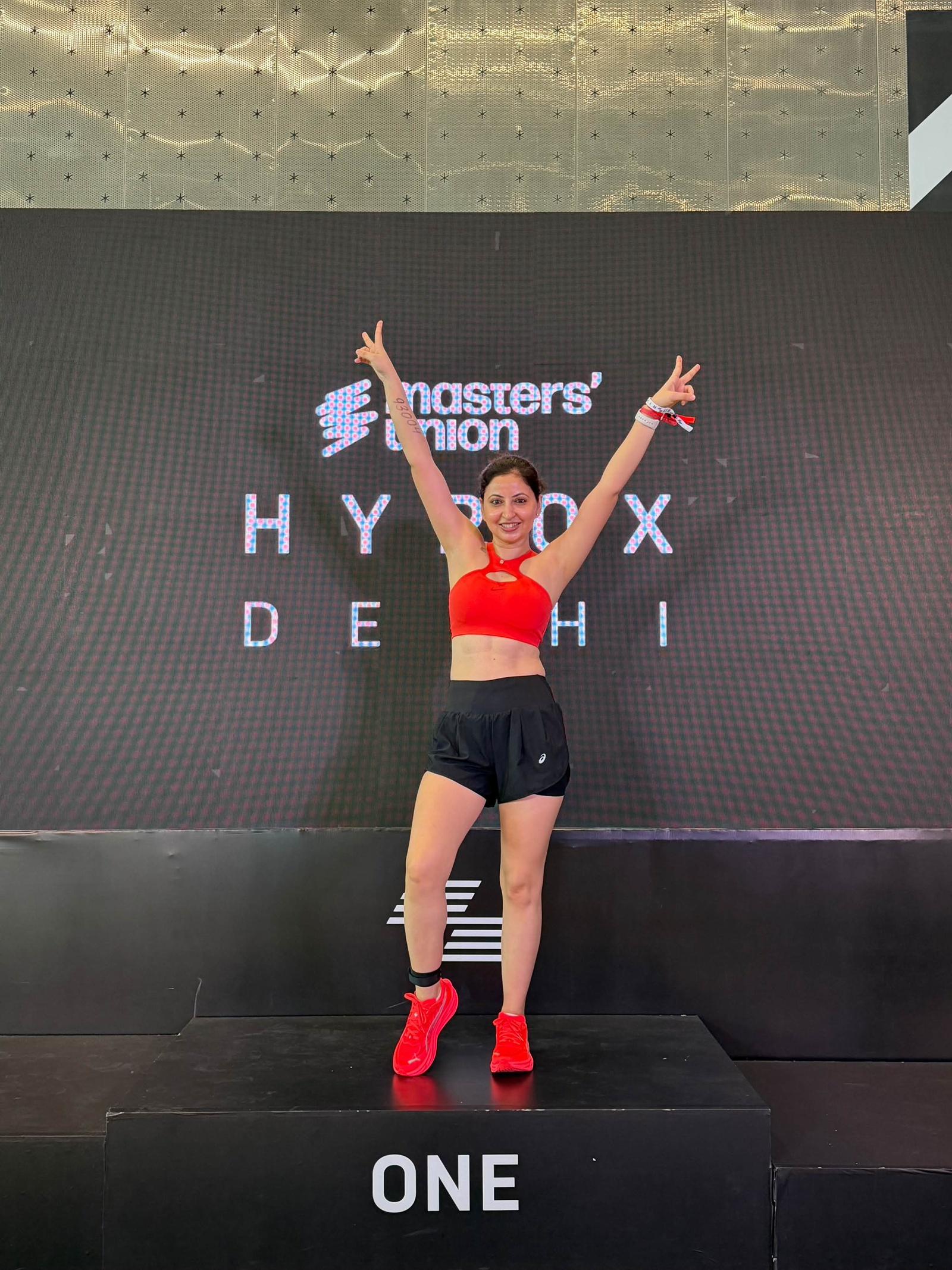 Dr Deepika Bagga shares her advice to manage Wall Balls (Photo: Dr Deepika Bagga)
“You need to start, train consistently and prepare intelligently. And please don’t underestimate the wall balls! They come at the last station, when you are already completely drained. Your legs are tired, your heart rate is high, and suddenly those wall balls feel much heavier than they did during training. So if you’re preparing for HYROX, train wall balls when you’re fatigued, not only when you’re fresh,” Bagga, who completed her first HYROX in Delhi in July this year, added.
While many have criticised HYROX participants for paying to run and tire yourself out at a company-led event, the athletes say they would do it again. Perhaps that is also what makes the format interesting: the same running intervals and functional stations can represent entirely different challenges depending on the person standing at the start line. And that lesson extends far beyond HYROX. “Learn to swim at 40. Run at 50. Study again. Dance. Travel alone. Start something you may be terrible at at first. Routine tells us who we already are. Challenge can introduce us to who else we might become. And sometimes the greatest prize is not the medal, but the discovery that ‘I didn’t know I had that in me’,” said Delnna.
KioskNews shows a cleaned-up reading view extracted from the publisher’s page — the original always lives on their site, not ours.