Zambry: MOHE targets 30,000 AI graduates by 2030 to meet future workforce needs
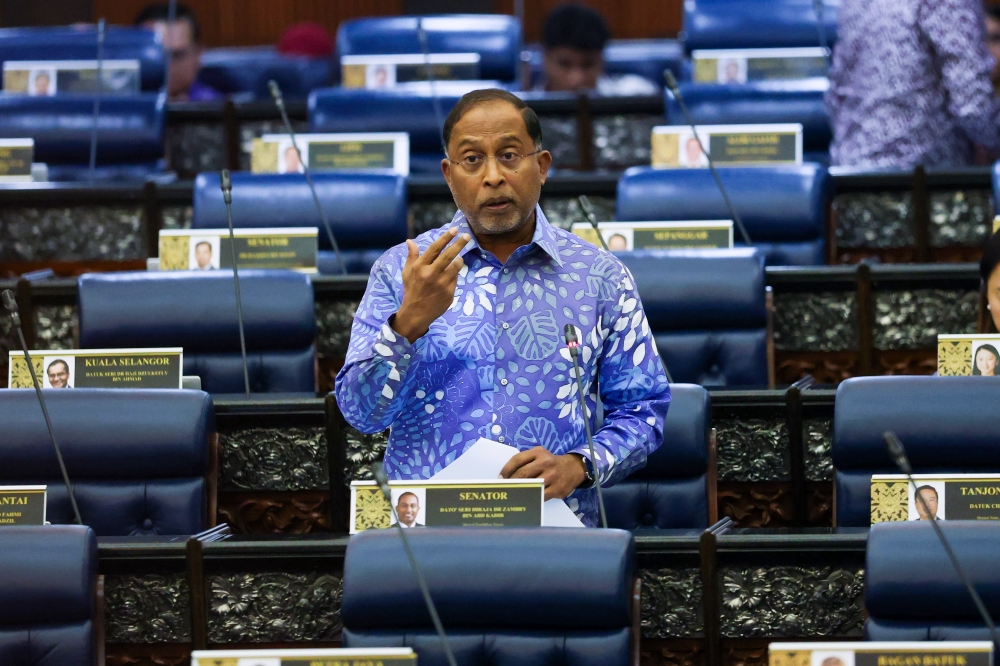

Datuk Seri Zambry Abdul Kadir said the Ministry of Higher Education aims to produce 30,000 graduates skilled in artificial intelligence between 2025 and 2030 to address the challenges of automation and meet future workforce needs. — Bernama pic
First Published: Thursday, 08 Oct 2026 3:47 PM MYT
KUALA LUMPUR, Oct 8 — The Ministry of Higher Education (MOHE) aims to produce 30,000 graduates skilled in artificial intelligence (AI) between 2025 and 2030 to address the challenges of automation and meet future workforce needs.
Its Minister Datuk Seri Zambry Abdul Kadir said the target would be achieved through 30 specialised programmes at bachelor’s, master’s and doctoral (PhD) levels currently offered at 11 public universities.
He said to ensure that academic programmes remained relevant to technological advancements, 455 programmes across various levels had undergone a review as of Sept 30.
“For specialised AI programmes, development and accreditation have also been strengthened through the Programme Standards: Artificial Intelligence (PS:AI) developed by the Malaysian Qualifications Agency (MQA), to ensure that they are developed systematically and meet the stipulated quality standards,” he said during the question-and-answer session in the Dewan Rakyat today.
He said this in reply to a question from Datuk Seri Dr Shahidan Kassim (PN-Arau) on measures taken by MOHE to ensure graduates possess AI skills to cope with changes in the job market, following expectations that many jobs could be at risk of being replaced by automation.
Elaborating, Zambry said the talent development ecosystem was also being strengthened through the establishment of the Faculty of Artificial Intelligence at Universiti Teknologi Malaysia (UTM), the Faculty of Artificial Intelligence and Cybersecurity at Universiti Teknikal Malaysia Melaka (UTeM), and the Faculty of Intelligent Computing at Universiti Malaysia Perlis (UniMAP).
To ensure that graduates remained competitive and their employability was maintained, he said MOHE planned to integrate AI elements into 80 per cent of bachelor’s degree courses at public universities.
“We are also implementing upskilling programmes, work-based learning and stackable programmes to ensure that AI skills can be developed at every level of study, enabling our graduates to remain employable when they graduate from university,” he said.
Responding to a supplementary question from Datuk Shahelmey Yahya (BN-Putatan) on students’ critical thinking skills, which he said were increasingly being eroded by the ‘ask ChatGPT’ mentality, Zambry said the biggest challenge facing universities today was to strike a balance in using AI as a learning aid rather than as an agent that completely takes over human thinking.
“Agentic AI is the latest development in our world. It has become humanoid (human-like), meaning it can think for us, solve problems for us, and can even understand feelings.
“This is very dangerous. That is why the measures being taken are aimed at striking a balance so that our higher education system can produce well-rounded, comprehensive, and holistic individuals,” he said. — Bernama
KioskNews shows a cleaned-up reading view extracted from the publisher’s page — the original always lives on their site, not ours.