New LED technology helps archaeologists uncover details invisible to the naked eye
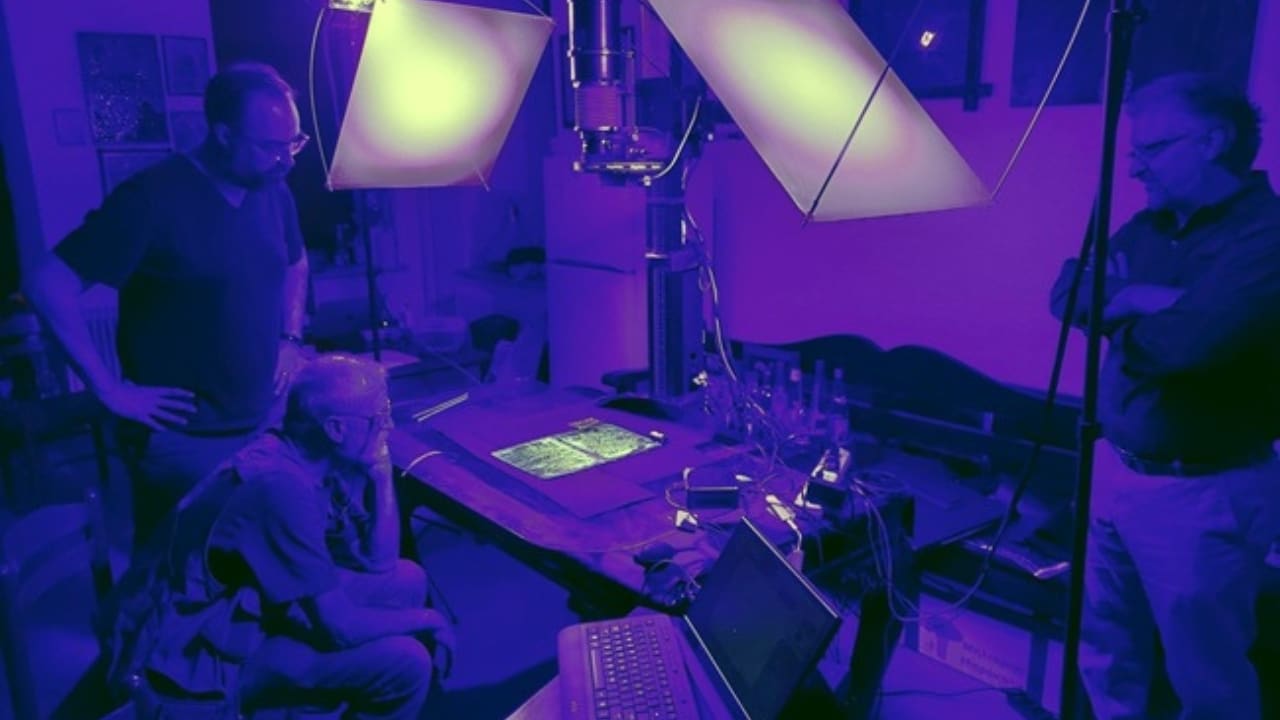
An LED inexpensive multispectral imaging system (LEDMSI) has been developed by researchers from Aarhus University and Moesgaard Museum in Denmark, giving archaeologists new ways of studying a site before beginning to dig into it.
The complete findings were published in September in the Journal of Archaeological Science.
Instead of using standard white light to illuminate the soil, the Danish prototype uses LEDs set to 16 different wavelengths, ranging from near-ultraviolet to near-infrared.
The reason for the varied wavelength is due to the fact that different materials absorb and reflect light differently, according to the study.
“We wanted to make things faster, clearer and better in the field, and at a cost that makes sense for archaeology,” explained Aarhus University Associate Professor Søren Munch Kristiansen. “One way of doing that is simply to rethink the light.”
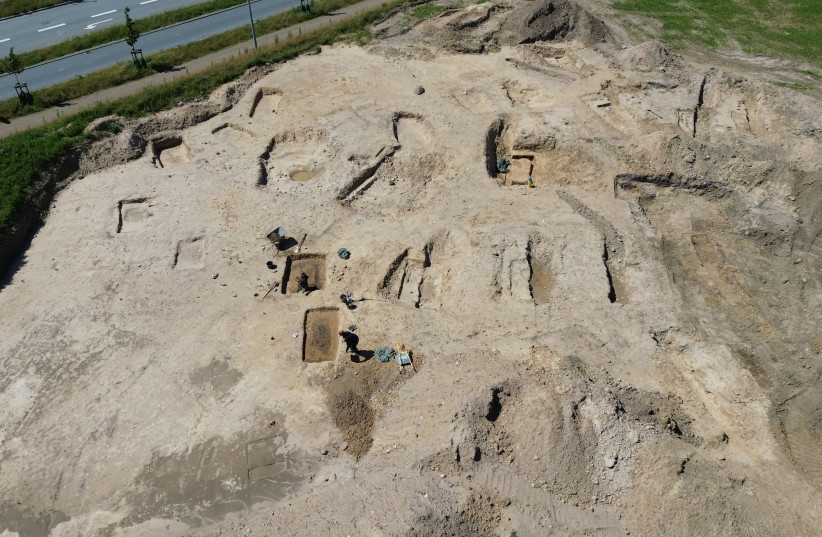
Testing first prototype at Sorte Muld
The first prototype of the system was tested at Sorte Muld, an Iron Age archaeological site, located on the Danish island of Bornholm. It is described as a “rich” site, with over a meter of deposits created by centuries of human activity.
For archaeologists wishing to excavate the site, the rich layering can pose an issue: since many of the layers are thin and, to the naked eye, similar in color, it is difficult to tell where each one ends or begins.
As part of testing the prototype, researchers used LEDMSI to photograph the same section using all 16 different wavelengths. The photos were then analyzed and enhanced to study the differences between materials that wouldn’t have otherwise been seen.
“The images looked almost psychedelic when we took them, and we only really saw what we had when we analysed them back at the computer,” said Kristiansen. “Then we could see new layers and changes in the fill that we simply could not see with the naked eye.”
According to the study, a feature revealed with LEDMSI may show a break in activity at the site. While the claim has yet to be confirmed, the revelation of new data points towards the effectiveness of the system.
The experiment at Sorte Muld further revealed that bone glowed fluorescent under ultraviolet light, becoming increasingly easy to tell apart from the surrounding soil.
Normally, fluorescence photography requires optical filters that separate fluorescence from reflected light. LEDMSI simplifies that process and the equipment needed in the field, according to researchers.
The prototype is also significantly cheaper than similar hyperspectral imaging systems, the researchers noted.
Not replacing trained archaeological eye
A second prototype with a better camera and two LED units was tested earlier this year at Fredbjerg in northern Jutland, Denmark, where archaeologists are excavating a cemetery dating from the late Viking Age and early Christian period.
The cemetery is poorly preserved, with some graves bearing little skeletal remains or evidence of such.
“We’re trying to see if there is information present in the graves that is not otherwise apparent,” said archaeologist David Stott from Moesgaard, one of the developers of the LEDMSI system.
During the Fredbjerg excavation, the researchers used the multispectral data to help decide where to take samples for further analyses.
This newer version is able to take several photographs in around 30 seconds, compared to the first prototype, which took up to five minutes to do the same.
Researchers are now working towards figuring out how to make the results processable on site at a computer, and later, on a phone or other field device.
Another goal of the researchers is to add machine-learning software to the system that would allow it to learn the spectral signatures of different materials and help archaeologists work out what they are looking at.
“The difficult part is teaching an algorithm what is what. At the moment, the archaeologist and I, as a geologist, basically have two settings: glasses on or glasses off. This gives us many more ways of seeing,” explained Kristiansen.
Even so, Kristiansen does not expect algorithms to replace the trained archaeological eye, but for it to be used as a tool to assist.
“I hope that in ten years, bringing a system like this to an excavation will be as normal as bringing a digital camera,” he said.
KioskNews shows a cleaned-up reading view extracted from the publisher’s page — the original always lives on their site, not ours.