Two new Chinese blockbusters show us how it’s done
OCT 3 — For the longest time, when it comes to the sheer scale and spectacle of cinematic blockbusters, local moviegoers have almost instinctively looked toward Hollywood to deliver the goods.
European cinema, for all its artistic pedigree, has very rarely made a dent in our local multiplexes on a blockbuster scale.
At most, Asian audiences seeking high budget escapism have turned to Korean or Japanese hits, or looked back fondly at the glory days of Hong Kong action cinema in the 1980s and 1990s.
When blockbusters from Mainland China do manage to reach our shores, they usually arrive tightly wrapped in specific, predictable packages: sweeping Wu Xia epics or explosive crime thrillers.
But contemporary Chinese cinema has quietly expanded its palette far beyond martial arts and urban shootouts.
The huge success of the Ne Zha films have made people realise that there’s more to Chinese blockbusters than just kung fu movies.
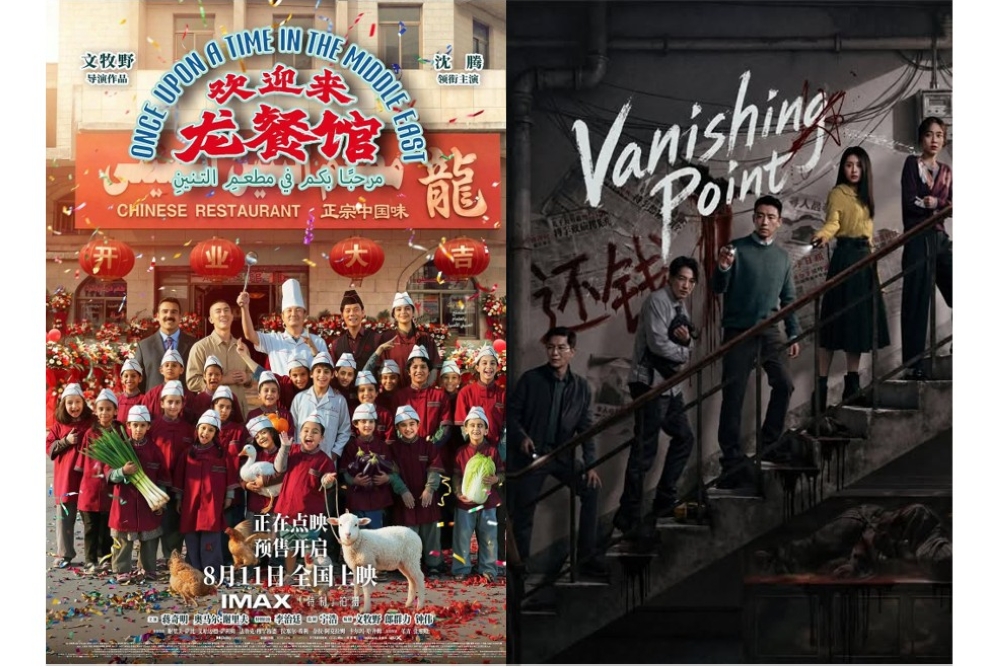
Lately, two distinct Chinese blockbusters have been gaining serious traction across Malaysian social media, Once Upon A Time In The Middle East, which has so far grossed around US$341 million (RM1.39 billion) worldwide and opened in local cinemas roughly two weeks ago, and Vanishing Point, which bagged around US$81 million worldwide but which most Malaysians have recently caught and championed on Netflix.
Together, they offer a fascinating look at how Chinese big budget filmmaking is evolving.
‘Once Upon A Time In The Middle East’
On almost every technical level, Once Upon A Time In The Middle East has all the hallmarks of a sprawling, multi-million-dollar Hollywood war drama.
It features sweeping visuals, terrifyingly visceral combat sequences, and a razor sharp sense of geography during its high stakes military set-pieces.
It is an impressively professional technical feat, boasting crisp cinematography and sound design that holds its own against any Western counterpart.
What makes the film so utterly refreshing, however, is its perspective.
Rather than serving as another platform for Western heroism, the film offers a perspective that is slyly anti-American and fiercely empathetic toward the local civilian population.
Even though the narrative carefully avoids explicitly naming the specific Middle Eastern nation it is set in, the historical and political parallels to the invasion of Iraq are unmistakable.
By centering the human cost of foreign intervention through the eyes of local citizens caught in the crossfire, the film flips the standard Hollywood military trope on its head.
Yet, it never forgets its duties as an Asian blockbuster.
* This is the personal opinion of the columnist.
It knows exactly when to lean into a healthy dose of earnest, sweeping melodrama, the kind of unabashed emotional conviction that Asian audiences genuinely love and connect with, and the film is generously peppered with these moments.
It is a thrilling, deeply human piece of action cinema that proves blockbuster scale doesn’t have to come at the expense of local perspective.
‘Vanishing Point’
If Once Upon A Time In The Middle East demonstrates how to handle large-scale military thrills, Vanishing Point proves that Chinese cinema can be just as formidable when executing taut, high concept suspense.
Twisty thrillers, honest emotional resonance, and sharp social commentary very rarely collide smoothly in a single film.
Too often, a director will sacrifice character logic for the sake of a cheap plot twist, or bury the narrative momentum beneath heavy handed moralising.
Yet, Vanishing Point manages to balance all three elements quite beautifully.
Beginning as a seemingly straightforward procedural about the mysterious disappearance of a child from a housing block, the film gradually peels back its layers to expose a web of institutional compromise, class anxiety, societal pressure and personal regret.
The twists are genuinely earned, deriving their power not from cheap shock value, but from the tragic flaws of its characters.
What elevates the film beyond a standard crime thriller is its emotional honesty.
The characters feel lived in, grounded by a narrative that takes time to let its quiet moments breathe amid the mystery.
It delivers the propulsive, binge worthy thrill of a top tier mystery while sneaking in a subtle, incisive critique of contemporary social pressures.
Both Once Upon A Time In The Middle East and Vanishing Point serve as potent reminders that the global blockbuster landscape is shifting.
Whether tackling high stakes war zone politics on the big screen or delivering intricate, emotionally grounded suspense to streaming audiences worldwide, these two releases showcase a film industry operating at the peak of its commercial and technical powers.
Hollywood may still hold the traditional crown for box-office scale, but these two films show exactly how it’s done.
KioskNews shows a cleaned-up reading view extracted from the publisher’s page — the original always lives on their site, not ours.