Armour vs altitude: India’s light tank dilemma along China border
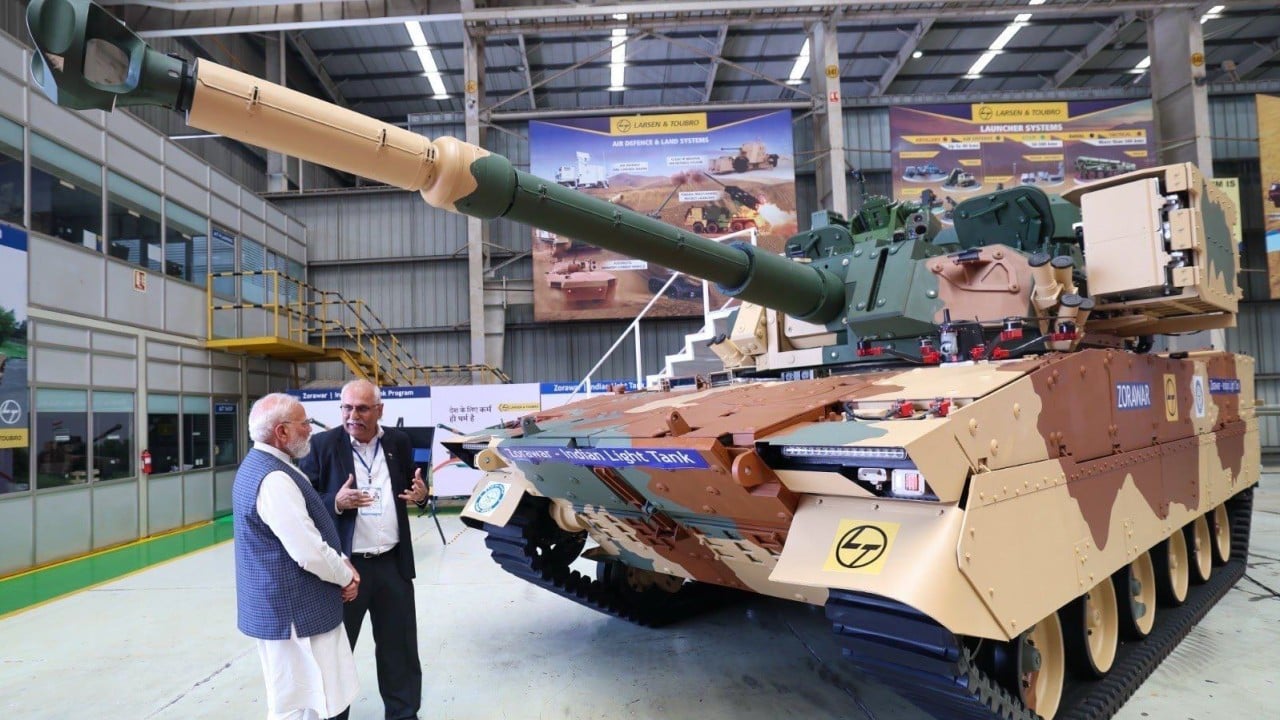
India’s new high-altitude combat tank was designed to go where its heavier armoured fighting vehicles cannot: the thin mountain air, narrow roads and small bridges along its disputed border with China.
In its base configuration, the Zorawar weighs some 25 tonnes – light enough to be flown all the way to the Line of Actual Control – but a push to make it strong enough to withstand high-calibre autocannon fire could add an extra seven tonnes to that loadout.
Reports of renewed stand-offs between Indian and Chinese troops at the border, including one carried by The Hindu newspaper on October 23, have injected fresh urgency into the debate surrounding how much the tank should weigh.
During previous confrontations, India airlifted its older, Russian-origin T-72s and T-90s, which weigh between 45 and 50 tonnes each, to the border territory of Ladakh, where they have faced off against China’s lighter Type 15, weighing 33–36 tonnes.
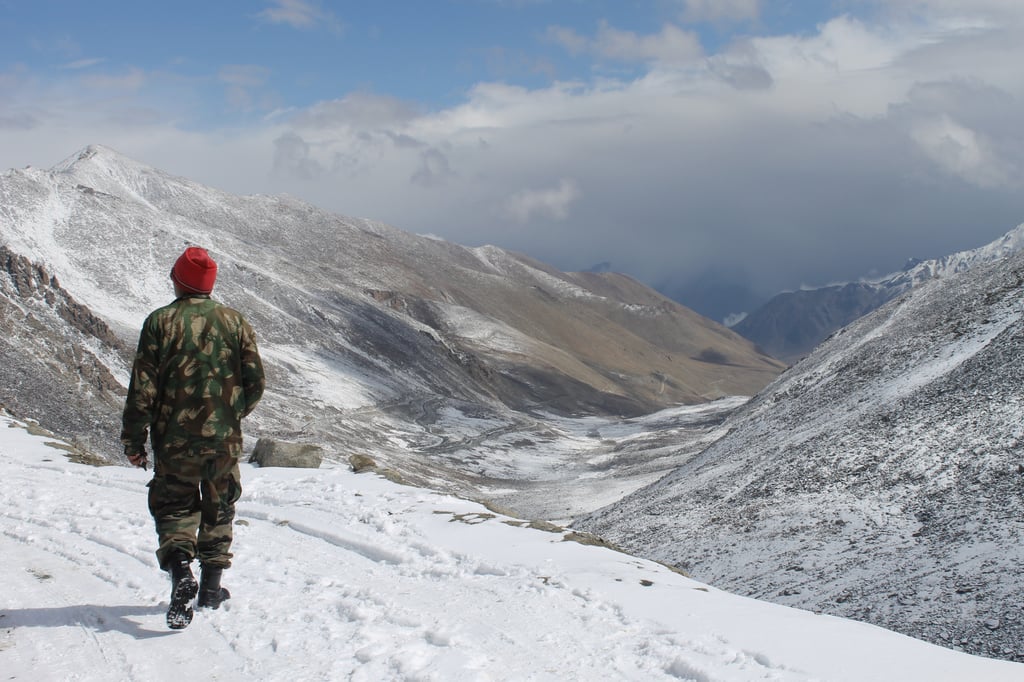
But question marks hang over the performance of these heavier main battle tanks in the sub-zero conditions and low-oxygen environment of the high Himalayas, as the Observer Research Foundation, an Indian think tank, noted in a 2021 report.
China’s Type 15, by contrast, is easier to run and maintain at altitude and has been in service since the end of 2018.
The Zorawar was developed by India’s state-run Defence Research and Development Organisation and the private engineering group Larsen & Toubro over a two-year period, from its formal approval in March 2022 to the first public unveiling of a prototype in 2024.
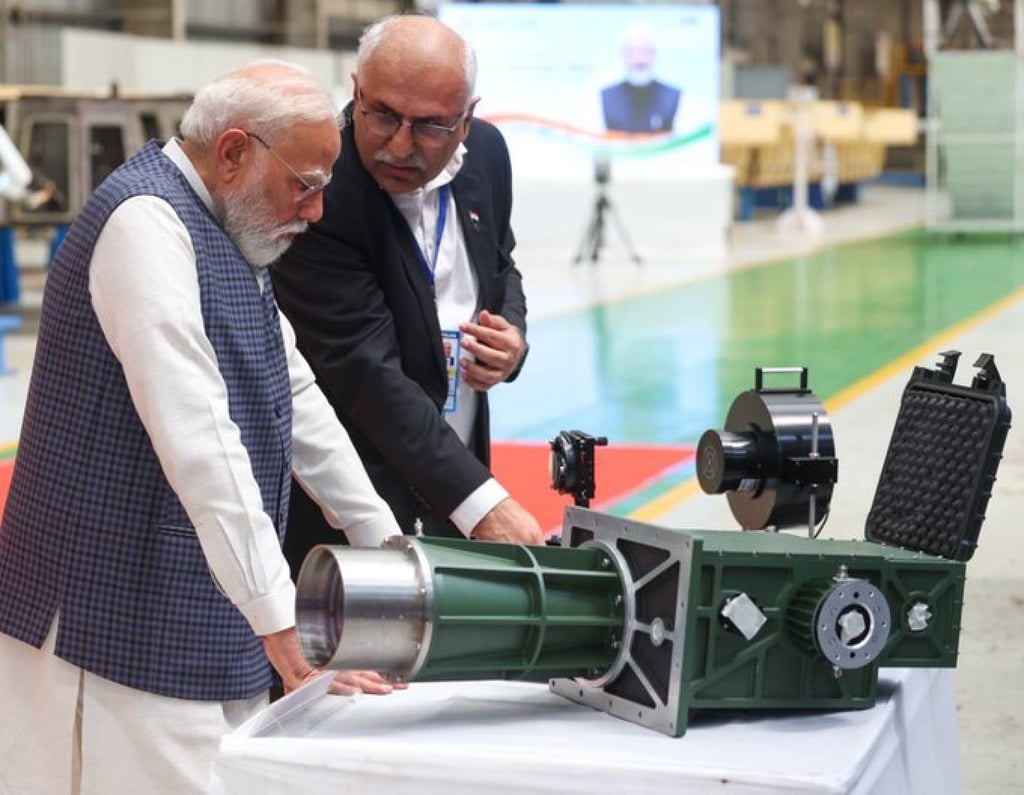
It comes equipped with a 105mm rifled gun in a Belgian-designed Cockerill turret – the rotating upper section of the tank – that is hardened against small arms fire and artillery shrapnel, but not the armour-piercing shells designed to punch through metal that are fired by Chinese autocannons.
India’s army is reportedly pushing for the tank’s armour to be upgraded to Nato’s highest standards of ballistic protection, known as STANAG Level 6, able to withstand 25mm and 30mm armour-piercing rounds.
Doing so would not only add weight, but also force redesigns and prolong the tank’s development cycle. As a result, army chief General Upendra Dwivedi told Indian media earlier this year that he expected the Zorawar to enter service in 2028–29, overshooting the original 2027 target.
‘The urgency is real’
Ashok Bhim Shivane, a retired lieutenant general who previously led the Indian Army’s mechanised forces and commanded a strike corps – one of its major offensive formations – delivered a blunt assessment of why such a delay was a problem.
“The urgency is real,” he told This Week in Asia. “A light tank for areas where the medium-category T-90/T-72 cannot reach or operate is a critical requirement as of the day before yesterday.”
Heavier armour needs a stronger engine. At altitudes above 4,500 metres (15,000 feet), where the Zorawar would have to operate, thinner air could result in a 20 per cent drop in engine power, Shivane said – unless the tank’s current 764-horsepower engine was upgraded to a 1,000-horsepower one.
“There is also a design question. The Belgian turret cannot take the heavier armour,” said Shivane, who helped build the case for a home-grown light tank and has been closely involved with its development.
The additional armour could add up to seven tonnes to the tank’s weight, he said, arguing that to rectify some of these issues, India should further localise its design, which he described as currently between 40–45 per cent indigenous by value.
India plans to field an initial 59 Zorawars and 354 in total. Shivane said he wanted to see the first batch inducted by 2028 “with a documented baseline, instrumented trials and funded upgrade lots”, meaning a thoroughly tested, finalised design with funding already secured for upgrades.
He proposed a “spiral approach” to production that gradually added capability in stages, with stopgap measures to plug any vulnerabilities that should arise.
“A tank that does not exist cannot be trained on. A user trial under real conditions teaches what no laboratory can,” he said.
Sanjay Iyer, a retired Indian Army brigadier, agreed that fielding the first batch of Zorawar tanks that had already been through trials would be preferable to waiting for a heavier version that so far existed mostly on paper.
“I do understand where the army is coming from. No commander wants to send crews up to the LAC in a vehicle they don’t fully trust,” he said, referring to the disputed India-China border by the abbreviated form of its official name. “Still, these tanks won’t be arriving in an empty theatre.”
An armoured brigade of T-72s and T-90s, typically ranging from 135 to 150 tanks, was already in Ladakh “and the Zorawar brings what those tanks can’t easily give you”, Iyer said.
“It can be flown in, it can use the smaller bridges and narrow roads, and it can get up to heights where a 45-tonne tank struggles,” he said. “Used alongside the heavier tanks on the flatter ground, even 59 of them would give the brigade a good deal more flexibility.”
China’s decade lead
The Zorawar is part of a broader overhaul of India’s armoured forces, which includes upgrading the T-72 and T-90 fleet using Soviet-era and Russian engineering drawings, alongside developing indigenous systems.
India has the world’s fifth-largest tank fleet with an estimated 3,900 main battle tanks, while China has the largest with more than 5,800 units, according to data compiled by US-based military tracking site Global Firepower.
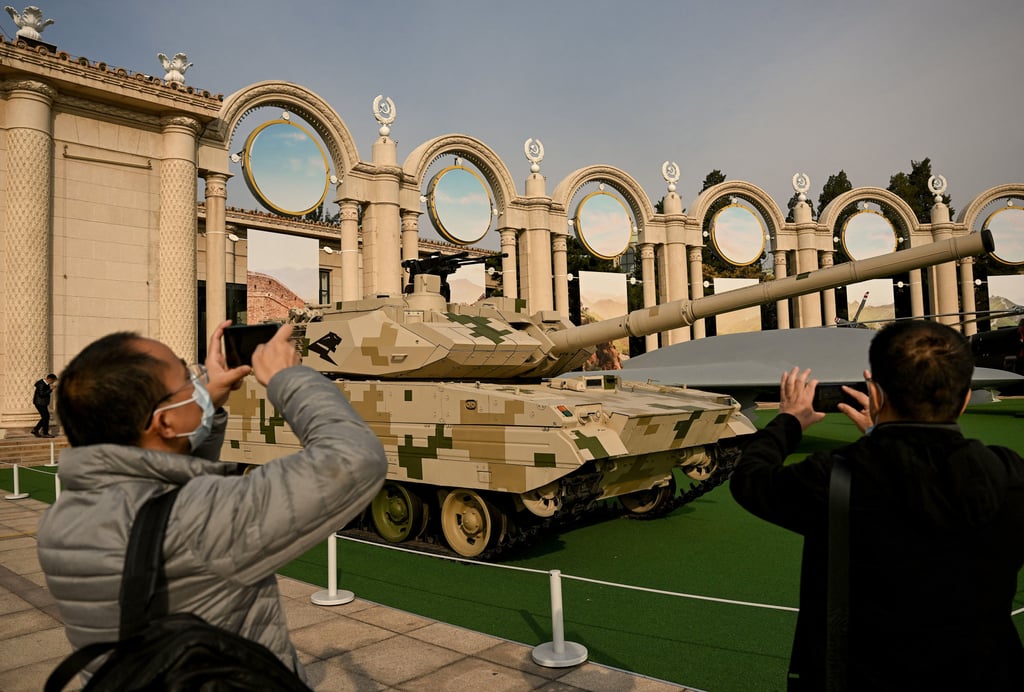
Iyer said China was nearly a decade ahead of India in light tanks, noting that its Type 15, launched eight years ago, had a 1,000-horsepower engine and came equipped with a 105mm gun.
“On paper the baseline Zorawar is lighter,” he said, describing the power-to-weight ratio as “broadly similar” and the guns as “comparable”.
But other factors must also be taken into account, including road, rail and air links, and the industrial capacity to build tanks at scale, Iyer said.
India’s tank fleet was older and behind on protection technology, he said, but not hopelessly so – further noting that the army had moved more T-90s and T-72s into Ladakh in a bid to narrow the gap.
Neither the Zorawar nor the Type 15 had yet seen combat, Iyer said. “The advantage India has in acclimatised troops and high-altitude experience is real and should not be underrated,” he added.
KioskNews shows a cleaned-up reading view extracted from the publisher’s page — the original always lives on their site, not ours.