Pakistan Says Middle East Oil Shock Is Accelerating EV Shift
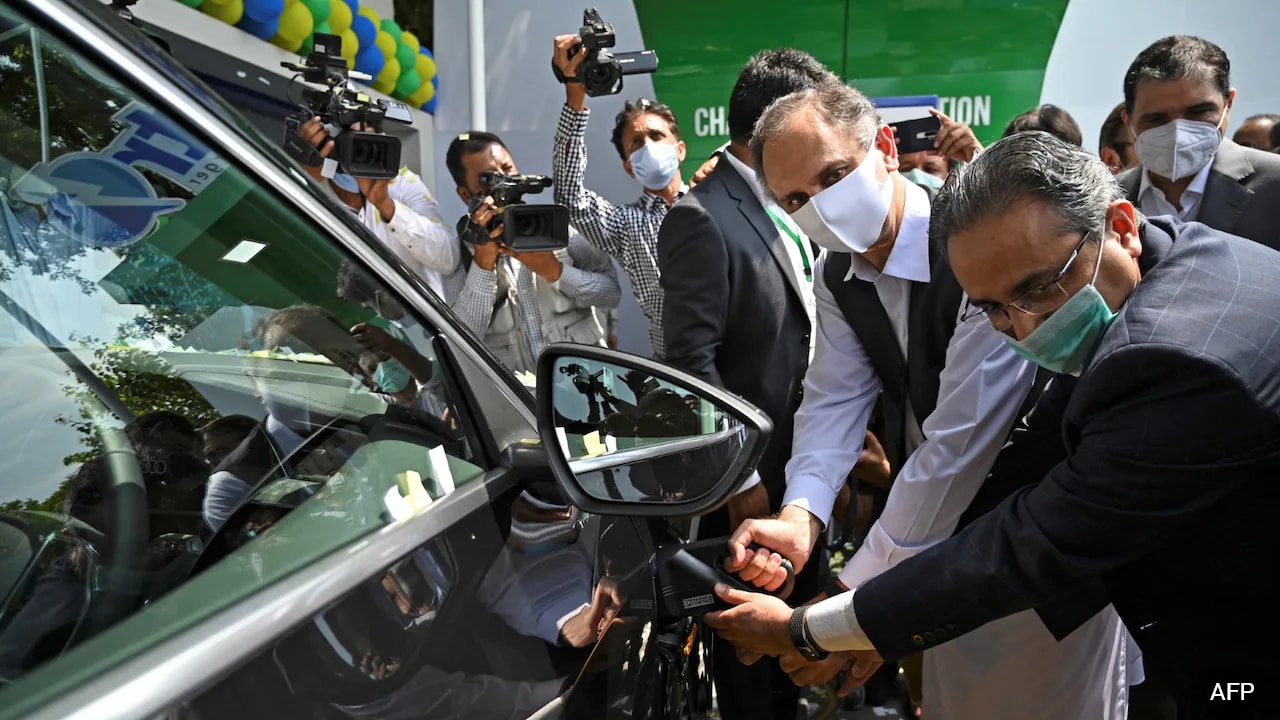
Pakistan expects to reach its electric-vehicle adoption target ahead of schedule as surging oil prices make switching away from gasoline-powered cars increasingly attractive, according to a senior government official.
The government aims for EVs to account for 30 per cent of new vehicle sales by 2030 under a policy announced last year. The jump in fuel costs since the Middle East conflict has shortened the time it takes for buyers to recoup the higher upfront cost of an EV, said Haroon Akhtar, adviser to the prime minister on industries and production.
"I feel that the target we had set in our electric-vehicle policy last year, we will achieve it much earlier as rise in oil prices has brought cost recovery of EV to one to one and a half year," adviser to Prime Minister on Industries and Production Haroon Akhtar told Bloomberg in Islamabad.
"People are realizing the benefit now. You don't have to pay for petrol," he said.
Since the Middle East war started in February, petrol and diesel prices have jumped 54 per cent and 43 per cent respectively, according to data available on Pakistan State Oil Company Ltd.
While Pakistan has every incentive to push ahead, along with other major oil and fuel importers, factors like vehicle cost and charging infrastructure mean a large-scale transformation of the country's fleet and oil-consumption needs is years away.
Still, even a modest shift could have wider economic benefits. Petroleum accounted for almost a quarter of Pakistan's total imports, at $16.9 billion in the year through June 2026, according to the Pakistan Bureau of Statistics. Higher oil prices can therefore worsen the trade deficit and add pressure on the currency and inflation.
The South Asian nation is also preparing a new auto policy that could be presented to the cabinet within the next two weeks. The government is considering tax incentives for EVs to narrow their price gap with conventional vehicles, Akhtar said.
The policy has been under discussion since earlier this year but was delayed by negotiations over tariffs and export requirements. The draft is now with Law Minister Azam Nazeer Tarar, who will incorporate the latest recommendations, according to Akhtar.
Akhtar said demand is already accelerating, with sales of electric motorcycles and scooters tripling from a year earlier and electric-car sales doubling. Industry-wide EV sales data aren't publicly available.
"This is an impact of the Middle East conflict, as fuel prices have gone up," Akhtar said.
(This story has not been edited by NDTV staff and is auto-generated from a syndicated feed.)
KioskNews shows a cleaned-up reading view extracted from the publisher’s page — the original always lives on their site, not ours.