Impeachment court: Sara Duterte cannot be compelled to admit bank account ownership
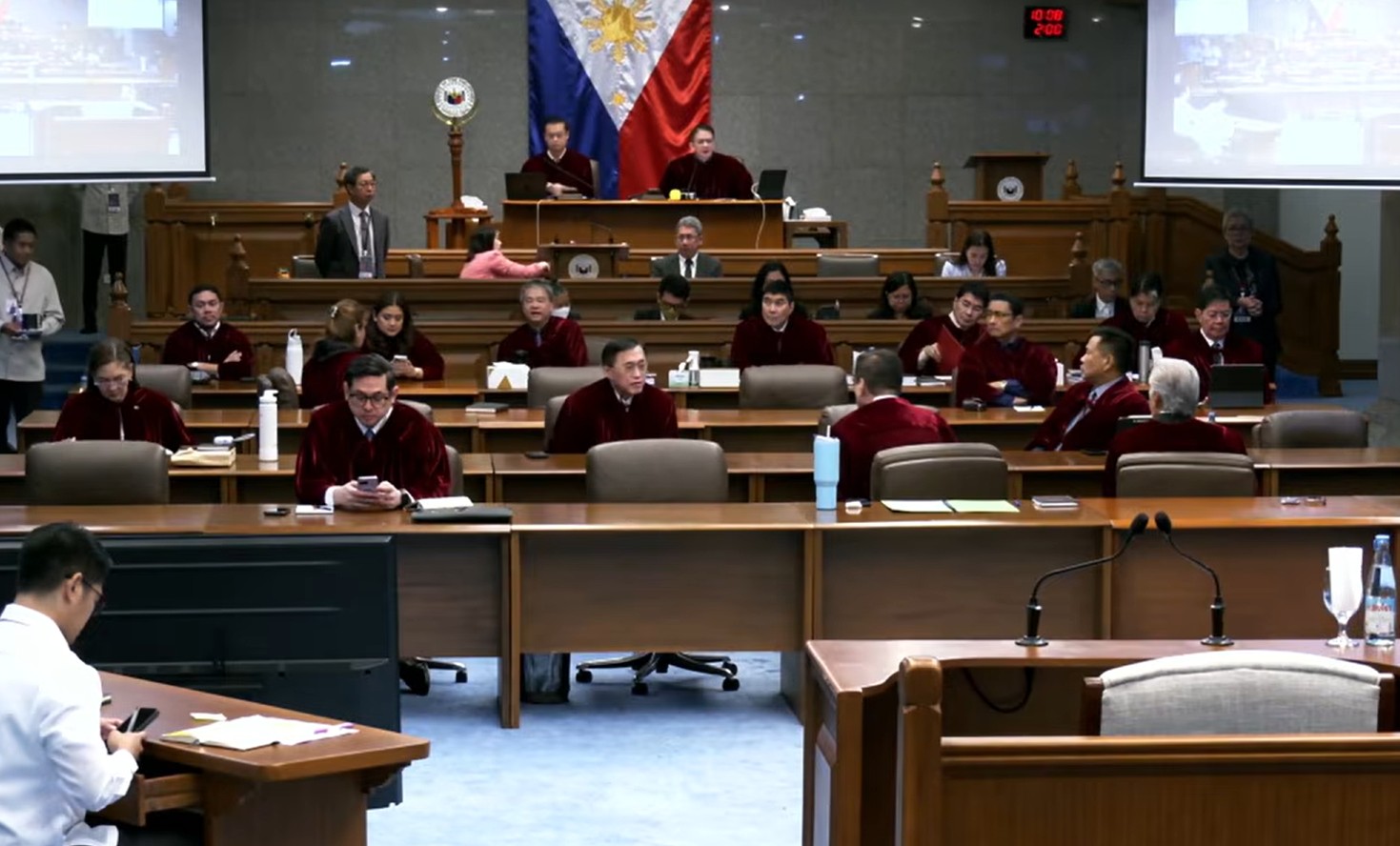
The Senate impeachment court on Tuesday ruled that Vice President Sara Duterte cannot be compelled to admit that she owned bank accounts whose records were submitted in her impeachment trial.
The ruling came after the House prosecution panel withdrew its request for admission on Monday and instead asked the defense to agree to stipulations, or agreements, on the authenticity of the bank records.
“The impeachment court, therefore, rules that respondent cannot be required to serve a written response to the request for admission,” Presiding Officer Francis “Chiz” Escudero said.
The prosecution’s request for admission covered 104 matters concerning Duterte’s personal circumstances and former public offices, her spouse’s business interests, and various bank records.
Duterte’s defense team objected to the request and sought to have the matter expunged from the impeachment court's records.
After withdrawing its motion for admission, the House prosecution panel asked the defense to agree to stipulations that the bank accounts exist, that the records were produced by the banks pursuant to subpoenas issued by the impeachment court, and that the records are genuine and authentic copies of those maintained and produced by the banks.
For its part, the impeachment court, despite the withdrawal of the request, said it found it necessary to address the issues it raised to guide the parties in future proceedings.
“The respondent’s objection to the application of Rule 26 is sustained. Respondent need not answer the request for admission and her failure to answer shall not be deemed an admission,” Escudero said.
“However, her prayer to expunge the request is denied. The request, the objection, and this ruling shall remain in the record as part of the proceedings but with the admonition and reminder to senator-judges that the request for admission shall have no evidentiary, factual, or prejudicial effect against the respondent,” he added.
Right against self-incrimination
Escudero said Rule 26 of the Rules of Civil Procedure cannot prevail over Section 17, Article III of the Constitution, which protects a person's right against self-incrimination.
Rule 26 states that “after the issues have been joined, a party may serve upon another party a written request for admission of the genuineness of material and relevant documents, or of the truth of material and relevant matters of fact.”
Meanwhile, Section 17 of Article III provides that “no person shall be compelled to be a witness against himself.”
“Being part of the Bill of Rights, the right against self-incrimination remains protected even under impeachment process as held in Duterte v. House of Representatives,” Escudero said.
He also cited jurisprudence holding that requiring a respondent to answer questions on material and relevant matters of fact could amount to compelling the respondent to be a witness against herself.
Escudero noted that Rule 26 also requires the response to be made under oath, exposing the party to the additional risk of being held liable for perjury, which he said constitutes another form of compulsion.
“While the impeachment court welcomes the prosecution’s desire to narrow the issues for trial, identify matters genuinely in dispute, and avoid unnecessary proof of uncontroverted matters, any such measure to expedite the proceedings must always yield to the protection of the substantial rights of the respondent under the Constitution,” he said.
'Burden of proof still with prosecution'
Escudero also said discovery cannot be used as a substitute for presenting competent evidence.
He said the prosecution remains responsible for establishing the charges through competent evidence, while the respondent must be given the opportunity to contest such evidence.
“The prosecution cannot shift its burden of proof to the respondent through the simple expedience of a request for admission,” Escudero said.
He also rejected the argument that the prosecution’s position that impeachment is not a criminal proceeding removes the constitutional safeguards afforded to the respondent.
“Gutierrez v. House of Representatives ... explains that impeachment is analogous to a criminal trial. Although it is not a criminal prosecution,” he said.
The House prosecution is presenting evidence on the second article of impeachment, which accuses Duterte of accumulating unexplained wealth through alleged failures to fully and truthfully disclose assets and liabilities in her Statements of Assets, Liabilities and Net Worth, as well as alleged failure to divest from business interests while serving as vice president.
The prosecution had sought Duterte’s admission regarding bank records subpoenaed by the impeachment court as part of its presentation of evidence on the unexplained wealth allegations.— MCG, GMA News
KioskNews shows a cleaned-up reading view extracted from the publisher’s page — the original always lives on their site, not ours.