"When will you come back?" How young Malaysians are bridging generations
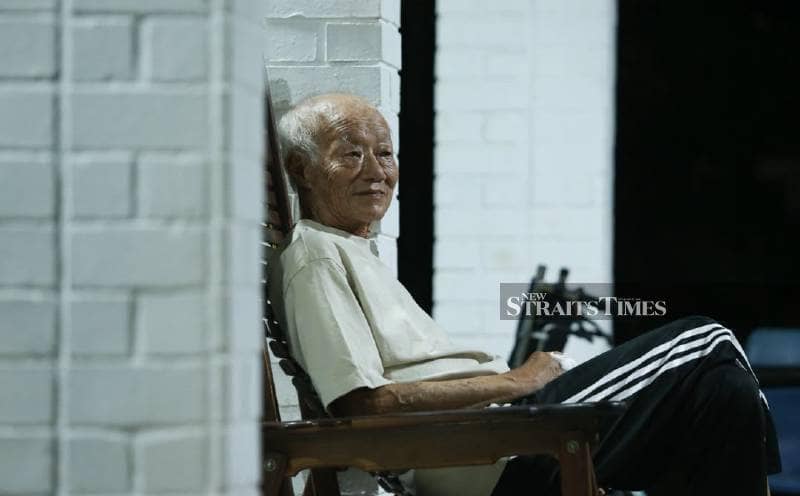
At 89, Sundra a/l Lingam doesn't need to say much more. The pleasure is written all over his face as a group of university students walks into Legend Care Centre in Petaling Jaya.
His eyes light up and he beams, and for a moment our conversation takes a back seat. Among the young visitors is Ho Chun Yi, the nursing student behind Stronger Intergen, a programme that brings university volunteers and older residents together.
[[nid:1587988]]
When I first join Sundra at the dining table, he's absorbed in reading on his Apple laptop. He looks up with a smile, closes the computer and turns his attention to me.
With his neatly combed white hair and gentle eyes, he has a quiet, thoughtful manner that puts people at ease. An engaging storyteller, we settle easily into conversation.
The students' arrival says something about how much their visits have come to mean to him. They're no longer just young volunteers organising activities, but familiar faces whose return brightens his day.
That kind of connection is becoming increasingly important as Malaysia grows older. The Department of Statistics Malaysia estimates that people aged 65 and above make up 8.4 per cent of the population in 2026, up from eight per cent the previous year.
Behind the changing demographics are millions of individual lives, families and relationships, and the question of how generations remain connected as family structures and lifestyles evolve.
Stronger Intergen, a student-led initiative at Universiti Malaya (UM), is one attempt to create more opportunities for that connection.
Its value, however, lies in something less easily measured than the number of visits or activities organised: the time spent listening, the stories exchanged and the unexpected lessons that pass between young and old.
[[nid:1587985]]
For Sundra, an English teacher for more than 25 years, conversation has always mattered. These days, he still enjoys reading, particularly Tamil language books and historical novels. He's been at Legend for several months, having moved there with his wife after her health deteriorated and she needed more nursing care than they could manage at home.
"Of course, nothing like home, but I know I won't be able to manage," he shares.
He describes the centre as peaceful, a place where he can settle into his reading and enjoy a quieter routine. Yet parts of his former life remain close to him, especially the family he's built over the years.
He speaks with particular affection about a granddaughter in Sydney, who spent much of her childhood with him and his wife while her parents were at work. Their closeness remains precious, even though distance now separates them.
Then, almost as an afterthought, he asks shyly: "Would you like to see something?" Reaching into his pocket, he draws out a small homemade card bearing a photograph of a younger Sundra with a little girl.
Eyes lighting up with pride, he says: "My granddaughter made this for me. Would you like to read what she wrote?"
Taking it from him, I slowly read the handwritten message. She thanks him for being a wonderful grandfather and wishes him many more years together. More than a birthday greeting, the card is a precious reminder of the closeness they once shared and a granddaughter whose presence he still misses.
Yet, amid the memories he shares, it's his wife who remains closest to his heart.
Also 89, her health has declined to the point where she needs more care. Even now, his concern is less about his own circumstances than about what will become of her when he's no longer around to care for her.
"As long as I'm around, I can ensure she's okay," he says softly.
His words are simple, but they linger. After a lifetime together, his sense of responsibility towards her remains instinctive. Even as they navigate the realities of growing older, his thoughts are still with the woman who has shared so much of his life.
WEIGHT OF GOODBYE
[[nid:1587980]]
For 75-year-old Lee Siew Boon, life at the centre has brought its own profound changes. She moved there with her husband after a car accident left her with a leg injury, making everyday tasks increasingly difficult.
But her life took another unexpected turn when her husband died suddenly from a brain haemorrhage, just weeks before our conversation.
Even as she shares about her life at the centre, the conversation returns to the loss that has left the deepest mark. His death is still painfully raw, and she struggles to hold back her emotions.
"His death was very sudden. I didn't have the chance to say goodbye as I wasn't expecting it."
There's a particular ache in that unfinished goodbye.
They'd known each other for almost 49 years, and only weeks before his death, they were still making plans for his birthday and their wedding anniversary. Instead, she's left to face those dates without him and navigate a future she'd never imagined having to face alone.
"Aiya, why you have to go so fast?" she laments, voice breaking.
In the weeks after his death, her children considered moving her elsewhere. But Lee had made up her mind to stay at Legend, where she has settled into a familiar rhythm and the faces around her have become part of her everyday life.
She has friends there, too, and looks forward to their outings and lunches together. Her daughter visits when she can, while her son, who lives in Singapore, helps pay for her care.
Holding on to what remains familiar matters to Lee. She doesn't want to uproot herself again, nor does she want her children to put their own lives on hold for her. She'd rather they visit because they want to, not because they feel compelled.
It's not that she misses them any less or that the absence of her husband has become easier to bear. But Lee is finding her own way forward. She may live in a care centre, but she hasn't surrendered her independence or appetite for life.
[[nid:1587977]]
That's also why she enjoyed the students' visits. Their energy and curiosity, she says, brought a different kind of liveliness to the centre.
Her advice to the younger generation is shaped by a truth she's come to know all too painfully: never take the time you have with your parents for granted. Make the most of it while you can, she urges, and don't hold back the words that matter.
"If you want to say you love them, say it now," Lee reminds them. Having lost her husband so suddenly, she knows that the chance to express love, share one more conversation or simply say goodbye may not always come when we expect it.
LESSONS IN LISTENING
[[nid:1587975]]
Stronger Intergen was born out of an encounter that stayed with Ho.
During a cognitive screening exercise in January, the young student met a 93-year-old woman accompanied by her daughter. The woman struggled to answer the questions, but something she kept saying left the deepest impression on him: she missed her grandchild.
The encounter made Ho think about something easily overlooked in caring for older people. Beyond medical assessments and physical care were emotional needs that mattered just as much: companionship, affection and the simple comfort of feeling connected to others.
Months later, when his lecturer shared news of a community-project funding competition organised by My Starfish Foundation, he saw an opportunity to turn that concern into something more tangible.
His initial proposal was to bring children and older family members together. But following feedback from the judges, the idea took a different direction. University students would be a more accessible group to mobilise and so the project evolved into Stronger Intergen.
Ho became student director, working with a six-member committee to plan and organise the visits. Getting young volunteers and older residents to connect, however, proved less straightforward than he'd imagined.
[[nid:1587973]]
During the first visits, some residents were hesitant to engage, while the students themselves were unsure how best to approach them. The activities didn't always go as planned either. Some music selections failed to get residents moving, while games proved too simple or repetitive.
The team had to learn by doing, observing how residents responded and making adjustments along the way. With each session, the students became more attentive to their interests and preferences.
They began to understand that the visits shouldn't simply be about organising activities for older people, but about involving them and taking part alongside them.
Each session lasted about five hours. Volunteers were paired with residents, with time set aside to get acquainted before moving on to warm-up activities, group games and personal conversations. The students also learnt to encourage residents to do things for themselves where possible, rather than stepping in and taking over.
During one session, for instance, a volunteer joined an older resident in tai chi and was surprised by his strength and ability. It was a reminder that age doesn't necessarily define what a person can still do, and that assumptions about older people can be misplaced.
PRICELESS LESSONS
[[nid:1587970]]
For some of the students, the lessons from Stronger Intergen reach beyond the walls of Legend Care Centre, finding their way into their own lives and relationships.
Dental student Tong Jia Chen signed up after a friend shared the volunteer opportunity. He had a personal reason for wanting to take part: he hoped to become more comfortable interacting with older people, including his own grandmothers, whom he saw only once every few months.
During one session, he was paired with an older woman for a drawing activity. As they sketched together, she began telling him about her kampung home, her working years and the time she spent raising her children.
Tong initially tried introducing other topics, but soon noticed how readily she returned to those memories. Rather than steer the conversation elsewhere, he decided to let her talk.
The drawing became almost incidental; what mattered was that she had someone willing to sit with her and listen. By the end of their conversation, she even invited him to her home for murukku.
The encounter also gave him something to think about in his chosen profession. As a future dentist, he knows that sitting in a dental chair can be an unfamiliar, intimidating experience, particularly for older patients.
[[nid:1587968]]
A procedure may require technical skill, but helping someone feel at ease takes patience and a willingness to understand the person sitting before him.
For Siti Nurshahidah Alias, 37, the experience offered a different kind of nourishment. A nursing graduate working in the Paediatric Haematology and Oncology Unit at Universiti Malaya Medical Centre, she was already balancing the demands of work and study when she decided to volunteer.
She wanted to give something of herself beyond her professional responsibilities, but discovered that the experience gave something back to her, too.
"I wanted to feed my soul with something," she confides.
One encounter, in particular, stayed with her. An older woman, whom Siti believes was a former teacher, smiled at her and held her hand. In that brief exchange, the woman offered words of encouragement, reminding her to look after herself and continue doing good.
The simple gesture left a lasting impression.
"I realised that meaningful connections don't always require grand gestures or lengthy conversations. Sometimes it's just having you make time to sit there and listen."
For Ho, one of the most unexpected lessons from Stronger Intergen didn't come from a resident at the centre, but from a conversation with his mother.
During his first year studying in Kuala Lumpur, he hardly called home. Caught up in university life, he assumed his mother understood that he was busy and wouldn't take his silence to heart. He didn't realise that she, too, had been holding back, afraid that calling might interrupt his studies or become a burden.
When she eventually confided this to him, he was shocked. He hadn't realised his mother was waiting for him to call. In their own way, both had been trying not to trouble the other, leaving an unspoken distance neither had recognised.
Since then, he has made a conscious effort to reach out and talk to her. It was a small change, but one that speaks to the programme's wider value: in learning to listen to older people, the students are also learning to pay closer attention to those closest to them.
BEYOND THE VISITS
[[nid:1587965]]
Jaya Rajamanickam, founder of Legend Care Centre, had watched the students find their feet, too. In the beginning, some were unsure how to approach the older residents. They kept a polite distance, sometimes falling back on a string of questions that did little to draw people out.
Jaya advised Ho to slow things down: spend time with the residents, get to know them, understand what they need and, above all, build their trust before planning activities around them.
A care home, explains Jaya, isn't simply a place for students to carry out a community project. Its residents aren't there merely to be part of a learning exercise.
They have their own histories, preferences and ways of relating to others. Any meaningful connection has to begin with seeing them as individuals, listening to them and meeting them where they are.
For Jaya, this matters all the more as family life continues to change. Adult children are often stretched between work, raising their own families and other commitments, while older parents may spend much of their day in a care home or by themselves.
[[nid:1587962]]
Good professional care can provide for their physical needs, but there are things it cannot offer in quite the same way: the familiarity of a loved one's voice, the comfort of an unhurried conversation and the feeling of being remembered and missed.
She hopes Stronger Intergen will help young people look at older adults with greater understanding, rather than through the lens of age alone.
For Dr Lee Wan Ling, an associate professor at UM's Faculty of Nursing and the programme's facilitator, the real value of Stronger Intergen lies in what happens beyond the games, activities and hours spent at the care centre.
Academic knowledge can equip students with the skills they need for their chosen professions, but empathy and compassion are harder to learn from textbooks. They have to be nurtured through encounters with people whose lives and experiences may be very different from their own.
[[nid:1587959]]
Through listening, communicating and recognising needs that aren't always spoken aloud, students begin to develop a deeper understanding of others.
Dr Lee's role is to provide guidance without taking the reins away from the students. She helps them assess what's practical, offers support when challenges arise and encourages them to take responsibility for shaping the programme themselves. Just as importantly, she wants them to reflect on what each encounter has taught them.
After the activities, students write reflections on their experiences, what they've observed and how their perceptions may have shifted.
The team also looks closely at the residents' responses, including quieter signs of connection: a willingness to join in, a conversation that lasts a little longer or growing familiarity with the young people who return to see them.
The programme's evaluation is still largely qualitative, and Dr Lee hopes to develop stronger ways of measuring its emotional and social impact. For now, the students' reflections and the team's observations offer glimpses of the changes taking place, sometimes in ways that aren't easily captured by numbers.
For UM, the initiative also reflects a wider responsibility of higher education: to develop graduates who can take their knowledge beyond the classroom and apply it meaningfully in the communities they serve.
Ultimately, Dr Lee wants the experience to shape more than students' attitudes towards ageing. She hopes it will help nurture graduates who aren't only competent in their respective fields, but also conscious of their responsibilities to the communities around them.
That's an important distinction in a country growing older. The ability to communicate with, understand and care for older people shouldn't rest solely with those in healthcare.
Whatever their profession, today's students will be part of a society in which ageing touches almost every family, and where the capacity to see beyond a person's age or condition will matter more than ever.
LASTING CONNECTIONS
[[nid:1587955]]
But what happens when the initial enthusiasm fades? For Stronger Intergen to grow beyond its first few rounds of visits, it'll need more than the commitment of a small group of students. It will need support, resources and partnerships to give it staying power.
Ho and his team are exploring ways to make this possible, including working with UM's Centre for Integral Learning (CITrA), which oversees general courses and service-learning initiatives.
Dr Azlin Zaiti Zainal, head of CITrA's General Course and Service Learning Division, sees potential for the project to develop under the university's Service Learning Malaysia–University for Society framework.
The approach connects academic learning with community needs, giving students the opportunity to apply their knowledge while working alongside the people they hope to serve.
For Stronger Intergen, this could offer a more structured way forward, with academic guidance, reflection and assessment incorporated into the learning experience. Formal integration, however, is still being explored.
Any longer-term effort will require sustained institutional support, resources and close collaboration with community partners who understand the residents' needs.
The care centre and university each have a part to play: one brings an intimate understanding of the people who live there, while the other can provide guidance, training and a continuing pool of student volunteers.
[[nid:1587952]]
Dr Lee hopes intergenerational engagement will eventually become part of everyday community life, rather than an activity that depends on a university project or a group of students finding the time to visit.
It's a worthwhile ambition, but one that cannot be achieved in a few sessions. A handful of visits will not erase loneliness, close every generational gap or take the place of family bonds that need tending.
What they can do is create opportunities for people who might otherwise never have crossed paths to sit together, talk and discover something in one another.
Perhaps that's best understood back at Legend Care Centre. As the students' visits came to a close, some residents wanted to know when they'd see them again.
"When will you come next time?"
They weren't asking for another afternoon of games or activities, but for the young people to return, sit beside them, listen to their stories and share a little more time.
For the students, what began as a university initiative became an encounter with lives and experiences far removed from their own. They, too, leave with fresh perspectives and a greater appreciation of the people behind the label of old age.
The visits may have ended, but the connections made in those few hours remain significant. For a while, young and old found common ground, discovering how much can pass between generations when someone's willing to listen.
Perhaps that's the simplest measure of Stronger Intergen's worth: not the activities completed or lessons recorded, but the human connections forged when people make time for one another.
KioskNews shows a cleaned-up reading view extracted from the publisher’s page — the original always lives on their site, not ours.