Ted Morton: What happens next in Alberta depends on Ottawa
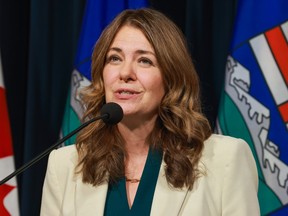
The results for the Alberta referendum send a mixed message.
Sign In or Create an Account
The 25 per cent vote for Option B — for a followup referendum to secede — was lower than what I had hoped for, but about what I expected. As I’ve stated repeatedly, I do not support Alberta separation, but I also do not support the status quo. My concern was — and is — that too low a vote for Option B sends a message to the rest of Canada that they don’t have to worry about Alberta; that the separatists are a noisy but politically irrelevant minority, and so the Carney Liberals can go back to business as usual.
This would be a big mistake. The 25 per cent vote for separation is double what it would have been a decade ago. And if the next decade is like the past decade, this number will double again. Which means 50 per cent, and a real problem, both for Canada and for Alberta.

Columnist Jesse Kline keeps you up to date with what’s happening in Israel and the effects of antisemitism on life here in Canada. Friday mornings.
By signing up you consent to receive the above newsletter from Postmedia Network Inc.
A welcome email is on its way. If you don't see it, please check your junk folder.
The next issue of Channel Israel will soon be in your inbox.
We encountered an issue signing you up. Please try again
My main takeaway from the referendum is that the same voters who voted 75 per cent to remain in Canada also voted around 50 per cent for the policy and constitutional reforms in questions 1 through 9. That is, they oppose separation, but they also do not think that Alberta has been treated fairly.
Does that mean that the separation debate in Alberta is over? No. Alberta’s constitutional vulnerability to predatory and damaging federal policies remains. But I predict the next chapter will depend more on what happens in Ottawa than what happens in Edmonton.
Prime Minister Mark Carney must turn his talk into actions; he must follow through on his “energy super-power” rhetoric and deliver on the now three new proposed pipelines to the West Coast. If Carney does this, separatist sentiment will go into hibernation.
Test No. 1 for Carney will be to meet his September 2027 deadline for final approval of the Pacific Link pipeline as a project of national interest. And not coincidentally, meeting this deadline would also almost guarantee that Albertans would give Premier Danielle Smith and the UCP a second majority government in the October election.
But what if Carney does not deliver? What if the U.S.-Iranian conflict ends; the Strait of Hormuz reopens; and the global price of oil goes back to $50 or $60 US/barrel? Will climate change replace energy security as Carney’s highest priority? Will reducing Canada’s CO2 emissions replace expanding Canada’s oil and gas exports to the rest of the world? Perhaps more worrisome, what happens after Carney? The Liberal party will be here long after Carney goes out the door. If all of this goes in the wrong direction, the separation bear will come out of hibernation and roar again.
This pessimistic scenario is hardly improbable. The same Canadian organizations that supported Justin Trudeau’s climate change policies and helped to kill Northern Gateway, Energy East and Keystone are now just as strongly opposed to Carney’s new export pipelines. So are their U.S. counterparts who funded much of the anti-pipeline litigation of the past decade.
Then there is the Aboriginal opposition. The recent Cowichan Tribes court decision in British Columbia has undermined traditional property rights not just in Richmond but in the entire province. No private-sector companies are going to invest a dollar in British Columbia — much less in new West Coast pipelines — until this legal uncertainly is clearly resolved, and sooner rather than later.
Short term, this will be Test No. 2 for Carney. It will be neither easy nor pleasant. The very judges who the Liberals have appointed have ignored the text of Section 35 of the Constitution — “existing Aboriginal and treaty rights” — and given it a retrospective application that has opened the door to hundreds of new lawsuits. And when these involve proposed pipelines, they don’t have to win the legal issues. Death by delay is good enough.
And this is the likely fate of Pacific Link, unless Carney intervenes and refers the Cowichan Tribes issues directly to the Supreme Court of Canada, along with a request for an expedited ruling. While this tactic is not common, it is perfectly legal and has been done before. And given the unprecedented media coverage of Carney’s energy super-power initiatives, a majority of the nine Supremes might just give him the ruling that he — and all Canada — needs.
This strategy would be strongly supported by Alberta and Saskatchewan. And now by the newly elected Conservative government in British Columbia. Premier-elect Lorne Doerkson campaigned on promises to double the provinces’ natural gas production; expedite the building of Pacific Link; and repeal B.C.’s Declaration on the Rights of Indigenous Peoples Act.
But Carney’s use of an expedited appeal to the Supreme Court would be strongly opposed by all Indigenous groups and would bitterly divide the Liberal party’s traditional base of supporters. Will Carney choose to go down this road? Even if he does, will the Liberal party follow him?
Carney is an economist. He understands the value of Alberta’s oil and gas to the rest of Canada even if his party doesn’t. If Alberta were to leave, international investment would decline, and Canada would have a trade deficit rather our current surplus. Canada’s GDP would shrink, and the Canadian dollar would weaken even further, making all imports more expensive. Without Alberta, the Canada Pension Plan would have to either raise contributions or reduce benefits. Without Albertans’ (over) contribution to federal revenues, Ottawa would have to raise taxes, cut spending or run even bigger deficits. And there would be higher interest rates on government borrowing to cover those deficits — not just for Ottawa but for all the other nine provinces and three territories.
But if the Liberal party doesn’t follow Carney down the energy super-power path — and many won’t want to — they know they can always go back to their old playbook: “Screw the West; we’ll take the rest.” Together, Ontario (122) and Quebec (78) have 200 seats in the House of Commons. A majority government requires only 172 MPs. The Liberal party can and has formed majority governments with few or even no MPs from the West. With policies that transfer federal tax revenues from the energy-rich, voter-poor western provinces, to the energy-poor, voter-rich central Canadian provinces, the Liberals have won 12 of the past 18 federal elections. The playbook works.
Bottom line: Post-referendum, what happens next will depend more on what happens in Ottawa than what happens in Edmonton. Albertans should hope for the best but still continue to be prepared for something much less. Alberta’s constitutional vulnerability to predatory and damaging federal policies remains.
F.L. (Ted) Morton is professor emeritus and an executive fellow at the School of Public Policy at the University of Calgary. He is also a former energy and finance minister of the government of Alberta.
Join the Conversation
This website uses cookies to personalize your content (including ads), and allows us to analyze our traffic. Read more about cookies here. By continuing to use our site, you agree to our Terms of Use and Privacy Policy.
KioskNews shows a cleaned-up reading view extracted from the publisher’s page — the original always lives on their site, not ours.