Election Commission resolves to prosecute 77 people in Senate collusion case
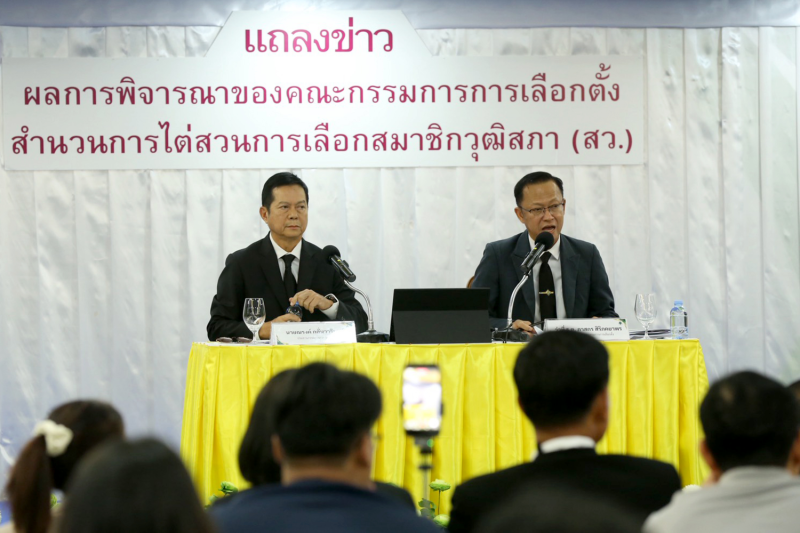
The Election Commission (EC) on Monday resolved to ask the Supreme Court to hear the case against 77 people accused of collusion in the 2024 Senate election process, including 26 sitting senators.
The charges relate to alleged improper candidate introductions and the solicitation or acceptance of benefits.
No political party executives, House of Representatives MPs, other political office holders or reserve senators are named in the charges.
All seven election commissioners met to consider the findings of an investigation into alleged irregularities in the 2024 Senate election, EC deputy secretary-general Phasakorn Siriphakyaporn, who oversees investigation, adjudication and election administration, said.
The case involved a total of 427 accused individuals, not 229 as previously reported in the media.
EC chairman Narong Klanwarin said the commission’s consideration of the cases was independent but remained within the framework of the law. The commission did not make its decision arbitrarily or in response to social pressure, or the demands of any particular group, he said.
The EC considered complaints filed by 67 people, with investigation files containing 75,722 pages of documents.
Of the 77 people the EC resolved to take to the Supreme Court and pursue criminal proceedings, 26 are serving senators, 36 people eligible to vote in the Senate election but who were not candidates or reserve candidates, and 15 are other individuals, Mr Narong said.
The EC considered seven charges under the organic law governing the acquisition of senators, concerning political party executives, party office holders, MPs, local councillors, local administrators or political office holders.
The first charge concerns assisting candidates in securing election as senators under Section 76, paragraph one, of the Organic Act on the Acquisition of Senators. There were 21 people involved in this charge, 20 respondents and one other individual. The EC resolved not to petition the Supreme Court in these cases.
The second charge concerns candidates consenting to assistance from the figures to secure their election under Section 76, paragraph two. There were 140 people involved, comprising 137 serving senators, one reserve candidate and two Senate voters. None was referred to the court under this allegation.
The third charge concerns candidates failing to comply with methods or conditions prescribed by the EC, including its 2024 regulation on introducing themselves to voters, issued under Sections 70 and 36.
Of the 137 serving senators facing this charge, the EC resolved to petition the Supreme Court against 26. One person eligible to vote in the Senate election and nine other individuals will also face Supreme Court petitions.
The fourth to seventh allegations cover providing property or other benefits to influence voting, offering or accepting hospitality to influence voting, accepting benefits in exchange for standing as a candidate, and accepting benefits in exchange for voting for or against a particular candidate.
The EC resolved to petition the Supreme Court to try 77 people: 26 serving senators, 36 Senate voters and 15 other individuals. (Continues below)
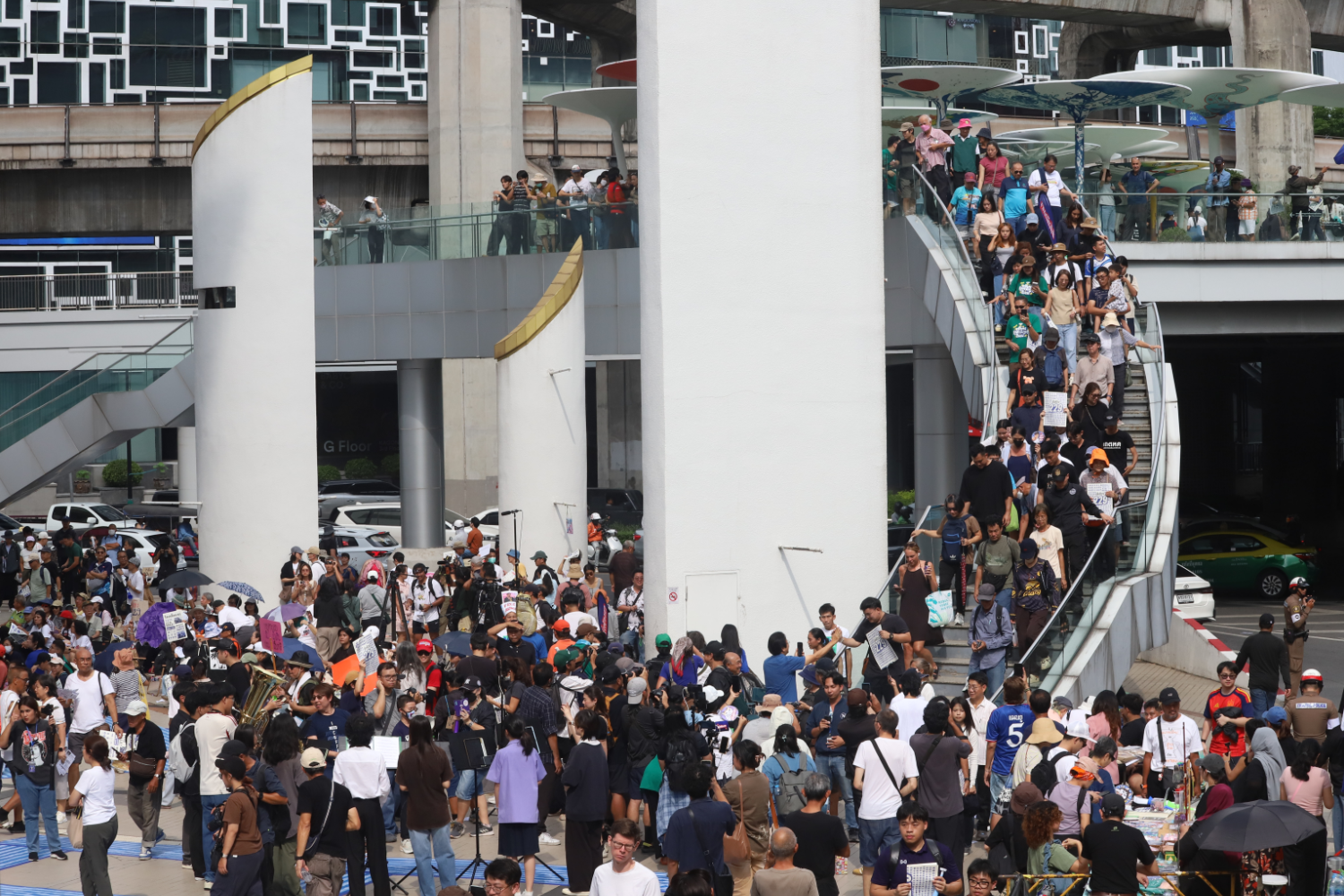
iLaw (Internet Law Reform Dialogue) and People’s Party supporters on Sunday gather at the Bangkok Art and Culture Centre, demanding the Election Commission (EC) submit the senate election collusion case to the Supreme Court for judgement. (Photo: Apichart Jinakul)
The case has dragged on for more than two years since the nationwide Senate election results were announced on June 26, 2024. The election process involved candidates voting among themselves over several rounds to select the 200-member Senate.
The iLaw group, along with the opposition-core People’s Party and their allies had demanded the EC prosecute 229 people they initially identified in the case.
The extensive investigation uncovered financial transaction trails linking several individuals in political circles. The EC’s 26th inquiry subcommittee, working with the Department of Special Investigation (DSI), concluded in July that 138 of the 200 sitting senators had obtained their seats unlawfully and implicated 91 other political figures.
Prime Minister and Bhumjaithai Party leader Anutin Charnvirakul and several senior Bhumjaithai figures were among the 229 accused but have denied any involvement.
Investigators allege that an organised network coordinated Senate candidates across all 20 occupational groups, with senior politicians, cabinet members and influential provincial political families accused of supporting the operation.
Under the previous EC investigation, 229 people were formally accused. They included 138 senators and 91 political figures.
The case has been jointly investigated by the EC and the DSI.
While the EC’s original panel recommended referring the case to the Supreme Court, a later subcommittee concluded by a 5-2 vote that no offences had been committed, creating conflicting recommendations.
Following Monday's resolution, the EC is required to finalise its decisions on the Senate election investigation files within 60 days and then file petitions with the Supreme Court within 60 days.
Once the Supreme Court accepts a petition for consideration, any serving senator named in the case will be suspended from duty until the court issues its ruling. If the court finds a senator guilty, their Senate membership will end from the date they were suspended from duty. If not, they will resume duty.
KioskNews shows a cleaned-up reading view extracted from the publisher’s page — the original always lives on their site, not ours.