Malaysia bets on AI boom with 2,300-acre Silicon Island
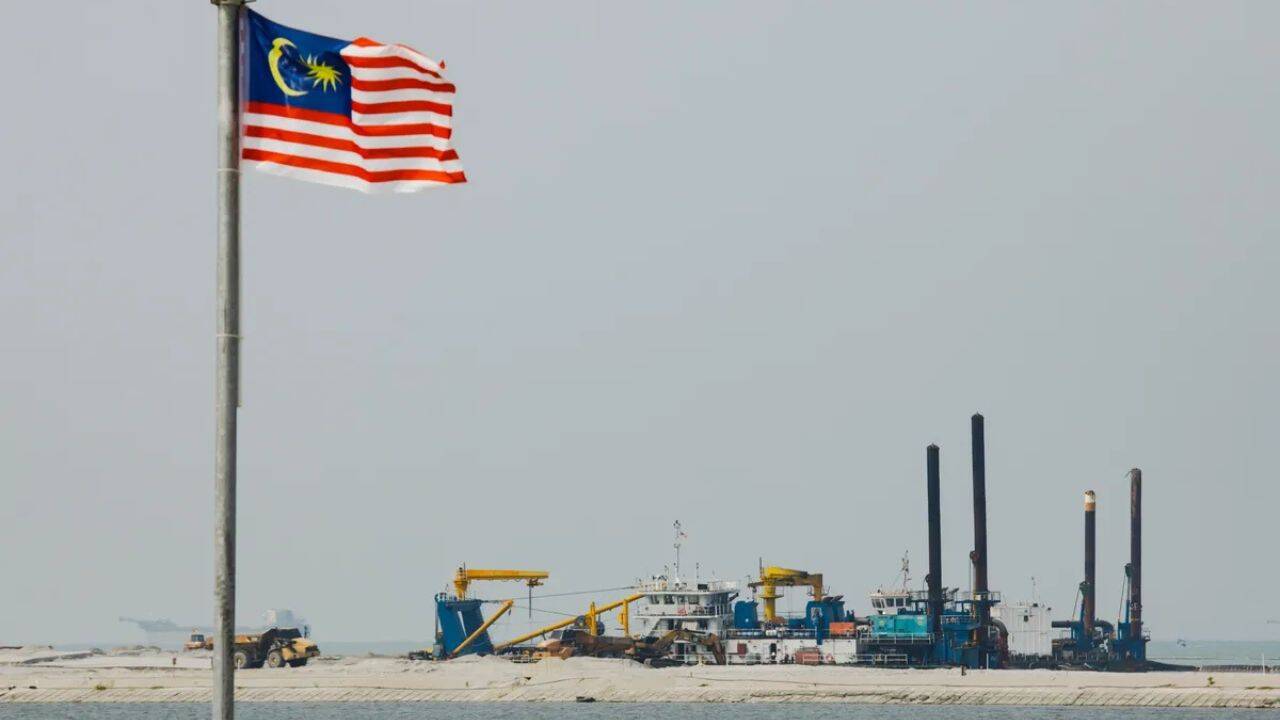
A Malaysian flag near the construction site for Silicon Island reclamation works (Samsul Said/Bloomberg)
Malaysia is reclaiming 2,300 acres of sea near Penang to build a new semiconductor hub as rising demand driven by the artificial intelligence boom pushes the island’s existing industrial clusters towards their land limits.The Silicon Island project is expected to attract about 75 billion ringgit in investment, contribute 1.1 trillion ringgit ($269 billion) to Malaysia’s economic output through 2050 and create around 220,000 jobs, Bloomberg reported, citing a Deloitte study used by the project's developers.Penang has spent more than five decades building a major electronics and semiconductor hub, with companies including Intel, AMD and ASE Technology operating around Bayan Lepas.
The state accounts for about 5 percent of global semiconductor exports, according to the state government.Silicon Island is intended to provide space for further expansion while helping Malaysia move beyond traditional chip assembly and testing into higher-value activities such as semiconductor design, advanced packaging and automated testing.The project comes as the global AI boom drives demand across the semiconductor supply chain.
Malaysia is also benefiting as companies diversify production amid US-China tensions. Silicon Island has already drawn interest from local and international firms, particularly from Taiwan and Japan.At its centre will be a roughly 700-acre Green Tech Park targeting semiconductor design, advanced packaging and automated testing. Its first phase is planned to operate entirely on renewable energy, according to the developers.However, the project will take years to complete. Reclamation could take three to four years, with the first industrial operations expected by early 2029 and the wider development potentially taking up to 15 years.Gamuda is financing the project's 14 billion ringgit reclamation and infrastructure costs through a syndicated loan, according to Bloomberg. The first industrial land sales are planned for early 2027.The island will also include around 20,000 homes, commercial facilities and green spaces. A 29.67-km Mutiara Line light-rail system is planned to connect it with Bayan Lepas, Penang International Airport and George Town, with operations scheduled to begin by the end of 2031.Silicon Island faces competition from Singapore, Vietnam and India, while higher land costs could make it less attractive to lower-margin manufacturers. Its developers are betting that Penang’s existing semiconductor ecosystem and growing AI-driven demand, rather than residential development, will drive the project’s success.
KioskNews shows a cleaned-up reading view extracted from the publisher’s page — the original always lives on their site, not ours.