SYSTEMS CHANGE: Zaheera Mohamed brings public finance savvy to the fight for ECD systems change
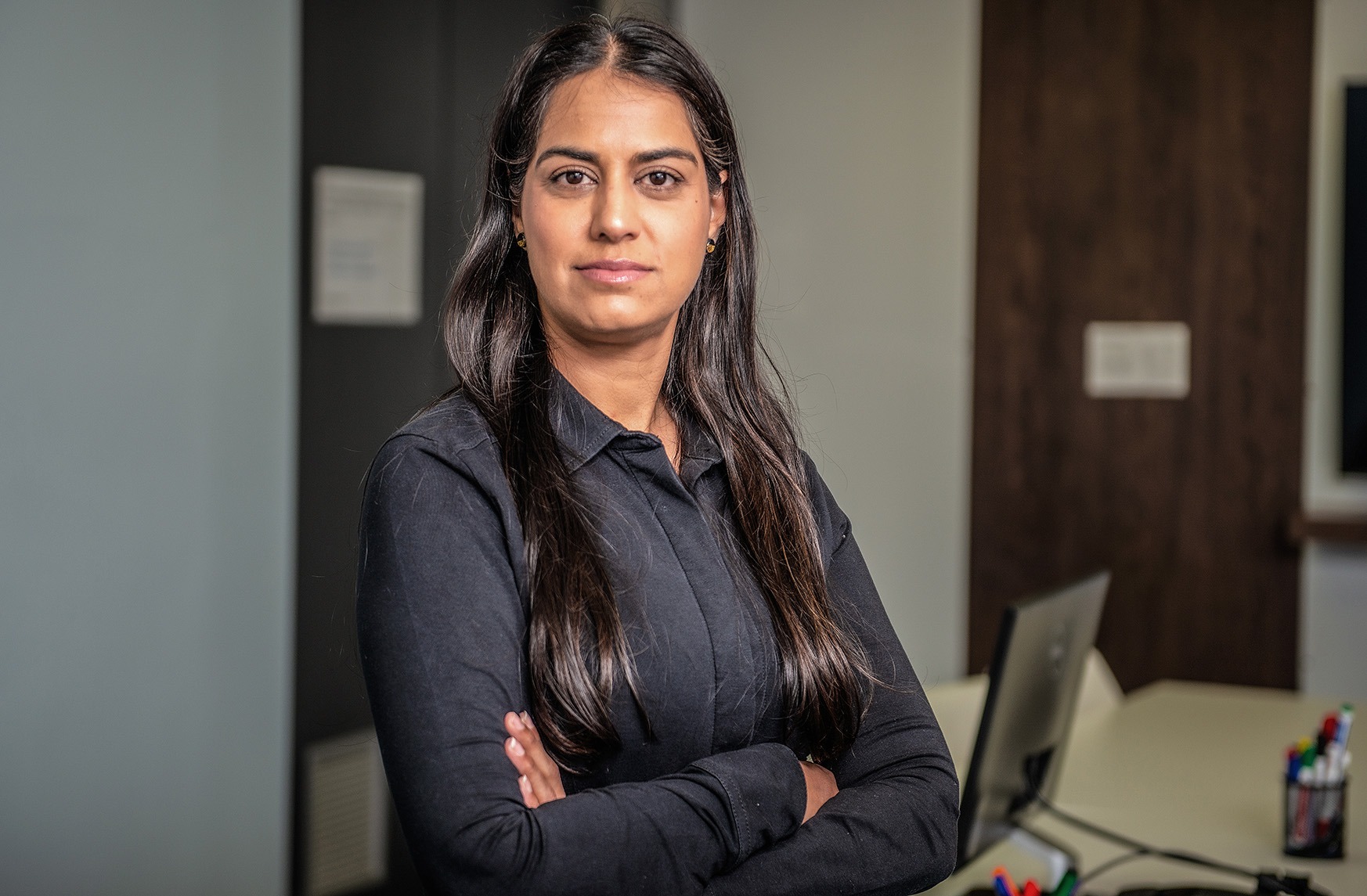
Zaheera Mohamed grew up in a household of grandmothers – older matriarchs of the family who transformed her childhood into a series of playful learning opportunities by involving her in activities such as cooking, dressmaking and cleaning.
She learnt to count change with her great-great-grandmother, who had a knack for numbers, and looked up to her maternal grandmother, who started a small early childhood development (ECD) programme in an orphanage hall and grew it into a fully fledged school with more than 200 children.
“That’s my origin story. I always say I did not choose ECD; ECD chose me because of my upbringing, what I was exposed to. Each and every job that I’ve done has had an aspect of childhood development,” Mohamed reflected.
/file/attachments/orphans/10706445_425148.jpg "A child in the SmartStart national early learning programme engages in an activity at the SmartStart center in the farm working community of De Doorns, South Africa 31 March 2022. . (Photo: EPA-EFE / NIC BOTHMA)")
Systems change
Today, Mohamed is the CEO of Ilifa Labantwana, a “systems-change organisation” working towards universal access to quality early childhood development services that benefit children and women in low-income households.
The nonprofit organisation works on government systems specifically, placing it in a position Mohamed describes as a “seat of privilege”.
“We don’t take it lightly, where you really get to see the struggles that government is facing. You develop such deep levels of empathy,” she said.
“We will work with them to shift the system slowly, rather than push a non-collaboration agenda.”
When it comes to the intersection of public policy and finance, Mohamed can draw not only from her time in the civil society sector, but also from her experiences as the former director of public finance for social development in National Treasury. She has supported and advised on reform of public finance administration systems – most notably the design of South Africa’s first ringfenced ECD budget, the ECD Conditional Grant.
During her time at Treasury Mohamed observed that the two greatest challenges were the limited budgets for ECD and the difficulties in ensuring that the money allocated flowed to practitioners.
/file/attachments/orphans/WFD_4080_234161.jpg "Children gather for lunch at Phaphamani Preschool in Xhorha Mouth, Eastern Cape. (Photo: Felix Dlangamandla)")
“When I was at at Treasury we started a process with the Department of Social Development, back in the day, around saying... can we work together... to actually make the money that’s there flow efficiently, effectively, and reach the most vulnerable children,” she said.
“For many years we’ve been working on what we call subsidy reform processes, slowly, one little step at a time, making things easier.”
This process has included steps such as reworking the framework that required all subsidy recipients to provide audited financial statements – a high-level requirement – so that it was simpler and less intensive for programmes.
Since the shift of the ECD function from the Department of Social Development to the Department of Basic Education in 2022, Mohamed noted that the education department had remained very interested in better enabling the money flow to ECD programmes in a way that met the government’s compliance requirements, but also reduced red tape for centres.
Priorities for funding ECD
While there were many potential “threads” to pull on for ECD funding, Mohamed explained that her focus and attention was always on the public money.
“I think it’s critically important to not get distracted by other strands of funding and financing, and trying to get them to work, when we still have to fully expend the government money that is there. Because if we don’t get that right, the opportunity for sustainable provisioning is at risk – we may not get such a huge budget increase again,” she told Daily Maverick.
/file/attachments/orphans/PHOTO4_630785.jpg "A Grade R learner completes a learning exercise at Inkwenkwezi Educare in Nyanga, Cape Town, 22 January 2026. (Photo: Tamsin Metelerkamp)")
In 2025, Treasury allocated an additional R10-billion to the Department of Basic Education over the medium term to increase the subsidy to R24 per day, per child and support expanded access to ECD for about 700,000 more children under five.
While the ECD subsidy remains the primary source of funding for early learning programmes, Mohamed argued that the sector should be looking to unlock other forms of government financing.
“The subsidy reaches a programme… once it’s there, set up and registered. That’s part of being subsidy-eligible. It cost that woman [practitioner] so much of her own time, energy and resources to set up that programme. That needs to be financed. We need start-up capital, micro-enterprising money,” she said.
A rewarding role
Helming a large NGO like Ilifa Labantwana is not without its challenges. Mohamed took on the role during the Covid-19 pandemic, a time of turmoil and uncertainty for many ECD practitioners.
“We saw what was happening across the country. We saw government issue stimulus packages, that support, but nothing for our early learning practitioners. And we thought something is not right here. As Ilifa Labantwana, I’m sure there’s something we can do,” Mohamed recalled.
/file/attachments/orphans/PHOTO6_894003.jpg "Young learners play on the swings at Inkwenkwezi Educare in Nyanga, Cape Town, 22 January 2026. (Photo: Tamsin Metelerkamp)")
The organisation ended up issuing a survey looking at how ECD practitioners were being affected by the Covid lockdowns. In just one weekend it received more than 8,000 responses from people in the sector.
“We used a lot of that information to do technical lobbying and advocacy to demonstrate to government [that] this is a crisis of the ECD sector – they’re shutting down; they’re closing down. Very few of them are going to be able to open again. What’s going to happen to those children?” Mohamed said.
Using the evidence collected, Ilifa Labantwana was able to raise about R50-million in philanthropic funding to provide relief to affected ECD practitioners.
In the years since the work has not become any less complex, but Mohamed says that toiling for systems change is what she loves.
“Doing systems work, because of the level of connectedness, integration, partnerships, is very, very complicated, and it’s not for the faint-hearted, but it’s the most rewarding work for me at the end of the day,” she said. DM
KioskNews shows a cleaned-up reading view extracted from the publisher’s page — the original always lives on their site, not ours.