Opinion: Time to lower our elbows and make a deal
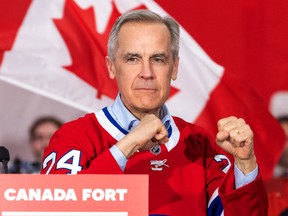
Canada’s “elbows-up” approach to American tariffs has been unique among market-based economies. What have the EU, Japan, South Korea, U.K. and especially Mexico done differently and what lessons might we learn from them? Mexico has recently announced it wants to complete trade negotiations with the U.S. before the November midterms. That would leave Canada as a jilted bride.
Sign In or Create an Account
The prime minister and the country obviously had a difficult hand to play in dealing with President Donald Trump — erratic, unreliable, crude and rude — and his clear desire to make Canada the 51st state rightfully angered Canadians.

Columnist Jesse Kline keeps you up to date with what’s happening in Israel and the effects of antisemitism on life here in Canada. Friday mornings.
By signing up you consent to receive the above newsletter from Postmedia Network Inc.
A welcome email is on its way. If you don't see it, please check your junk folder.
The next issue of Channel Israel will soon be in your inbox.
We encountered an issue signing you up. Please try again
But the strategy of going along with the U.S. on border security and defence but being “elbows up” with retaliatory tariffs, boycotts of liquor and travel to the U.S., and overtures to China has escalated the conflict. In the most recent negotiations, Canada could have simply explained why the deal the Americans were offering was unacceptable and expressed a willingness to continue negotiations. Instead, we unilaterally ended the negotiations and declared a trade war with the U.S. Batten down the hatches!
Canada’s position, heavily influenced by experience with the past CUSMA negotiations, has been “no deal is better than a bad deal,” with the implicit assumption that a better deal could be reached by delaying until there is a change in leadership in the United States.
The delaying tactic of refusing to renegotiate CUSMA until the current American tariffs are addressed has clearly failed. It has led to a further round of American tariffs and produced a rift with Mexico, which has been clear and consistent on its intent to negotiate and sign a trade deal with the United States.
The other dimension of Canada’s strategy has been to diversify its trade and encourage more investment in Canada. Diversification makes sense to a degree, but it will be nearly impossible to replace the large, dynamic U.S. market with more distant markets where we won’t be competitive. Though the prime minister has acknowledged that his professed trade war comes at a cost, he also needs to acknowledge the costs associated with diversification.
The EU, Japan, the U.K., South Korea and others have negotiated deals with the U.S. that included tariff hikes they didn’t like but at least brought stability and predictability — to the extent those are on offer by the current administration.
For its part, Mexico has taken a low-keyed approach, stating its positions clearly and concisely but avoiding escalation in actions or rhetoric. Mexico has also addressed American concerns about China by enhancing screening of Chinese investments and placing tariffs of between 35 and 50 per cent on more than 1,000 Chinese items, including steel and electric vehicles, to curb trans-shipment of Chinese products through Mexico. Unlike Canada, it has not imposed retaliatory tariffs, it is renegotiating CUSMA with the U.S. without Canada, and its president is optimistic about signing a deal with Americans. As a result, Mexico was not hit by the new U.S. tariffs Canada has had to bear since February. It’s no accident that Mexico’s trade with the U.S. increased by six per cent last year, while Canada’s slipped seven per cent, with an even larger drop in the auto sector.
Canada would be in a stronger position in dealing with the U.S. if it were aligned with Mexico. Instead, the risk is that the U.S. and Mexico sign a new CUSMA deal that benefits Mexico at the expense of Canada.
Ottawa’s evident belief that delay will bring a better deal rests on risky assumptions. The Democrats will certainly improve the American approach to Canada, but their industrial policy initiatives and America’s fiscal problems likely mean tariffs will remain in some form. It now seems at least possible that the Democrats could gain control of both the House and Senate, which could mean the end of Trump’s tariff wars. But the president can veto legislation, and it takes a two-thirds majority in both chambers to override the veto, which not even the most optimistic Democrats expect. Moreover, Trump will still have enough executive powers to continue to create economic problems for Canada.
Delaying a deal involves major economic costs for Canada. Inadequate infrastructure and uncompetitive taxes and regulatory burdens are bad enough. Continuing uncertainty about the Canada-U.S. trade relationship only compounds them.
Uncertainty deters investment. A recent KPMG survey found that four of 10 Canadian manufacturers, including some not affected by American tariffs, either have moved operations to the U.S. or are considering doing so. Tariffs result in job losses and higher prices, with low-income and vulnerable Canadians often being hit the hardest. Because many capital goods are now subject to Canadian tariffs, investment costs are also affected.
Considering the stakes, it is alarming that, relative to Mexico’s, Canada’s strategy lacks clarity. There is much uncertainty about Canada’s red lines, both in the recently rejected deal and in a renegotiation of CUSMA. Mexico, in contrast, has been clear about its end game, which is to sign a trade deal with the Americans and address American concerns such as the role of China in cross-border trade.
What is Canada’s end game in the current trade war with our biggest trading partner, buyer of 73 per cent of our exports? Defying the deeply unpopular President Trump is excellent politics in Canada. But if the current trajectory continues, there will be significant negative consequences for Canadians, with those least able to bear the burden being hit the hardest.
Janice MacKinnon is a former Saskatchewan minister of finance, and Jack Mintz, regular FP Comment columnist, is President’s Fellow at the School of Public Policy, University of Calgary.
Join the Conversation
This website uses cookies to personalize your content (including ads), and allows us to analyze our traffic. Read more about cookies here. By continuing to use our site, you agree to our Terms of Use and Privacy Policy.
KioskNews shows a cleaned-up reading view extracted from the publisher’s page — the original always lives on their site, not ours.