Govt’s fuel quota ‘U-turn’ economically sensible, says economist
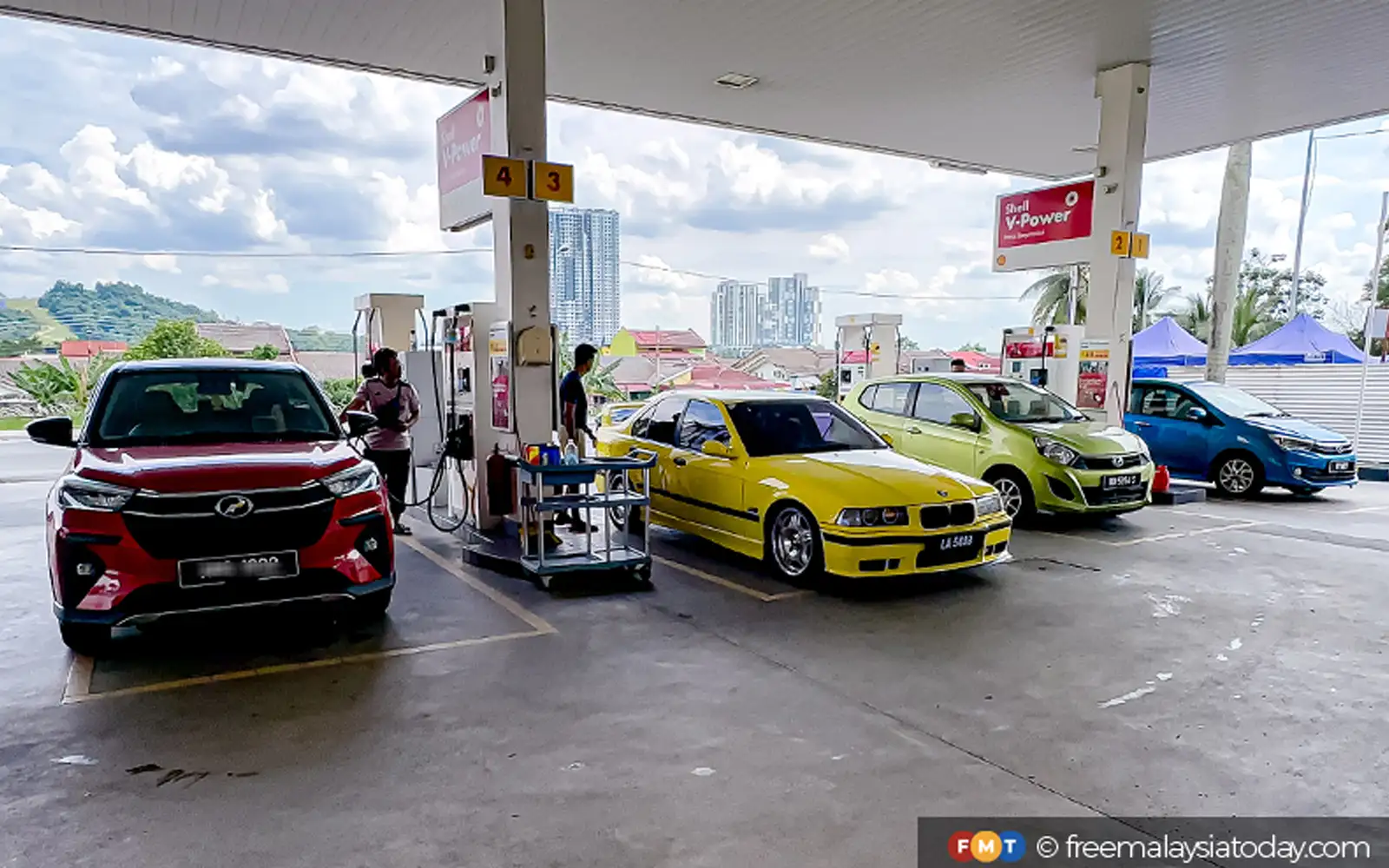
The government’s decision to cut the BUDI95 quota in April before restoring it this month may look like a political U-turn, but the two moves can be reconciled economically, says an economist.

Universiti Teknologi Mara’s Tan Peck Leong said the April quota reduction came when global oil prices were elevated and the cost of maintaining subsidised RON95 at RM1.99 per litre had risen sharply.
“From an economic perspective, reducing the monthly quota from 300 litres to 200 litres during that period was therefore reasonable.
“The government was not removing the subsidy or increasing the subsidised price. It was simply limiting the maximum volume of subsidised petrol available to each individual at a time when every subsidised litre was becoming increasingly expensive to the Treasury,” he told FMT.
Tan’s comments come after Umno president Ahmad Zahid Hamidi took a veiled swipe at Prime Minister Anwar Ibrahim over the quota change, claiming the government restored the 300-litre entitlement “out of fear” with an election approaching.
According to Tan, consumption data also showed that fewer than 1% of BUDI95 users consistently consumed more than 200 litres a month, while average usage was around 100 litres.
In an illustrative calculation, he estimated that had 1% of the 16 million BUDI95 users used the additional 100 litres in April, maintaining the 300-litre quota could have cost the government approximately RM36.5 million more that month.
He said that, if fully utilised, the restoration of the 300-litre quota would cost an additional RM29.3 million per month—roughly RM7.2 million less than in April.
“The economic arithmetic suggests that describing it simply as a political move would be too simplistic,” he said.
The quota reduction took effect on April 1 amid volatility in global oil markets following the escalation of the US-Iran conflict.
Brent crude continued climbing that month and reached US$126.41 a barrel on April 30, its highest level in more than four years.
In Malaysia, unsubsidised RON95 was priced at RM4.27 a litre from April 9 to 15, compared with the subsidised BUDI95 price of RM1.99.
By Aug 28, shortly before Anwar announced the restoration of the 300-litre quota, Brent had eased to US$89.31 a barrel, while unsubsidised RON95 was priced at RM3.82 a litre for the Aug 27-Sept 2 period.
Tan said the quota restoration did not mean Malaysians had suddenly begun consuming significantly more fuel.
Rather, he said the additional 100 litres in both BUDI95 and BUDI Diesel served largely as a buffer for motorists who might occasionally make a long-distance journey or face an unusually high-use month, especially those in the rural areas of East Malaysia.
“So the distinction is quite clear: 200 litres is more efficient from a fiscal perspective, while 300 litres provides greater psychological comfort to consumers,” he said.
“The government appears to be accepting some additional fiscal exposure in exchange for greater public confidence and acceptance of the targeted subsidy system.”
Political analyst Syaza Shukri of International Islamic University Malaysia said the reduction and subsequent restoration did not necessarily amount to a U-turn if the government could clearly explain the circumstances behind both decisions.

However, she said the timing of Anwar’s announcement, with the next general election increasingly in view, made it easier for political opponents to portray the move as a reversal or a “pre-election offering”.
Syaza said the restoration was a genuine response to public concerns while also carrying political benefits for the government.
“If people feel burdened, that will naturally affect their support for the government.
“So, for me, both can be true,” she said.
Syaza added that Zahid’s criticism should be viewed in the context of his role as Umno president, as opposed to his position as deputy prime minister.
“We know Zahid is the deputy prime minister and is in the Cabinet, so he should also share responsibility for decisions made collectively by the government,” she said.
“At the same time, he is Umno president, and Umno is increasingly differentiating itself from PH.
“So this can be read more from his position as Umno president heading towards an election, rather than as deputy prime minister.”
Tan said future quota adjustments would be easier to defend if the government sets out clearer rules linking them to oil prices, the subsidy cost per litre or the overall monthly subsidy bill.
He said this would make the policy more predictable and reduce the perception that quota changes were driven primarily by politics.
Subscribe to our newsletter and get news delivered to your mailbox.
KioskNews shows a cleaned-up reading view extracted from the publisher’s page — the original always lives on their site, not ours.