‘Now is not a time to tremble’: Casey Babb’s Moral Case for Zionism
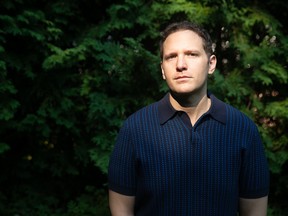
At a time when “Zionist” has become, for many, an accusation, Casey Babb’s new book, The Moral Case for Zionism, attempts to reclaim Zionism as a powerful and rational idea — one rooted, he argues, in Jewish peoplehood, historical continuity, national self-determination, cultural revival and democratic aspiration.
Sign In or Create an Account
Babb, director of the Promised Land Project at the Macdonald-Laurier Institute in Ottawa, contends Zionism is not the caricature commonly presented by its critics: neither colonialism nor racism, but a Jewish national-liberation movement rooted in a long historical relationship with the land of Israel.
Further, Babb suggests, the spirit of Zionism – the ethos of early Zionist thinkers – remains very much alive, and applicable today, for both Jews and non-Jews alike.

Columnist Jesse Kline keeps you up to date with what’s happening in Israel and the effects of antisemitism on life here in Canada. Friday mornings.
By signing up you consent to receive the above newsletter from Postmedia Network Inc.
A welcome email is on its way. If you don't see it, please check your junk folder.
The next issue of Channel Israel will soon be in your inbox.
We encountered an issue signing you up. Please try again
The book, coming from Wicked Son publishers on Oct. 22, is needed because the argument over Zionism has become emotionally charged, morally reductive, and often detached from history, he says. Babb seeks to arm readers — Jewish or not — with language, context and confidence: to distinguish criticism of Israeli governments from the repudiation of Jewish collective rights, to confront antisemitism expressed through anti-Zionist terms, and to recover an idea he believes has been deliberately distorted with the express purpose of destroying the Jewish story.
Babb is also an international fellow at Tel Aviv’s Institute for National Security Studies, and an associate fellow at the Royal United Services Institute in London. His research has appeared in peer-reviewed publications in Canada, the United States, Europe and the Middle East. He holds a BA in political science and international development from Saint Mary’s University, an MA in international relations from York University, and a PhD in international relations from Carleton University.
This interview was edited for brevity.
What was the impetus to write the book?
I had, like many people, over time, and especially following October 7, become increasingly alarmed by the rise of anti-Zionism and the normalization of anti-Zionist rhetoric. I felt like if I wrote a book just on anti-Zionism, I might be putting the cart before the horse, because if you’re going to talk about anti-Zionism, in my view, you first have to talk about Zionism, what it really means, what it represents, and what it has achieved and continues to achieve for the Jewish people. I feel like yes, we have to defeat anti-Zionism, but Zionism itself is also worth saving.
Your book draws on decades of scholarship about antisemitism, Zionism, and related ideas, yet you’ve chosen a personal voice. What was behind that decision?
When I set out on this path a few years ago, it became clear to me rather quickly that there was decades worth of literature, thought, and material that needed to be taken into account. At the same time, I wanted this book to be accessible to everybody. I didn’t want it to be some highbrow book that people in the back of coffee shops are reading, only to be understood by a select few.
For me, it was about taking an expansive body of literature and contemplation, and distilling it down into something I hope is quite easily understood for the masses. It’s a bit challenging. But I tried to limit, to a certain extent, some of the intellectual details and historical debates on the topic that, in my opinion, would probably do the community a disservice right now. I wanted something that people could read and support, and which would leave them feeling good, and perhaps, a bit more confident about Zionism, and their place in the Zionist story.
Amongst your research, throughout the writing, what one particular thing was revelatory to you?
Israel is the most powerful unifying force in the history of the Jewish world. It is the force, vis-à-vis Zionism, that has taken the Jewish world from the private into the public. In other words, it is Israel which led Jews out the synagogue, the living, and the shtetl, into the light of public living. Prior to the reestablishment of the state of Israel in 1948, Jewish life was largely a private matter, and it no longer is. And that’s why an Orthodox rabbi in Crown Heights can relate with a secular Jewish kid in Fredericton, because it is highly likely that a part of their Judaism is woven into the Zionist spirit. Indeed, it’s probably the only thing uniting them on such a deep level.
That hadn’t really been so clear to me prior to writing this book. Similarly, I realized the true existential dangers of anti-Zionism and the underlying objective of anti-Zionists. I argue in the book, their aim is to ultimately destroy the Jewish story, the Jewish spirit and, in the end, the Jewish people.
Towards the end of the book, you have recommendations, actionables.
No part of this book is me pontificating about Zionism or how to live a Jewish life or a Zionist life. In fact, as I mention in the book, the recommendations I make in the book are for me, too.
That said, one of the ideas I raise is to remember that the Jewish people and our allies have never been stronger, never in history, and that now is not a time to tremble. There’s a distinction between fear that sharpens your attention, which I think is what we need now, and fear that paralyzes action, and the second kind is the enemy of Jewish life in virtually every era.
There’s no need for us to retreat inwards. We need to really remember who we are, embrace our story, and all that comes with it, and muster up a new level of chutzpah and courage, because that’s what it’s going to take to get through this. We cannot allow ourselves to fall victim to the gaslighting and the moral inversion that has characterized not just Jewish life, but most of our society the last number of years.
People need to know who they are, know the story that they’re part of, and know that they aren’t alone. Another thing, is to do Zionist things. Help people in your community. Start living a more Zionist life. There’s a temptation to orient ideas and day-to-day living around opposition and defensiveness. I understand that, but we can’t allow that to shape who we become. That’s no way to live. We have to say yes to things like Shabbat. We have to say yes to the Hebrew language. We have to say yes to Israeli culture, have the full fullest expression of what living a Zionist life actually means – a genuine abundance of meaning, of connection, of beauty, of purpose, of pride, and of exhilaration.
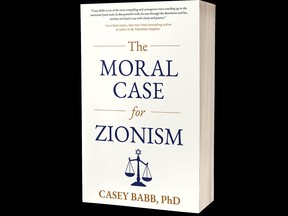
How is your book different from Alan Dershowitz’s “The Case for Israel”?
OK, so that was published 25 years ago and much has changed since then. Too much. Dershowitz’s is principally a prosecutorial defence of Israel against historical, legal, and political accusations. It is legalistic and forensic.
I make a more affirmative moral, historical, and civilizational argument for Zionism itself. I speak of dignity, belonging, return, liberation, tikkun olam, democratic pluralism, Jewish historical continuity. He speaks of legal context, double standards, anti-Israel demonization. I’m not refuting charges against Israel; I’m building a case for Zionism as a morally serious, positive ideal – one of the most morally inspiring stories and ideas in all of history.
I think there’s a lot to be said about keeping Zionism alive and modernizing it and renewing it. If Dershowitz’s book asks, “Why is Israel not what its detractors say it is?” mine asks, “What valuable moral ideas are its detractors failing to see?”
Our website is the place for the latest breaking news, exclusive scoops, longreads and provocative commentary. Please bookmark nationalpost.com and sign up for our newsletters here.
Join the Conversation
This website uses cookies to personalize your content (including ads), and allows us to analyze our traffic. Read more about cookies here. By continuing to use our site, you agree to our Terms of Use and Privacy Policy.
KioskNews shows a cleaned-up reading view extracted from the publisher’s page — the original always lives on their site, not ours.