Insurance company denies rainwater damage claim for luxury car, owner wins Rs 2.02 lakh
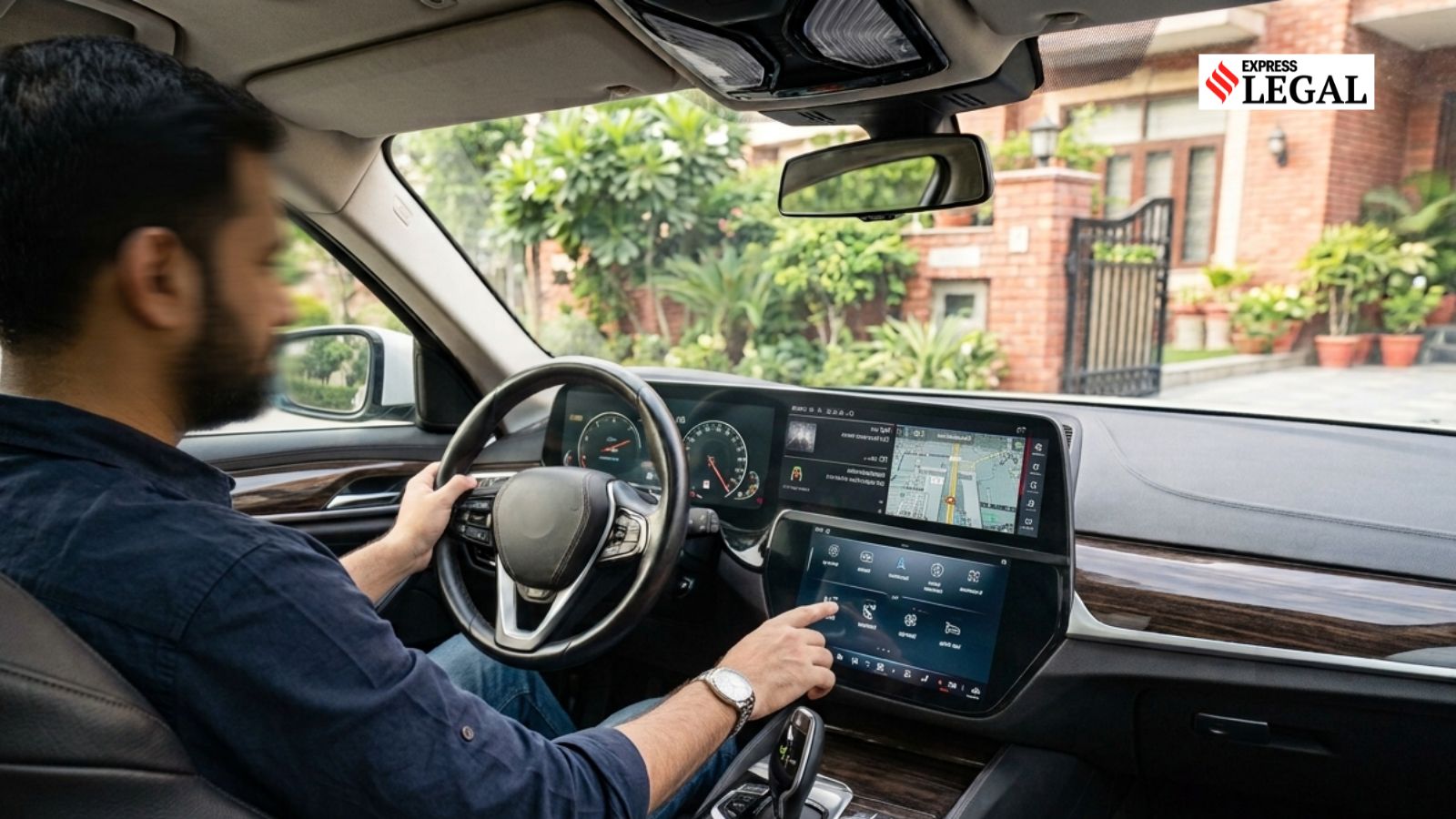
The insurance company ordered to pay Rs 2.02 lakh to a Jaguar owner. (AI-generated Image)
Holding that an insurer cannot rely on policy exclusions that were never supplied to the insured, a Chhattisgarh District Consumer Commission directed the insurance company to pay Rs 1.75 lakh to a man whose luxury car was damaged by rainwater.
A bench of president Dakeshwar Prasad Sharma and members Nirupma Pradhan and Anil Kumar Agnihotri also ordered the company to pay Rs 20,000 for mental agony and Rs 7,000 as litigation costs.
“Since the opposite party had not provided the complainant with a copy of the policy’s terms, conditions, and exclusions along with the insurance policy, those terms and conditions were not binding on the complainant. Therefore, it held that the opposite party could not have rejected the complainant’s insurance claim by relying on the exclusion clauses of the policy. The rejection of the claim on that basis was therefore not justified and amounted to deficiency in service and unfair trade practice on the part of the opposite party,” the commission said on August 24.
Noting that the opposite party had also produced a copy of the terms and conditions, which was marked and consisted of six pages, the order said that these terms and conditions could not be treated as part of the insurance policy, since the insurance policy produced by the opposite party itself consisted of only four pages.
Rainwater damaged car’s infotainment system
The case was filed by a man, the owner of a car, against an insurance company before district consumer commission. The vehicle was insured under a private car insurance policy valid from November 29, 2020 to November 28, 2021.
In August, 2021, rainwater entered the vehicle after its driver-side window glass was left slightly open, causing damage to the car’s infotainment system and other components. The insurer appointed a surveyor, who assessed the repair cost at Rs 1.98 lakh, while the complainant claimed that he had incurred Rs 2.73 lakh towards repairs.
The man challenged the repudiation before the consumer commission, alleging deficiency in service and unfair trade practice. He argued that the insurer had not supplied him with the complete policy terms and conditions when the car policy was issued, and therefore could not later rely on exclusion clauses to reject his claim.
Story continues below this ad
Window open amounted to gross negligence: Insurer
The insurer rejected the claim, stating that damage caused by rainwater was not covered under the policy and that leaving the car window open amounted to gross negligence, violating policy conditions.
It further maintained that rainwater damage was not covered under the policy and that leaving the window open amounted to gross negligence. On these grounds, it rejected the claim on February 4, 2022.
Insurer failed to supply terms: Order
The commission observed that the insurer had provided the complainant only a four-page policy, while the terms and conditions relied upon by the insurer were not supplied to him along with the policy.
It held that since the complainant was not provided with the policy terms, conditions, and exclusions when the policy was issued, those conditions could not be treated as binding on him.
Story continues below this ad
The order stated that the insurance policy produced by the opposite party clearly consisted of four pages, with page numbers mentioned on each page.
“However, the opposite party had produced only three pages of the insurance policy before the commission. From the document itself, it was clear that the opposite party had issued a four-page insurance policy to the complainant. The terms and conditions of the policy, however, had not been provided to the complainant along with the policy,” it said.

Jagriti Rai works with The Indian Express (Digital), where she writes from the vital intersection of law, gender, and society. Working on a dedicated legal desk, she focuses on translating complex legal frameworks into relatable narratives, exploring how the judiciary and legislative shifts empower and shape the consciousness of citizens in their daily lives. Expertise Socio-Legal Specialization: Jagriti brings a critical, human-centric perspective to modern social debates. Her work focuses on how legal developments impact gender rights, marginalized communities, and individual liberties. Diverse Editorial Background: With over 4 years of experience in digital and mainstream media, she has developed a versatile reporting style. Her previous tenures at high-traffic platforms like The Lallantop and Dainik Bhaskar provided her with deep insights into the information needs of a diverse Indian audience. Academic Foundations: Post-Graduate in Journalism from the Indian Institute of Mass Communication (IIMC), India’s premier media training institute. Master of Arts in Ancient History from Banaras Hindu University (BHU), providing her with the historical and cultural context necessary to analyze long-standing social structures and legal evolutions. ... Read More
KioskNews shows a cleaned-up reading view extracted from the publisher’s page — the original always lives on their site, not ours.