Not destroying Iran's missiles, drones 'most significant failure,' former CENTCOM deputy cmdr. says

The failure of the United States and Israel to destroy Iran's ballistic missile and drone capabilities is "probably the most significant failure" of the war, former US Central Command (CENTCOM) deputy commander Rear-Adm. (ret.) Robert Stiles Harward Jr. told KAN News' "International Hour" in an interview on Tuesday.
"These are Iran's main means of threatening American forces, Israel, and the countries of the region," said Harward. "Unfortunately, we have not been able to completely eliminate this threat, and it is very possible that it will be the main target of the next wave of military action."
Harward told KAN that the existence of these capabilities, which he emphasized are the main power projection and pressure tools left in Tehran's arsenal, is a primary obstacle to the international community being able to support the Iranian population against the regime.
Regarding US military operations in and around the Strait of Hormuz, Harward said that US President Donald Trump's administration maintains "complete control of the operational pace and is operating with successful deception that keeps everyone on their toes."
Trump has threatened in recent days to renew strikes against Iran, but has also pursued a diplomatic solution through Qatari mediators.
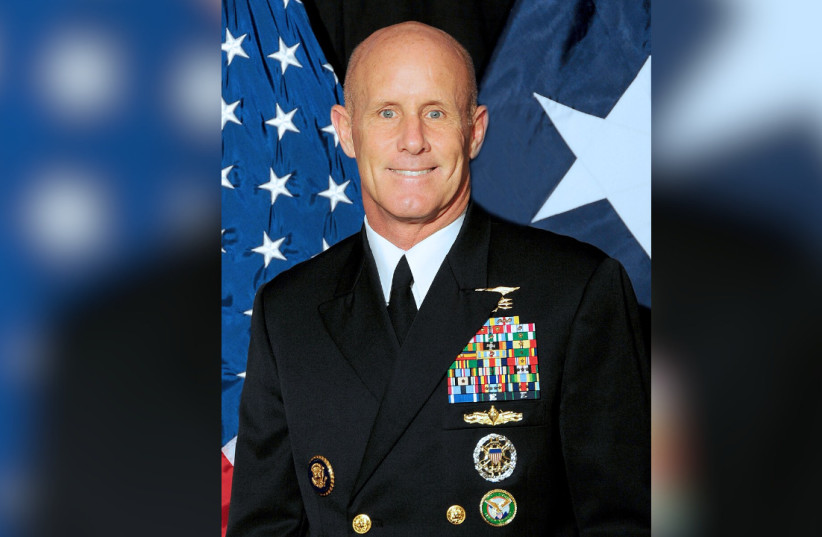
Harward: Trump can attack Iran 'whenever he wants'
"The financial strangulation is already causing severe internal shocks in Iran, so time is working in Trump's favor," said Harward. "He can wait and attack whenever he wants."
In addition to military and naval blockades, the US Treasury Department has issued multiple sanctions against the Islamic regime, with the most recent sanctions targeting eight Canada-based money services firms that have allegedly facilitated transactions with sanctioned Iranian entities.
According to Harward, the US has multitudes of both kinetic and non-kinetic capabilities with which to increase pressure on Iran, though these would stop short of a nuclear attack, despite claims by controversial conservative commentator Tucker Carlson on Sunday that Trump may launch such an attack "within days."
"That would be a last resort and a most extreme option," Harward emphasized. "Any leader would hesitate to use it, especially when there are many conventional alternatives on the table."
Examples of these capabilities listed by the former CENTCOM deputy commander included blockading Iran's remaining trade routes and using the GBU-43/B Massive Ordnance Air Blast (MOAB) bomb, nicknamed "The Mother of All Bombs," against Iranian nuclear facilities.
Sources say MOAB cannot strike deep Iranian targets, unlike MOP
The MOAB is the most powerful conventional weapon in the US military's arsenal, though it is not a "bunker buster" and is thus unable to penetrate deep enough to destroy buried targets, US officials told CNN in October. In comparison, the smaller GBU-57A/B Massive Ordnance Penetrator (MOP), the weapon dropped by US Air Force B-2 Spirit stealth bombers during Operation Midnight Hammer, is designed for such targets.
Regardless of the methods used, Harward stressed that any Iranian regime loyal to the Islamic Revolution "will always have the motivation to restore its capabilities," warning that this would include nuclear weapons if given the chance.
"An official declaration of a goal of regime change will strengthen trust and coordination with our partners in the Middle East," Harward noted.
"This region holds 60% of the world's proven oil reserves," he added. "The day after the Iranian threat is removed, the alliances being built now will allow the Middle East to become one of the most prosperous and secure regions in the world."
Jerusalem Post Staff, Asher Smith, and Ariella Roitman contributed to this report.
KioskNews shows a cleaned-up reading view extracted from the publisher’s page — the original always lives on their site, not ours.