Humans vs AI art: why game studios hire Southeast Asian talent
Video game companies have long been at the vanguard of artificial intelligence, using it in its more nascent form to dictate non-player character behaviour, simulate crowds and adjust game difficulty on the fly years before the advent of chatbots like ChatGPT.
Today, the technology is increasingly being deployed to write code, create visual assets and even synthesise real-time voice-overs, supplanting humans who would have otherwise done the work.
Yet studios do still pay people to animate their characters – many of them students and recent graduates in Thailand, Malaysia and Vietnam, who charge far less than artists based in the West or Japan.
The US$275 billion industry is thus proving to be a rare exception in the field of creative work, with human-created art still carrying a certain cachet among game makers and players, even as AI streamlines much of the game development process.

AI tools could cut annual games industry costs by US$22 billion, Morgan Stanley Research estimated in a May report. Developers are now using them to code, work on early concepts and automate repetitive tasks such as drawing the “in between” frames that link key moments in an animation.
In a survey of more than 1,300 industry insiders published by Japan’s Computer Entertainment Supplier’s Association in September, over 85 per cent of Japanese game developers said they were using generative AI to trim costs and drive growth.
Studios, from indie start-ups to the “AAA” behemoths that dominate the sector, are becoming leaner, using AI for part of the work, then commissioning the finished artwork from freelancers like James Chaingam, 19, a first-year animation and visual effects student at Chiang Mai University in northern Thailand.
“Consumers still want human art,” he told This Week in Asia. “There is a funnel of people out there who want artists with specific styles, people who want to work with humans who know what they are looking for. They want originality and they are still attached to the human side of creativity.”

More than cheap
Chatbots are able to turn simple text prompts into images, videos and reams of written copy for next to nothing, with slightly pricier AI agents even capable of creating entire video games – of varying quality – far faster and more cheaply than any human.
Southeast Asian freelancers, by comparison, typically charge between US$50 and US$300 to craft a video game character or produce a set of in-game “assets”, ranging from weapons, props and environmental set-dressing to sound effects and background music.
These low prices help studios protect their margins in a hyper-competitive market crowded with rivals and cheaply made prompt-assembled games.
At the same time, indie studios are cropping up across the region – among them Malaysia-based outfit Okakichi, founded by Yoshiki Okamoto, a veteran Japanese games developer renowned for his work on classic titles such as Street Fighter II. His former employer, the Osaka-based gaming giant Capcom, has an annual revenue of more than US$1.2 billion.
Andy Chaisriri, a game designer and lecturer who co-founded the Bit Egg animation, art and game development studio in Chiang Mai, Thailand, said cost was only part of the region’s appeal.
“A lot of US studios have been shrinking or closing. It’s very expensive to have a studio in Los Angeles vs say Bangkok, Chiang Mai or Kuala Lumpur,” he said.
“But people aren’t coming here [just] because it’s cheap, they get interesting results. The Thai talent base is strong.”
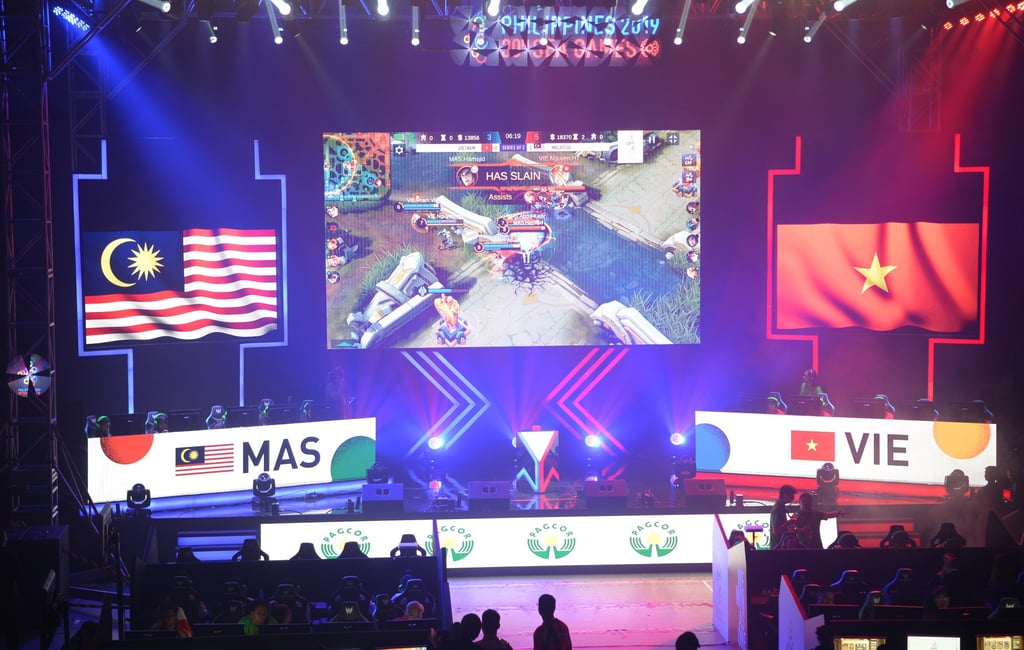
More Western AAA studios were heading to Malaysia than to Thailand because of its English-speaking “advantage”, he said, adding that Thai animators tended to draw on influences from far and wide, including China and the US.
Japan’s big games studios send work to the region too, commissioning individual artists with whom they build long-term relationships based on trust. “Japanese studios are more specific about remembering specific artists,” Chaisriri said.
When it came to in-game artwork, generative AI was still behind the curve because it tended to produce “an aesthetic that people avoid”, he said. “The knock-off looks like a knock-off, you don’t want to show that off.”
Relationships mattered most when creative work was outsourced, Chaisriri added. “Nothing will beat a previous relationship that worked,” he said. “It’s going to be cheaper than Japan, but people find Southeast Asian studios and they stick with them. They remember those individuals [and] the biggest timesaver is having a proven relationship.”
Skilled, yet anxious
For students like Chaingam, who pays his way through university by picking up work as a freelance artist and animator under the pen name “Avomavomy”, the fear is that paid-for roles might vanish before he can complete his training and properly join the workforce.
AI is moving into more parts of game development, from concept to design, and is increasingly able to mass-produce content for a market that may come to value volume over artistry.
“There is still a trust problem around generative AI. Not everyone is comfortable with it,” Chaingam said. “But it is bringing pressure down the chain … we are all competing for jobs, taking on freelance work. It [the industry] is saturated, so the price gets lower.”
He said his Thai classmates were highly skilled, yet anxious. “Some are insanely good and they can produce studio-quality work. But even they are worrying about improving their skills, making connections and building their brand.”
KioskNews shows a cleaned-up reading view extracted from the publisher’s page — the original always lives on their site, not ours.