Why Malaysia should have national long-term care insurance and how it can be funded


Socso deputy CEO Edmund Cheong Peck Huang said Malaysia needs a long-term care insurance that does not only cover those who cannot live independently due to illness or injury before age 60, as people tend to become invalid after 60. — Picture by Sayuti Zainudin
By Ida Lim
First Published: Monday, 02 Nov 2026 7:00 AM MYT
KUALA LUMPUR, Nov 2 — If Malaysia introduces a new nationwide insurance to cover the cost of long-term care of older persons, who would be paying for it?
The government via tax revenue? All Malaysians through a monthly contribution? Or a mix of both? Or some other method?
But wait, just what is long-term care insurance?
Unlike a medical card or medical insurance which covers hospital bills, long-term care insurance covers the care and support that a person — including older persons — needs outside of hospitals.
For example, if a person is unable to feed or dress himself/herself due to a stroke or other illnesses.
Social Security Organisation (Socso) Deputy CEO (Strategy and Corporate), Edmund Cheong Peck Huang said Socso or Perkeso already covers long-term care for Malaysian workers by giving them a lifelong monthly “invalidity pension” — but only if they become invalid before age 60.
“The irony of Perkeso being able to provide pension, being able to provide rehabilitation, medical benefits until the person dies is that you have to be sick or injured before 60. Then you would have proper long-term care protection.
“But the thing is that when we talk about long-term care, invalidity or sickness comes after 60. When it comes after 60, who protects you?” the social protection expert said recently at the National Long-Term Care Financing Dialogue 2026.
Cheong said this has led to a “moral hazard” where Malaysians lie and try to claim for this Socso monthly payout before they turn 60, even when they are actually not invalid.
“And to be honest, we are seeing trends of people applying for Perkeso’s invalidity pension at the ages of 55 to 60.
“Basically not because they are invalid, but basically they are trying their luck. Hoping for that lottery that Perkeso says that you are invalid and you get pension for life, you get rehabilitation for life,” he said, adding that the spouse and children would also continue to get a pension as this person’s dependants.
“People are lying so that they get protection. So, we need to have a much more sustainable model for it.”

Edmund Cheong said mandatory contributions by all Malaysians would make long-term care insurance much cheaper, highlighting that everyone grows old and may need long-term care in the future. — Picture by Choo Choy May
‘Solidarity’: Paying for another Malaysian’s care now; getting paid when you become old in the future too
To introduce long-term care insurance for all Malaysians, Cheong proposed making it mandatory for every Malaysian to contribute to it.
“My one answer to it is one word — solidarity. Are we ready for solidarity? Because when we talk about long-term care insurance, it is a social insurance programme. When it is a social insurance programme, it is a mandatory contribution,” he said.
He pointed out that the monthly premium would be very affordable if it is a mandatory scheme involving all Malaysians, compared to a voluntary insurance scheme where the monthly premium would be very high as there would only be a small pool of contributors.
He cautioned Malaysians against being “individualistic” by viewing the contributions as “my savings”, noting that even the most prudent person would not be able to save enough for long-term care in their old age.
Cheong pointed out that everyone grows old, and that paying into this national insurance would eventually end up benefitting us when we need long-term care in the future.
“So that’s where you have to educate, today I’m paying for someone else’s grandfather, but one day, that some random Malaysian will be paying for me,” he said.
He added that a long-lasting organisation with a proper track record and proper infrastructure should be given the trust to run this national insurance scheme, as a person who has contributed for decades to the insurance can then hope to rely on it one day.
Cheong also indicated that long-term care insurance could be funded through existing social protection contributions, pointing out that the Employees Provident Fund (EPF) currently already allows EPF withdrawals via i-Lindung to buy life and critical illness insurance.
“But why can’t we just be brave enough and say, ‘Hey, let’s restructure it’,” he said, noting that social protection organisations such as Socso’s counterparts have also evolved over time to also cover employment injury and invalidity in line with changing needs and social risks.
One example that Cheong cited was Singapore’s national long-term care insurance CareShield Life, which is managed under the country’s Central Provident Fund (CPF) — the equivalent of Malaysia’s EPF.
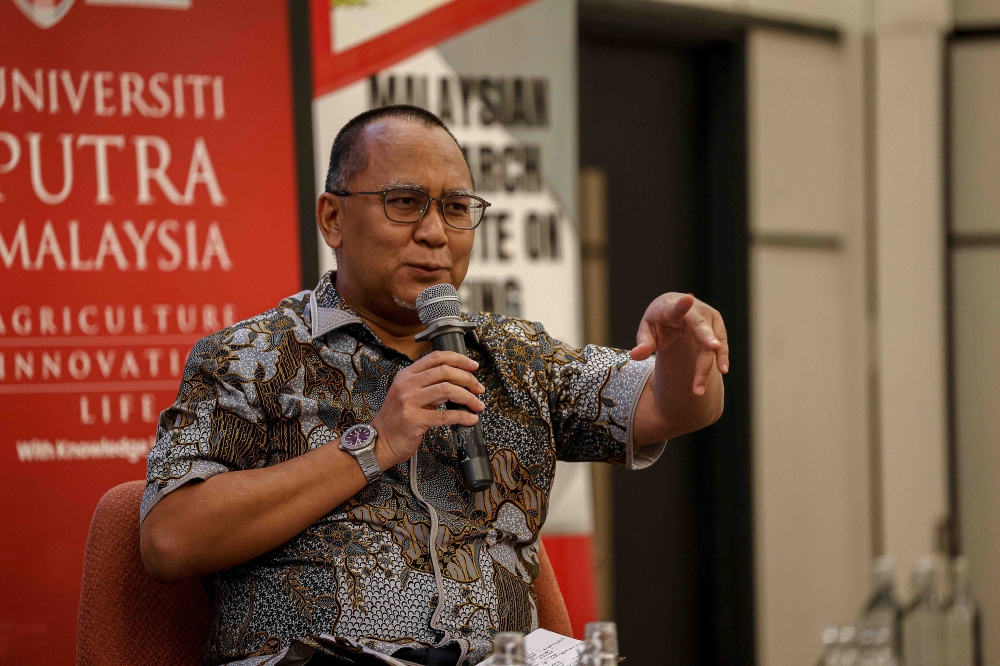
Syarikat Takaful Malaysia Keluarga Berhad’s Group CEO Nor Azman Zainal said there is a lack of willingness among Malaysians to pay for retirement-related insurance products if it is voluntary. — Picture by Sayuti Zainudin
Why long-term care insurance may fail in Malaysia if it’s not mandatory
Syarikat Takaful Malaysia Keluarga Berhad’s Group CEO Nor Azman Zainal, who has 30 years’ experience in the insurance and takaful sector, indicated that the real challenge was convincing Malaysians that they need retirement-related insurance products.
“From an insurance perspective, I can tell you, based on my observation and our own experience, long-term care is least on the minds of our customers,” he said at the same panel.
Nor Azman pointed to the insurance and takaful sector’s unsuccessful attempts in Malaysia to introduce insurance for Malaysians in their old age, which he said shows it would be tough to introduce new products.
This included life annuity products in the late 1990s and early 2000s that were designed to be funded through EPF, and another new retirement product about 10 to 15 years ago which also failed.
He said the problem with a voluntary long-term care insurance would be “nobody wants to pay for it”, and that it would only work in Malaysia if it is a mandatory nationwide scheme with the government’s involvement similar to that in Singapore or Japan.
“So I think that’s the way forward, but if you leave it entirely to the insurance sector or the takaful sector, we are going to fail once again,” he said.
He said another challenge in Malaysia is the lack of relevant data, which is required by actuaries for cost predictions when designing a long-term care insurance product.
“So I think, in short, it’s going to be tough, but it’s doable,” he said.
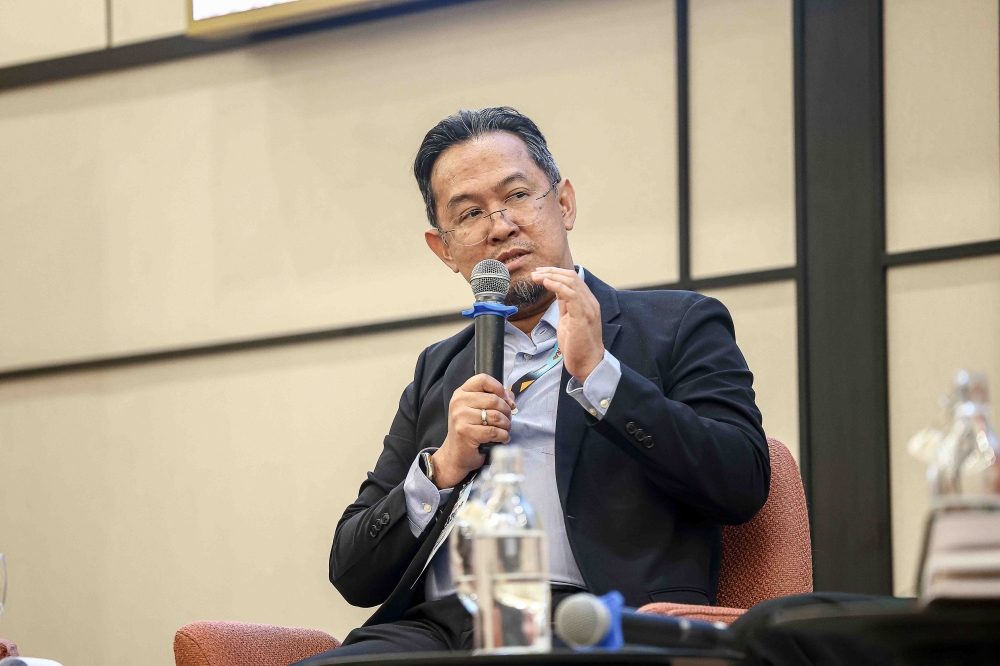
ProtectHealth Corporation’s Head of Healthcare (Sustainability and Assurance) Dr Muhammed Anis Abd Wahab said government funding for healthcare and long-term care needs to be increased. — Picture by Sayuti Zainudin
Government needs to fund long-term care in Malaysia too, advocates say
At the same panel, ProtectHealth Corporation’s Head of Healthcare (Sustainability and Assurance) Dr Muhammed Anis Abd Wahab agreed that there needs to be solidarity or shared risk in a single pool for long-term care.
While healthcare and long-term care should be a shared responsibility that also involves Malaysians, Dr Anis said the government has to “predominantly fund most” of those costs and advocated for an increase in government funding for these.
Fellow panellist and Malaysia Caregivers Association (Kendana) chairman Rashidi Yahaya stopped short of advocating for Socso to step up and handle a national long-term care scheme, but said it was capable of doing so.
Rashidi proposed a four-tier approach to financing long-term care in Malaysia, starting with prevention; having a social protection element that is tax-funded; a mandatory contributory fund with contributions from both employers and employees; and then a voluntary private top-up through insurance.
He indicated that Malaysians’ EPF funds could be tapped for long-term care: “We don’t have to go and tell the government tomorrow, ‘let’s start a new legislation, let’s start a new tax fund’, because the money is already there.”
In Singapore, Singaporeans must pay the premiums (typically using their CPF savings) for their mandatory long-term care insurance CareShield Life, but the government also gives premium subsidies for lower-income and middle-income households.
In Japan, funding for its mandatory national long-term care insurance is shared, with half being premiums paid by citizens and half being tax-funded.
The dialogue was part of the National Conference on Ageing 2026 (NCA 2026), which was organised by Universiti Putra Malaysia’s Malaysian Research Institute on Ageing (MyAgeing) together with Retirement Fund Inc (KWAP), the United Nations Population Fund (UNFPA) and Kendana.
KioskNews shows a cleaned-up reading view extracted from the publisher’s page — the original always lives on their site, not ours.